

Since 3 September 2026 beef, poultry, eggs and honey from Brazil, the EU‘s second-largest beef supplier in 2025, can no longer enter the Union. Brasília failed to guarantee that its animals are raised without antibiotics used as growth promoters or reserved for human medicine, as required by the ‘mirror clause‘ of Regulation (EU) 2019/6. The delisting, decided by Implementing Regulation (EU) 2026/1189, is the first trade casualty of a rule that now applies to every exporter of products of animal origin, and Brazil is weighing its response, at the WTO and elsewhere.
The ban is the visible tip of a wider system. Regulation (EU) 2016/429, the ‘Animal Health Law‘ (AHL), has been applicable for more than five years and was adopted a decade ago. In July 2026 the European Commission published its first evaluation report, while FAO, UNEP, WHO and WOAH (the ‘Quadripartite’ for One Health) extended the global One Health Joint Plan of Action and WHO Member States kept negotiating the last annex of the Pandemic Agreement.
This article starts from the Brazilian case, then updates the Food Times analysis of 2020 on the seven regulations that completed the reform, checks where each act stands today, and draws out what the current framework means for operators in the livestock chain. Animal welfare, which follows a separate legislative track, will be dealt with in a dedicated article.
Brazil delisted, the first casualty of the mirror clause
The mirror clause of Regulation (EU) 2019/6 (Article 118) and Delegated Regulation (EU) 2023/905 requires animals and products of animal origin entering the Union to come from countries that apply the EU prohibitions on antimicrobials, with attestations in the official certificates. Its first practical effect is the exclusion of Brazil. Implementing Regulation (EU) 2026/1189 left the country out of the list of compliant exporters for bovine, equine and poultry meat, aquaculture products, eggs, honey and casings, because ‘the Commission has not received information guaranteeing that Brazil implemented the necessary measures to ensure that the requirements laid down in Article 3 of Delegated Regulation (EU) 2023/905 will be complied with by 3 September 2026‘.
Consignments certified on or before 2 September 2026 may still enter. The stakes are large: about 83,000 tonnes of fresh and frozen beef in 2025 and some 211,000 tonnes of chicken a year, according to the British Agriculture Bureau. On 3 September 2026 a Commission spokesperson noted that for beef ‘no such guarantees had been provided‘, since the attestation must cover the whole life of the animal, while audits on poultry and honey were proceeding on the basis of written guarantees. Brasília called the measure ‘disproportionate‘ and announced that it is ‘examining reciprocal action and available legal channels‘.
Why, then, are the United States and Canada on the list, given that both countries allow hormonal growth promoters in cattle? Two distinct regimes are at work:
- hormones and beta-agonists (including ractopamine) have been banned in the Union since Directive 96/22/EC, for domestic production and imports alike. US and Canadian beef enters the EU only from certified hormone-free programmes, within the ‘high-quality beef’ quota agreed after the WTO dispute EC – Hormones (DS26, DS48), which the Union lost in 1998 and settled through the 2009 Memorandum of Understanding with the United States;
- the antimicrobial mirror clause covers a narrower ground: no antimicrobial medicinal products for growth promotion, none of the antimicrobials reserved for humans under Implementing Regulation (EU) 2022/1255. The United States and Canada provided the required guarantees, having withdrawn growth-promotion claims for medically important antimicrobials in 2017 and 2018 respectively, and were included in the first list laid down by Implementing Regulation (EU) 2024/2598. Brazil, which figured in that list for meat and milk, did not confirm them in time.
Legal and economic fallout
The exclusion of a whole country for failing to transmit documentary guarantees, rather than for non-compliance found in establishments, invites litigation and exposes the Union to an objection of proportionality. At the WTO:
- Brazil may argue that the measure is not a sanitary one, as residues of antimicrobials are already governed by maximum residue limits, but a process-based requirement that discriminates between like products, to be tested under the TBT Agreement (Article 2.2, unnecessary obstacles to trade);
- under the SPS Agreement it may invoke Articles 2.2 and 5.6, measures not more trade-restrictive than required and based on a risk assessment;
- the European Commission, on behalf of the Union, will reply that antimicrobial resistance is a public health risk covered by the SPS Agreement, backed by the 2016 UN Political Declaration on AMR and by the Quadripartite work described below;
- the precedent of EC – Hormones (DS26, DS48) points in both directions: the SPS Agreement requires a risk assessment proportionate to the measure (Article 5.1) and the Union has already lost once on similar ground, but losing a case does not oblige it to reopen its market, at the price of authorised retaliation;
- the strongest defence therefore remains the sanitary one, provided it would be supported by an explicit risk assessment and by a fast track to relisting for establishments that prove compliance.
A second front is the EU–Mercosur agreement, whose ratification the delisting complicates.
On the supply side, the impact is immediate for the Italian chains that process South American beef. Bresaola is the clearest example: about 80% of the raw material for Bresaola della Valtellina PGI, a product worth EUR 253 million at production and EUR 480 million at consumption in 2024, comes from South America (Brazil, Paraguay, Uruguay, Argentina), as documented in the GIFT article Bresaola della Valtellina PGI: nutrition and market. The loss of the first supplier shifts demand to Uruguay, Argentina and Paraguay, which remain listed but do not have unlimited volumes, and to European beef, already scarce after the contraction of the cattle herd and the 2025-2026 epidemics.
In general, the most likely short-term outcome is upward pressure on prices of the raw material and, in cascade, on retail prices of fresh beef and beef-based cured meats, in a market where Brazil was the EU’s second-largest supplier. Importers of composite products containing Brazilian ingredients of animal origin must also check the specific requirements, as explained in the FARE Q&A (Dongo, 2022a).
The Animal Health Law, a single framework
The Animal Health Law ‘lays down rules for the prevention and control of animal diseases which are transmissible to animals or to humans‘ (Regulation EU 2016/429, Article 1.1). It replaced some forty directives and regulations adopted since the 1960s with one risk-based and preventive framework, applicable since 21 April 2021.
The regulation defines biosecurity as ‘the sum of management and physical measures designed to reduce the risk of the introduction, development and spread of diseases to, from and within‘ an animal population or an establishment (Article 4, point 24). Operators bear direct responsibility for:
- ‘the health of kept animals‘;
- the ‘prudent and responsible use of veterinary medicines, without prejudice to the role and responsibility of veterinarians‘;
- ‘minimising the risk of the spread of diseases‘;
- ‘good animal husbandry‘ (Article 10.1, letter ‘a’).
Two further duties frame day-to-day practice on farms. Operators must:
- ‘immediately notify the competent authority where there are any reasons to suspect the presence in animals of a listed disease‘ of category A (Article 18.1, letter ‘a’);
- ensure that their establishments ‘receive animal health visits from a veterinarian when appropriate due to the risks posed by the establishment in question‘ (Article 25.1).
Listing and categorisation of diseases
The AHL works through a two-step mechanism. Diseases are first listed, then assigned to one or more categories (A to E) that determine the applicable rules, from immediate eradication (category A) to surveillance only (category E):
- Commission Implementing Regulation (EU) 2018/1882 carries out this categorisation and identifies the species concerned;
- Commission Implementing Regulation (EU) 2020/690 lists the diseases subject to Union surveillance programmes and those for which compartments may be recognised as disease-free (Dongo, 2022b).
The Commission evaluation notes that six of the seventeen national competent authorities surveyed ‘reported difficulties in applying categories in complex or rapidly evolving epidemiological situations‘ (SWD(2026) 179, section 4.1.1), a point that feeds into the reform agenda discussed below.
The seven regulations of 2020, where they stand today
The seven acts published in the Official Journal on 3 June 2020 remain the operational core of the system. Several have been amended, most recently in spring 2026:
- Delegated Regulation (EU) 2020/686 on germinal products (semen, oocytes, embryos): approval of establishments, traceability and movements;
- Delegated Regulation (EU) 2020/687 on the prevention and control of listed diseases (restricted zones, killing, cleaning and disinfection, restocking);
- Delegated Regulation (EU) 2020/688 on movements of terrestrial animals and hatching eggs within the Union;
- Delegated Regulation (EU) 2020/689 on surveillance, eradication programmes and disease-free status;
- Implementing Regulation (EU) 2020/690 on Union surveillance programmes and compartments;
- Delegated Regulation (EU) 2020/691 on aquaculture establishments and transporters of aquatic animals;
- Delegated Regulation (EU) 2020/692 on the entry into the Union of animals, germinal products and products of animal origin from third countries.
To these one should add Delegated Regulation (EU) 2019/2035 on the registration and approval of establishments and the traceability of kept terrestrial animals. The rules on non-commercial movements of pet animals moved under the AHL framework through Delegated Regulations (EU) 2026/131 and 2026/132.
Delegated Regulation (EU) 2026/322, the 2026 overhaul of disease control rules
The most relevant recent change for livestock operators is Delegated Regulation (EU) 2026/322 of 12 February 2026, which amends and corrects Delegated Regulation (EU) 2020/687 and applies from 12 May 2026. Its main innovations:
- competent authorities may adapt restricted zones ‘without any limitation to only certain possibilities‘ (recital 6), in line with Article 64(2) AHL;
- movements of non-listed species into suspect establishments become possible after a risk assessment and with biosecurity measures;
- a new derogation allows movements from disease-free approved compartments;
- a new Article 56 governs restocking after prolonged restrictions, and Article 55(4) permits early lifting of surveillance zone measures where final cleaning is significantly delayed and the risk is negligible;
- feed materials and straw produced in surveillance zones may be used in protection zones;
- day-old chicks hatched from eggs originating outside restricted zones may move beyond the Member State concerned;
- monitoring periods are extended for contagious bovine pleuropneumonia (from 45 to 90 days) and classical swine fever (from 15 to 25 days);
- risk-mitigating treatments for derived products are expanded, and fresh meat marking systems may continue in the old format until 31 December 2028.
Disease pressure in 2025-2026
The framework has been tested by an unusual sequence of epidemics. The Commission evaluation records about 2,400 outbreaks of highly pathogenic avian influenza (HPAI) in 2021-2022 affecting some 50 million poultry (Dongo et al., 2024), African swine fever in 14 Member States, and Union emergency expenditure of EUR 148.3 million in 2025 alone.
The latest EFSA-ECDC-EURL overview counts, between 28 February and 4 June 2026, ‘949 highly pathogenic avian influenza (HPAI) A(H5) virus detections’ in domestic (186) and wild (763) birds in 30 European countries, plus 31 wild mammals. ECDC keeps the risk ‘low for the general public‘ and ‘low-to-moderate for those occupationally or otherwise exposed to infected animals or contaminated environments‘.
African swine fever grew sharply in 2025. EFSA reports 585 outbreaks in domestic pigs (+76% on 2024) and 11,036 in wild boar (+44%), with Spain re-emerging after 31 years, Romania accounting for 81% of pig outbreaks and 91% of pig outbreaks in holdings with fewer than 100 animals. Special control measures are set out in Implementing Regulation (EU) 2023/594 (consolidated text: 28 April 2026).
Foot-and-mouth disease returned to the Union in 2025 (Germany in January, Hungary and Slovakia in March, serotype O) and again in 2026 (Cyprus in February, Greece in March, serotype SAT1). Germany, Hungary and Slovakia regained freedom between September and October 2025; Cyprus received 1,029,000 vaccine doses from the Union antigen bank.
Lumpy skin disease reached Italy on 21 June 2025 (Sardinia, then Lombardy), France on 29 June 2025 and Spain on 4 October 2025. Emergency vaccination with the Neethling strain vaccine from the EU vaccine bank was authorised by Commission Implementing Decisions (EU) 2025/1582 (Italy) and 2025/1708 (France), covering about 300,000 bovines in Sardinia and more than 350,000 in France.
One Health and zoonoses, the EU track
The AHL is the animal-side pillar of a wider architecture. On the human-health side, Regulation (EU) 2022/2371 on serious cross-border threats to health provides the legal basis for preparedness planning, joint procurement and coordinated response, with a One Health perspective. Under that framework, in June 2024 the Commission secured access for Member States to 665,000 doses of zoonotic influenza vaccine for people exposed to avian influenza.
EFSA and ECDC document the food-borne dimension each year. The European Union One Health 2024 Zoonoses Report counts 168,396 cases of campylobacteriosis, 79,703 of salmonellosis, 11,738 of STEC infection and 3,041 of listeriosis, with 6,558 food-borne outbreaks (+14.5% on 2023), 62,481 outbreak cases and 53 deaths. Salmonella in eggs and egg products remains the pairing responsible for most outbreaks and hospitalisations.
The Commission evaluation candidly notes that One Health integration in the Animal Health Law ‘remains operational rather than comprehensive‘. Its answer is procedural: the planned implementing regulation on contingency plans will ‘require Member States to clarify procedures for cooperation of veterinary authorities with their public health counterparts‘.
One Health at global level, WHO and the Quadripartite
Three developments define the international context in 2025-2026:
- The WHO Pandemic Agreement, adopted by the World Health Assembly in May 2025 (resolution WHA78.1), cannot be opened for signature until its annex on Pathogen Access and Benefit Sharing (PABS) is finalised. After the seventh session of the Intergovernmental Working Group (6-17 July 2026), Member States meet again on 14-18 September 2026; the outcome may go to a special session of the Assembly in 2026 or to WHA80 in May 2027;
- The amended International Health Regulations, adopted in 2024, entered into force on 19 September 2025 for 185 of the 196 States Parties, while the eleven that rejected the amendments remain bound by the previous text, introducing the ‘pandemic emergency‘ alert level and National IHR Authorities;
- on 14 August 2026 FAO, UNEP, WHO and WOAH extended the One Health Joint Plan of Action from 2026 to 2029, aligned with their renewed memorandum of understanding to 2030, with a structured review of implementation during the extension.
Antimicrobials, the AMR dimension
Regulation (EU) 2019/6 on veterinary medicinal products (consolidated text: 28 January 2022) bans antimicrobials for growth promotion, restricts prophylactic and metaphylactic use and reserves certain antimicrobials for human medicine. Progress has stalled. The EMA ESUAvet report on 2024 data shows aggregated EU sales of 89.6 mg/PCU, a 24.3% reduction on the 2018 baseline (118.3 mg/PCU) but the second consecutive year of increase; the Farm to Fork target for 2030 is 59.2 mg/PCU.
The mirror clause described above completes the picture: from 3 September 2026 the same prohibitions bind every third country exporting to the Union, on pain of delisting.
The reforms ahead
The Commission report of 6 July 2026 (COM(2026) 352) and its staff working document (SWD(2026) 179) conclude that the Animal Health Law has ‘mostly reached its main objectives‘, while ‘effectiveness in practice remains uneven across Member States and sectors‘. Only 10 of 27 Member States had notified their penalty provisions under Article 268 by October 2023, and Article 269 derogations have ‘contributed to variation in the detailed implementation of certain provisions‘. No recast is planned; the way forward is incremental:
- ‘Streamlining tertiary legislation to make it easier to navigate and more user friendly‘, with Commission notices as guidance;
- A review of whether ‘the current vaccination rules and principles included therein are fit for purpose‘, after the precedents of HPAI vaccination in France (2024), bluetongue and lumpy skin disease (2025-2026);
- An implementing regulation on contingency plans in 2026, with a series of Commission audits on simulation exercises;
- Rules ‘with criteria and baseline frequency of animal health visits‘ and guidance on biosecurity;
- Guidance on regionalisation and compartmentalisation, with IT mapping tools, and continued advocacy of EU regionalisation with trading partners;
- ‘A comprehensive revision of the TSE rules‘, considering bringing them under the Animal Health Law;
- ‘Limiting or better framing the use of Member States’ derogations‘;
- Compensation and financing through the Livestock Strategy and the next Multiannual Financial Framework.
The EU Livestock Strategy (COM(2026) 576, 7 July 2026) indeed commits to ‘ensuring adequate financing for the prevention, surveillance, control and eradication of animal diseases‘ and to ‘developing a dedicated livestock risk-management financial scheme‘. In parallel, the food and feed safety simplification package of 16 December 2025 (COM(2025) 1030) touches Regulation (EC) No 999/2001 on TSE and the Official Controls Regulation (EU) 2017/625; the Council agreed its position on 27 May 2026.
Practical implications, from stable to table
For operators the picture is one of stable primary rules and moving tertiary rules. Key points by segment:
- Farmers and keepers. Registration of establishments and traceability (Delegated Regulation (EU) 2019/2035), documented biosecurity, veterinary health visits and immediate notification are legal duties, not best practice. The Commission intends to set a baseline frequency for health visits and to audit contingency planning; record-keeping is likely to come under closer official scrutiny;
- Transporters and assembly operations. Movement conditions (Delegated Regulation (EU) 2020/688) and zone boundaries change quickly during outbreaks. Since 12 May 2026, authorities enjoy more flexibility in adapting restricted zones, which cuts both ways: faster relief, but a need to check TRACES and the latest implementing acts before each consignment;
- Slaughterhouses, dairies and processors. Products from restricted zones depend on risk-mitigating treatments (Annex VII to Delegated Regulation EU 2020/687, as expanded in 2026) and on health marking; the transitional regime for meat marks runs to 31 December 2028. Regionalisation recognition by third countries determines whether exports continue during an outbreak;
- Importers and exporters. Entry conditions (Delegated Regulation EU 2020/692) now sit alongside the antimicrobial mirror clause applicable from 3 September 2026: certificates, country listing and lifetime guarantees on animals must be checked with suppliers;
- Everyone in the chain. Epidemics are now a recurrent business risk. Contingency planning at company level, including for official restrictions, recalls and communication, is the subject of FARE’s crisis management services.
Conclusion
Ten years after its adoption, the Animal Health Law has done what it set out to do: one framework, one logic of prevention, one set of categories. The 2025-2026 epidemics have shown where the system still creaks, in uneven national application, in a vaccination policy built for a different era and in the gap between veterinary and public health authorities. The Commission has chosen maintenance over reconstruction.
The ban on Brazilian meat adds a trade dimension to a framework conceived as a sanitary one. Its legal and market consequences, examined above, will unfold over the coming months, at the WTO and along the supply chains that depend on South American beef.
For operators, the practical task is to treat biosecurity, traceability and antimicrobial stewardship as permanent compliance items, to keep an eye on the tertiary acts that will carry the changes and, for those who depend on South American beef, to diversify their sources before the market does it for them.
Dario Dongo
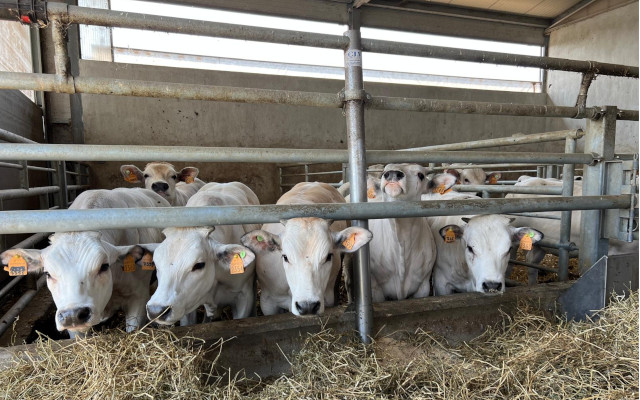
Credit cover Great Italian Food Trade, La Granda farm, Fossano (CN)
References
EU legislation
Council Directive 96/22/EC of 29 April 1996 concerning the prohibition on the use in stockfarming of certain substances having a hormonal or thyrostatic action and of beta-agonists. Consolidated text: 18/12/2008. http://data.europa.eu/eli/dir/1996/22/2008-12-18
Regulation (EU) 2016/429 of the European Parliament and of the Council of 9 March 2016 on transmissible animal diseases and amending and repealing certain acts in the area of animal health (‘Animal Health Law’). Consolidated text: 21/04/2021. http://data.europa.eu/eli/reg/2016/429/2021-04-21
Regulation (EU) 2017/625 of the European Parliament and of the Council of 15 March 2017 on official controls and other official activities. Consolidated text: 05/01/2025. http://data.europa.eu/eli/reg/2017/625/2025-01-05
Regulation (EU) 2019/6 of the European Parliament and of the Council of 11 December 2018 on veterinary medicinal products. Consolidated text: 28/01/2022. http://data.europa.eu/eli/reg/2019/6/2022-01-28
Regulation (EU) 2022/2371 of the European Parliament and of the Council of 23 November 2022 on serious cross-border threats to health and repealing Decision No 1082/2013/EU. OJ L 314, 6.12.2022. http://data.europa.eu/eli/reg/2022/2371/oj
Commission Implementing Regulation (EU) 2018/1882 of 3 December 2018 on the application of certain disease prevention and control rules to categories of listed diseases and establishing a list of species and groups of species posing a considerable risk for the spread of those listed diseases. Consolidated text: 01/02/2024. http://data.europa.eu/eli/reg_impl/2018/1882/2024-02-01
Commission Delegated Regulation (EU) 2019/2035 of 28 June 2019 supplementing Regulation (EU) 2016/429 as regards rules for establishments keeping terrestrial animals and hatcheries, and the traceability of certain kept terrestrial animals and hatching eggs. Consolidated text: 22/04/2026. http://data.europa.eu/eli/reg_del/2019/2035/2026-04-22
Commission Delegated Regulation (EU) 2020/686 of 17 December 2019 supplementing Regulation (EU) 2016/429 as regards the approval of germinal product establishments and the traceability and animal health requirements for movements within the Union of germinal products of certain kept terrestrial animals. Consolidated text: 10/04/2023. http://data.europa.eu/eli/reg_del/2020/686/2023-04-10
Commission Delegated Regulation (EU) 2020/687 of 17 December 2019 supplementing Regulation (EU) 2016/429 as regards rules for the prevention and control of certain listed diseases. Consolidated text: 12/05/2026. http://data.europa.eu/eli/reg_del/2020/687/2026-05-12
Commission Delegated Regulation (EU) 2020/688 of 17 December 2019 supplementing Regulation (EU) 2016/429 as regards animal health requirements for movements within the Union of terrestrial animals and hatching eggs. Consolidated text: 22/04/2026. http://data.europa.eu/eli/reg_del/2020/688/2026-04-22
Commission Delegated Regulation (EU) 2020/689 of 17 December 2019 supplementing Regulation (EU) 2016/429 as regards rules for surveillance, eradication programmes, and disease-free status for certain listed and emerging diseases. Consolidated text: 22/04/2026. http://data.europa.eu/eli/reg_del/2020/689/2026-04-22
Commission Implementing Regulation (EU) 2020/690 of 17 December 2019 laying down rules for the application of Regulation (EU) 2016/429 as regards the listed diseases subject to Union surveillance programmes, the geographical scope of such programmes and the listed diseases for which the disease-free status of compartments may be established. Consolidated text: 19/08/2024. http://data.europa.eu/eli/reg_impl/2020/690/2024-08-19
Commission Delegated Regulation (EU) 2020/691 of 30 January 2020 supplementing Regulation (EU) 2016/429 as regards rules for aquaculture establishments and transporters of aquatic animals. OJ L 174, 3.6.2020. http://data.europa.eu/eli/reg_del/2020/691/oj
Commission Delegated Regulation (EU) 2020/692 of 30 January 2020 supplementing Regulation (EU) 2016/429 as regards rules for entry into the Union, and the movement and handling after entry of consignments of certain animals, germinal products and products of animal origin. Consolidated text: 22/04/2026. http://data.europa.eu/eli/reg_del/2020/692/2026-04-22
Commission Implementing Regulation (EU) 2023/594 of 16 March 2023 laying down special disease control measures for African swine fever. Consolidated text: 28/04/2026. http://data.europa.eu/eli/reg_impl/2023/594/2026-04-28
Commission Delegated Regulation (EU) 2023/905 of 27 February 2023 supplementing Regulation (EU) 2019/6 as regards the application of the prohibition of use of certain antimicrobial medicinal products in animals or products of animal origin exported from third countries into the Union. http://data.europa.eu/eli/reg_del/2023/905/oj
Commission Implementing Regulation (EU) 2024/2598 of 4 October 2024 laying down the list of third countries or regions thereof authorised for the entry into the Union of certain animals and products of animal origin intended for human consumption in accordance with Regulation (EU) 2017/625 as regards the application of the prohibition on the use of certain antimicrobial medicinal products. http://data.europa.eu/eli/reg_impl/2024/2598/oj
Commission Delegated Regulation (EU) 2026/134 of 20 January 2026 amending Delegated Regulation (EU) 2020/689 as regards rules for surveillance and disease-free status from infestation with Echinococcus multilocularis. http://data.europa.eu/eli/reg_del/2026/134/oj
Commission Delegated Regulation (EU) 2026/322 of 12 February 2026 amending and correcting Delegated Regulation (EU) 2020/687 supplementing Regulation (EU) 2016/429 as regards rules for the prevention and control of certain listed diseases. http://data.europa.eu/eli/reg_del/2026/322/oj
Commission Implementing Regulation (EU) 2026/1189 of 4 June 2026 amending Implementing Regulation (EU) 2021/405 as regards the application of the restrictions on the use of certain antimicrobial medicinal products. http://data.europa.eu/eli/reg_impl/2026/1189/oj
EU institutional documents
Council of the European Union. (2026, May 27). Council agrees position to simplify and strengthen food and feed safety requirements [Press release]. https://www.consilium.europa.eu/en/press/press-releases/2026/05/27/council-agrees-position-to-simplify-and-strengthen-food-and-feed-safety-requirements/
European Commission. (2024, June 11). Commission secures access for Member States to 665,000 doses of zoonotic influenza vaccines to prevent avian flu (IP/24/3168) [Press release]. https://ec.europa.eu/commission/presscorner/detail/en/ip_24_3168
European Commission. (2025, December 16). Proposal for a Regulation amending Regulations (EC) No 999/2001, (EC) No 1829/2003, (EC) No 1831/2003, (EC) No 852/2004, (EC) No 853/2004, (EC) No 396/2005, (EC) No 1099/2009, (EC) No 1107/2009, (EU) No 528/2012, (EU) 2017/625 as regards the simplification and strengthening of food and feed safety requirements (COM(2025) 1030 final). https://food.ec.europa.eu/document/download/b0817113-6edc-4219-b638-8060fee037d5_en?filename=horiz_omnibus_reg-com-2025-1030_en.pdf
European Commission. (2026a, July 6). Report from the Commission to the Council and the European Parliament on the evaluation of Regulation (EU) 2016/429 on transmissible animal diseases (COM(2026) 352 final). https://data.consilium.europa.eu/doc/document/ST-11576-2026-INIT/en/pdf
European Commission. (2026b, July 6). Commission Staff Working Document. Evaluation of Regulation (EU) 2016/429 on transmissible animal diseases (SWD(2026) 179 final). https://www.parlament.gv.at/dokument/XXVIII/EU/82326/imfname_11644134.pdf
European Commission. (2026c, July 6). Commission report highlights achievements of EU rules on animal health. https://food.ec.europa.eu/food-safety-news/commission-report-highlights-achievements-eu-rules-animal-health-2026-07-06_en
European Commission. (2026d). EU Livestock Strategy (COM(2026) 576, 7 July 2026). https://agriculture.ec.europa.eu/overview-vision-agriculture-food/eu-livestock-strategy_en
European Commission. (n.d.-a). Animal Health Law. https://food.ec.europa.eu/animals/animal-health/animal-health-law_en
European Commission. (n.d.-b). Foot-and-mouth disease. https://food.ec.europa.eu/animals/animal-diseases/diseases-and-control-measures/foot-and-mouth-disease_en
European Commission. (n.d.-c). Infection with lumpy skin disease virus (LSD). https://food.ec.europa.eu/animals/animal-diseases/diseases-and-control-measures/lsd_en
European Commission. (n.d.-d). Zoonotic threats. https://health.ec.europa.eu/one-health/zoonotic-threats_en
European Commission, DG Trade. (n.d.). WT/DS26 – European Communities – Measures affecting meat and meat products (Hormones). https://policy.trade.ec.europa.eu/enforcement-and-protection/dispute-settlement/wto-dispute-settlement/wto-disputes-cases-involving-eu/wtds26-european-communities-measures-affecting-meat-and-meat-products-hormones_en
European Medicines Agency. (2025, December 9). New data on antimicrobials sales and use in animals in the EU. https://www.ema.europa.eu/en/news/new-data-antimicrobials-sales-use-animals-eu
European Medicines Agency. (2025). European Sales and Use of Antimicrobials for Veterinary Medicine. Annual Surveillance Report for 2024. https://www.ema.europa.eu/en/documents/report/european-sales-use-antimicrobials-veterinary-medicine-annual-surveillance-report-2024_en.pdf
International organisations
World Health Organization. (2025, September 19). Amended International Health Regulations enter into force [News release]. https://www.who.int/news/item/19-09-2025-amended-international-health-regulations-enter-into-force
World Health Organization. (2026a, May 1). WHO Member States agree to extend negotiations on Pathogen Access and Benefit Sharing annex [News release]. https://www.who.int/news/item/01-05-2026-who-member-states-agree-to-extend-negotiations-on-pathogen-access-and-benefit-sharing-annex
World Health Organization. (2026b, July 20). WHO Member States continue negotiations on the Pathogen Access and Benefit Sharing Annex [News release]. https://www.who.int/news/item/20-07-2026-who-member-states-continue-negotiations-on-the-pathogen-access-and-benefit-sharing-annex
World Organisation for Animal Health. (2026, August 14). Quadripartite collaboration extends the One Health Joint Plan of Action to 2029. https://www.woah.org/en/quadripartite-collaboration-extends-the-one-health-joint-plan-of-action-to-2029/
Scientific publications
European Food Safety Authority, & European Centre for Disease Prevention and Control. (2025). The European Union One Health 2024 Zoonoses Report. EFSA Journal, 23(12), e9759. https://doi.org/10.2903/j.efsa.2025.9759
European Food Safety Authority, European Centre for Disease Prevention and Control, European Union Reference Laboratory for Avian Influenza, Buczkowski, H., Ducatez, M., Fusaro, A., Gonzales, J. L., Kuiken, T., Mirinavičiūtė, G., Ståhl, K., Staubach, C., Svartström, O., Terregino, C., Willgert, K., Alarcón, E., & Kohnle, L. (2026). Avian influenza overview March–May 2026. EFSA Journal, 24(7), e10196. https://doi.org/10.2903/j.efsa.2026.10196
European Food Safety Authority, Ståhl, K., Boklund, A., Podgórski, T., Vergne, T., Mur, L., Aminalragia-Giamini, R., Rusinà, A., & Lima, E. (2026). Epidemiological analysis of African swine fever in the European Union during 2025. EFSA Journal, 24(5), e10106. https://doi.org/10.2903/j.efsa.2026.10106
Press and specialised sources
AGRINFO. (2026). List of non-EU countries compliant with new EU antimicrobial requirements. https://agrinfo.eu/book-of-reports/provisional-list-of-non-eu-countries-compliant-with-new-eu-antimicrobial-requirements/
British Agriculture Bureau. (2026). EU bans imports of Brazilian beef and chicken. https://www.britishagriculturebureau.co.uk/updates-and-information/eu-to-ban-imports-of-brazilian-beef-and-chicken-in-september/
Corlin, P. (2026, September 3). EU suspension of Brazilian meat comes into force, despite ongoing talks with Brasília. Euronews. https://www.euronews.com/my-europe/2026/09/03/eu-suspension-of-brazilian-meat-comes-into-force-despite-ongoing-talks-with-brasilia
EU Today. (2026, September 4). Brazil weighs countermeasures as EU animal-product restrictions begin. https://eutoday.net/brazil-countermeasures-eu-animal-products-rules/
The Poultry Site. (2026, September 3). EU to suspend Brazilian meat imports from September 3. https://www.thepoultrysite.com/news/2026/09/eu-to-suspend-brazilian-meat-imports-from-september-3
Previous articles
Dongo, D., & De Nobili, M. (2020, July 1). Animal health, 7 new regulations complete EU reform. FT (Food Times). https://www.foodtimes.eu/food-system/animal-health-7-new-regulations-complete-eu-reform/
Dongo, D. (2022a, 27 December). Importing composite products from Brazil into the EU: what are the rules? FARE (Food and Agriculture Requirements). https://fareagrifood.com/2022/12/27/import-di-prodotti-composti-dal-brasile-in-ue-quali-regole/
Dongo, D. (2022b, 17 January). African swine fever, first export bans for Made in Italy cured meats. FT (Food Times). https://www.foodtimes.eu/food-system/african-swine-fever-first-export-bans-for-made-in-italy-cured-meats/#4_Regionalization_scenario
Dongo, D., Della Penna, A. A. (2024, 15 June). Avian flu, the European Union orders vaccines. FT (Food Times). https://www.foodtimes.eu/food-system/avian-flu-eu-orders-vaccines/
Dongo, D., Della Penna, A. A. (2023, 5 December). Import of products of animal origin and composite products, the new EU rules. FT (Food Times). https://www.foodtimes.eu/food-system/import-of-products-of-animal-origin-and-composite-products-the-new-eu-rules/
Dongo, D. (2026, 9 April). Bresaola della Valtellina PGI: nutrition and market. GIFT (Great Italian Food Trade). https://www.greatitalianfoodtrade.it/en/meats–cured-meats-and-eggs/Bresaola-Valtellina-PGI-nutrition-market/

Dario Dongo, lawyer and journalist, PhD in international food law, founder of WIISE (FARE - GIFT - Food Times) and Égalité.