

Müller is recalling in the UK six dessert references distributed under the Cadbury brand, under license from Mondelez International, in a late alert for Listeria monocytogenes contamination.
The case is emblematic of the serious flaws in the systems and procedures organized to guard food safety by industrial giants. Big Food fails on safety.
It is also useful to look at the risk communication model adopted by the Food Standard Agency in the UK, compared with some ramshackle examples from Italy and Spain.
Listeria monocytogenes, a dangerous pathogen. Foreword
Listeria monocytogenes, as it turns out, is a pathogenic bacterium dangerous to human health. It can manifest as acute febrile gastroenteritis, in healthy individuals, but also cause septicemia, meningitis, and meningoencephalitis in vulnerable population groups (YOPI. Young, Old, Pregnant, Immunosuppressed). With atrocious repercussions on infants as a result of placental transmission. (1)
The pathogen can develop in foods with high water activity i.e., pH close to neutrality – i.e., soft cheeses, processed meats, ready-to-eat foods (2) – that have not been subjected to suitable cooking (>70°C), which is capable of inactivating it. And it is able to multiply at low temperatures, so it becomes more aggressive as days pass in the refrigerator. Even at the routine +4°C.
Müller – Mondelez – Cadbury. The three-card game
‘Müller has taken the precautionary measure of recalling certain lots of various Cadbury brand dessert products due to the possible presence of Listeria monocytogenes,’ it is learned on the Food Standards Agency (FSA) website on May 1, 2023. (3)
The British industry of the Müller Group is thus the sub-supplier of Mondelez International, which – as the owner of the Cadbury trademark – must appear on the label and is also responsible for food safety, according to the Food Information Regulation (EU) No 1169/11. (4) But it does not appear in the releases.
Müller, late alert on listeria and mishandling of food safety
The alert for a serious food safety risk (listeria) was disclosed by Müller on April 29, 2023, almost two weeks behind the expiration dates (April 17, 18, 2023) of the production batches involved. (5) Definitely too late, as listeria infections may have already occurred without consumers being aware of them and avoiding consumption of risky foods.
Food safety has been poorly managed already in self-control and risk prevention, as they show in all evidence:
- the inability of PRPs (Pre-Requisite Programs) and the Hazard Analysis on Critical Control Points (HACCP) system to prevent and control the risk of contamination of food processes and products with a high-risk pathogen,
- the lack of microbiological controls on products leaving the plant, confirming the above,
- the allocation of lots on a daily basis. How many shifts and production lines are there, how many sales units are included in a batch, is there effective coincidence of production conditions and raw materials used?
Listeriosis, incubation period and public health risks.
Invasive or systemic listeriosis – which typically affects children, the elderly, and immunocompromised individuals due to concomitant diseases or immunosuppressive therapies – can lead to septicemia, meningitis, and meningo-encephalitis that occur after long incubation (up to 90 days).
Listeria infection in pregnant women in turn manifests itself in the form of gastroenteritis or flu-like syndrome at an early stage. And early intervention with appropriate antibiotics is crucial to fight the disease and prevent transmission of the disease to the fetus, the effects of which can otherwise be tragic. (7)
Risk communication by the operator – as well as by the health authority, in his or her stead – should therefore include a specific warning to people who may have consumed the risky foods, particularly in vulnerable groups, not to underestimate the symptoms and undergo appropriate diagnosis and treatment if necessary.
Listeria risk communication, UK Spain and Italy compared
Food Standards Agency, beyond what is noted above, maintains a high standard of communication of food safety alerts. In the present case, FSA promptly posted in the News and Alerts area of its website a fact sheet as follows:
- product details. Product names and lot codes (daily),
- risk statement. FSA specifies symptoms of Listeria infection and dangers to vulnerable people (YOPI),
- action taken by the company. Müller recall notice for listeria, with images of the risky packages,
- our advice to consumers. Do not consume the product (expired a dozen days earlier) and return it for a full refund to the store or manufacturer? Better would be a warning about the need to go to the emergency room in case of early symptoms by children, the elderly, pregnant women, and the immunocompromised, reporting the possible Listeria infection.
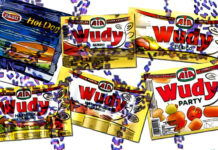
Spain, in the summer of 2019, reported more than a month late a food safety crisis over Lysteria monocytogenes contamination of meats that resulted in two deaths, 150 cases of listeriosis, and more than 500 suspected infections. (8) Instead, Italy hid the brands under which sausages were marketed from the killer Listeria in 2022, after making false accusations about cheeses that were instead safe. (9)
Mondelez, Big Food and food security. Relevant precedents
Mondelez has a prominent precedent to his credit – in food safety mala gestio – revealed on this very site. In fact, the Mondeleaks file reveals the deliberate failure to take the necessary corrective actions (commercial recall, notification of the health authority, consumer warning and public recall of products), in 2021-2022, on risky foods already placed on the European market and contaminated with allergens not declared on the label. With the complicity of at least one executive at the Ministry of Health in Italy, where the affair began. (10)
Nestlé – with Buitoni branded Escherichia Coli pizzas distributed in France in 2021-2022 -killed two children and caused hemolytic uremic syndrome in several dozen other consumers, who were forced into hospitalizations. Ferrero in 2022 introduced ‘Salmonella’ Kinder Suprise, which was distributed and recalled worldwide after causing dozens of salmonellosis with its contaminated ‘eggs’ (11,12). Lactalis had in turn intoxicated infants around the world for a year in 2017-2018 with salmonella powdered milk. (13)
Interim conclusions
‘Precautionary’ recall on a ‘voluntary’ basis, a dozen days after food expired? Enough! with taking the piss out of consumers and downstream operators in the supply chain. The recall is dutiful, not voluntary – under the General Food Law, Regulation (EC) No 178/02, Article 19 – and the precaution ended with the marketing of risky foods.
The Food Integrity preached by Professor Chris Elliot is incumbent, in food safety management as well as in crisis communication. (14) And serious deficiencies in the preparation of PRPs and HACCP should be punished with deterrent penalties, as a percentage share of operators’ turnover. In fact, as stated in the Official Control Regulation (EU). No 2017/625, in Article 139.
Dario Dongo
Notes
(1) Silvia Bonardi, Dario Dongo. Listeria and listeriosis, an in-depth study. FT (Food Times). 3.9.18
(2) Antonia Ricci et al. Listeria monocytogenes contamination of ready-to-eat foods and the risk for human health in the EU. EFSA Journal 2018 Jan; 16(1): e05134. doi: 10.2903/j.efsa.2018.5134
(3) FSA (Food Standards Agency). Müller recalls various Cadbury branded dessert products because of the possible presence of Listeria monocytogenes. https://www.food.gov.uk/news-alerts/alert/fsa-prin-12-2023 1.5.23
(4) Responsible operator address, lawyer Dario Dongo replies. FARE (Food and Agriculture Requirements). 15.5.20
(5) Cadbury Chocolate Desserts. Food Recall Alert. https://s3-eu-west-1.amazonaws.com/fsa-alerts-files/production/FSA-PRIN-12-2023/Muller-Cadbury-branded-dessert.pdf 30.4.23
(6) Dario Dongo, Giulia Pietrollini. Food safety management systems, EC guidelines 2022. FT (Food Times). 23.12.22
(7) EFSA. The European Union summary report on antimicrobial resistance in zoonotic and indicator bacteria from humans, animals and food in 2015. EFSA Journal 2017a;15(2):4694 212pp. doi: 10.2903/j.efsa.2017.4694
(8) Dario Dongo, Marta Strinati. Listeria, the Spanish outbreak and the faults of Brussels. FT (Food Times). 24.8.19
(9) Dario Dongo. Listeria in AIA sausages, false allegations against Asiago cheese. FT (Food Times). 30.9.22
(10) Dario Dongo. Mondeleaks, here’s how industry and institutions handled the mustard allergen in wheat. FT (Food Times). 29.9.22
(11) Marta Strinati. Kinder Ferrero, Buitoni-Nestlé, food security in crisis. FT (Food Times). 6.4.22
(12) Marta Strinati. Food safety crisis, Foodwatch denounces Ferrero and Buitoni-Nestlé. FT (Food Times). 23.5.22
(13) Dario Dongo. Lactalis, salmonella to infants. FT (Food Times). 16.1.18
(14) Dario Dongo. Supply chain integrity, a necessary revolution. FT (Food Times). 22.1.18

Dario Dongo, lawyer and journalist, PhD in international food law, founder of WIISE (FARE - GIFT - Food Times) and Égalité.