
Hemp network for mussel farming is born in Taranto. The solution solves the microplastic pollution caused by the nylon nets currently in use on farms, and produces additional economic benefits as well. (1)
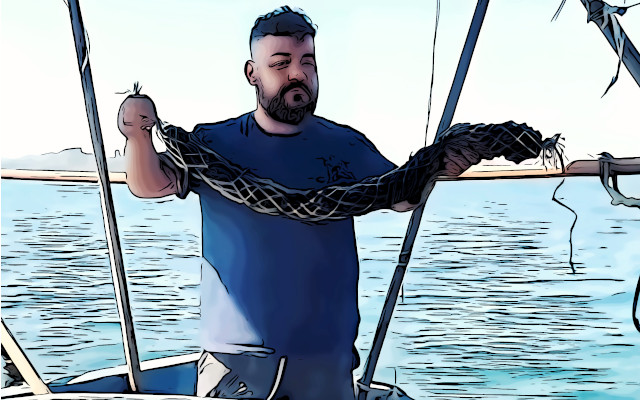
The hemp net for mussel farming
The new tool is being tested in the Taranto mussel farm, a Slow Food Presidium, in Taranto’s Mar Piccolo.
The location deserves a closer look, for those unfamiliar with it. Italy’s smallest sea, attacked by various forms of industrial, agricultural and anthropogenic pollution, is an example of resilience.
It boasts a rich and varied marine fauna, enriched by the specimens that come to Taranto from seas around the world attached to the bottom of ships.
For the past several years, Taranto’s Mar Piccolo has been transformed into a regional park of more than 6 thousand hectares. But the start-up of activities is still entangled in bureaucracy. (2)
Hemp, harmless indeed useful
Now halfway through, the experimental use of hemp for mussel netting has already yielded excellent results
- the material dissolves in water, turning into additional food for marine life,
- it excludes a source of plastic pollution that still plagues the seas and the Mediterranean in particular, (3,4)
- mussels grow much more, up to 6 times more than when raised in nylon nets.
The project will soon take the form of a startup. And this will be followed by corollary activities in the area, such as the cultivation of industrial hemp and a factory for the assembly of nets, now woven using the macramé technique, by artisan Simona Tempesta, who works on the project together with Fabrizio Manzulli and Rachele Invernizzi, vice president of Federcanapa.

A ring for sustainable aquaculture
By itself, mussel and mussel aquaculture is already a highly environmentally sustainable activity, as highlighted by the CREA Animal Husbandry and Aquaculture study.
Excellence may be achieved with the further operations of:
- Replace heat-powered boats with electric or hybrid-powered boats,
- Use solar energy (with photovoltaic panels or certified supplies) or other renewable energy sources to purify shellfish. (5)
Notes
(1) Mario Catania.
Hemp nets for mussels instead of nylon: ‘No waste and 6-fold increased growth’
. Industrial hemp, 2.8.22
(2) On the faunal richness and history of the Mar Piccolo, see. Scarlett Baldacconi.
Taranto’s Mar Piccolo, the Sea of Paradox.
, accompanied by beautiful photographs
On the fate of the park, see. Alessandro Greco. Mar Piccolo Park, where do we stand?, 20.7.22
(3) Dario Dongo, Sabrina Bergamini. Mediterranean, a sea of plastic. The ISPRA report. GIFT(Great Italian Food Trade), 10/16/19
(4) Dario Dongo, Giulia Torre. Fishing gear, marine litter and protection of aquatic ecosystems. The EU debate. FT (Food Times). 7.1.22
(5) Marta Strinati.
Mussels and other mussels, aquaculture sequestering carbon.
. GIFT(Great Italian Food Trade), 11.7.22.

Professional journalist since January 1995, he has worked for newspapers (Il Messaggero, Paese Sera, La Stampa) and periodicals (NumeroUno, Il Salvagente). She is the author of journalistic surveys on food, she has published the book "Reading labels to know what we eat".