


Political understanding on the free trade agreement between the EU and Mercosur(Mercado Común del Sur America) was reached on 6/28/19. Yet another toxic treaty netted by Jean-Claude Juncker-after CETA, JEFTA and TTIP (in the pipeline)-with a giant in agribusiness commodity exports. Details to follow.
Mercosur – EU, introduction
Mercosur-the Common Market of South America-was established in 1991 to create a free trade area and customs union. Its members are Argentina, Brazil, Paraguay and Uruguay. Venezuela was suspended on 5.8.17 under the pretext that it was supposedly ‘anti-democratic’ (in spite of international observers’ confirmation of the regularity of the elections). The European Union, the leading area of trade in agricultural and food commodities, is the first major trading partner to conclude a trade agreement with this bloc of countries.
780 million people will be affected, for better or worse, by this agreement. In view of the consolidation of political, as well as economic, relations among the 32 countries involved (the number of which may increase, with the extension to other South American countries that now have the role of observers). Free trade is just one piece of the broader political and economic association agreement, on the basis of which negotiators have already reached a n stage of negotiations between the EU and Mercosur countries, consisting of a political and cooperation pillar, on which negotiators already reached a general agreement in June 2018 in Montevideo, and a trade pillar.
‘With this trade pact, which will save more than 4 billion euros in duties per year, the Mercosur countries have decided to open up to trade with the EU, and this is obviously great news for businesses, workers and the economy on both sides of the Atlantic. For this is the largest trade agreement ever concluded by the EU. Thanks to the intense and patient work of our negotiators, this agreement will also bring positive results for the environment and consumers, so it will be beneficial to all.’ (Jean-Claude Juncker, outgoing president of the European Commission)
EU – Mercosur, the free trade agreement
The full content of the agreement, of which only a summary has been disclosed, in a 17-page document, is still unknown . (1) The only certain news concerns the abolition of most customs duties, which should save European industries an estimated 4 billion euros a year. The total value of trade is expected to reach four times the estimated value with Japan as a result of the JEFTA agreement.
The industrial sector most affected in Europe is the automotive sector, which until now has been subject to prohibitive duties (35 percent on cars, 14-18 percent on parts and spare parts). In addition to machinery (now subject to taxes ranging from 14 to 20 percent), chemicals (<18 percent) and pharmaceuticals (<14 percent), clothing and footwear (35 percent), and textiles (26 percent).
The European food industry will benefit from a drastic reduction in the still high duties on chocolate and confectionery (20 percent), wines (27 percent), and alcoholic and soft drinks (20-35 percent). Dairy products will be exempted from heavy taxes (28 percent) until quota quotas are reached. Mercosur countries will grant protection-in unknown ways-to 357 Geographical Indications (GIs) protected in Europe. These include Prosciutto di Parma and Tiroler Speck (Austria), Fromage de Herve (Belgium) and Queijo S. Jorge (Portugal), Comté (France), Polska Wódka(Poland), Tokaji (Hungary) and Jabugo (Spain), and Münchener Bier (Germany).
The agreement also covers procurement and services, including public. In various sectors, including Information Technology, telecommunications, and transportation. Finally, bureaucratic and border control simplifications are planned. Last but not least, in Brussels’ omertous narrative, the lowering of export taxes on products from Mercosur countries.
The understanding reached on 6/28/19 will soon undergo a ‘legal review’ and finalized into a first free trade agreement. To be submitted for ratification by the European Parliament and member states. Ratification could take a couple of years, obstacles permitting.
The shortcomings of Brussels
The European Commission is careful to temper criticism of the most important economic treaty to date. With apodictic evocation of the issues of greatest concern. ‘L‘agreement complies with the highest standards of food safety and consumer protection, respects the precautionary principle for food safety and environmental standards, and contains specific commitments to labor rights and environmental protection, including the implementation of the Paris Agreement on Climate Change and its implementing regulations.’ (2)
From words to deeds, there is a lack of concrete commitments and binding standards on crucial issues such as ecosystem protection, basic human and labor rights, and food safety. Outgoing Trade Commissioner Cecilia Malmström hints at ‘high standards (…) a solid framework for jointly addressing issues such as the environment and labor rights (…) commitments already made on sustainable development, such as those in the Paris Agreement on climate change.‘ The Commissioner asserts that ‘over the past few years, the EU has consolidated its role as a world leader in open and sustainable trade.’
However, the previous treaties with Canada and Japan lack specific references to environment, biodiversity and food security. Indeed, the treaty with Canada presents a real risk of demolishing European regulations on GMOs with the ICS (‘Investment Court System’) clause-gripper approved by the EU Court of Justice. Commissioner Malmström’s words are therefore belied by the evidence of the facts.
The Commissioner for Agriculture and Rural Development, Phil Hogan, in turn, states. ‘the EU-Mercosur agreement is a fair and balanced solution that offers opportunities and benefits to both sides, including European farmers.’ He acknowledges that the agreement ‘also presents some challenges for European farmers’ and states that ‘thehe European Commission will be there to help them deal with them. To make this a win-win deal, we will open ourselves up to agricultural products from Mercosur with careful management of quotas so that products do not flood the EU market and end up threatening the livelihoods of European farmers.’
Opposing voices and reason
Just from Ireland – Commissioner Hogan’s motherland – the first official protest vibrated. Within days of the news of the agreement, the Dublin Parliament immediately voted against it, with a motion voted by 84 members against 46. ‘‘A bad deal for Ireland and the planet’, denounces the independence party Sinn Féin. And the Irish vote, although symbolic since it predates the ratification stage, portends lively debates. (3)
Concerns relate to the ongoing devastation of the Amazon rainforest, tragically accelerated under the presidency of Jair Bolsonaro. Satellite data provided by INPE, the Brazilian Space Research Agency, record 739 square kilometers of rainforest destroyed in May 2019 alone, 920 in June (up 88 percent from June 2018). Also to the detriment of indigenous communities, violently deported from their lands. But pushing Ireland’s farmers to the streets is the real risk of South American competition, which could bring goods to market at rock-bottom prices.
99,000 tons of beef and 160,000 tons of poultry each year will enter Europe without paying duty, inevitably destabilizing the local market. All the more so as European animal husbandry faces the increased costs of complying with strict rules to guard sustainability and food safety. Rules that either do not exist in Brazil-regarding the environment and biodiversity-or are systematically violated. As the frac meat scandal has recently shown, implicating global beef and poultry leaders , as well as central and local government and the system of public veterinary controls.
‘An agreement closed by an outgoing commission brings to a close a 20-year discussion with a ‘summer’ decision that legitimizes a double standard: accepting large quantities of foreign products that, among other things, do not meet safety requirements, nor the increasingly stringent (and expensive) sustainability standards imposed on EU producers (…). Junker and Malmström’s hypocrisy reaches its zenith when they hype pro-climate agreement. On beef alone, Brazil is the champion of deforestation and lack of technology to minimize greenhouse gas emissions, a segment in which Italy is the leader’. (Luigi Scordamaglia, president of Filiera Italia. See footnote 4)
Assocarni in Italy and its sister associations representing beef animal husbandry in Europe – Interbev (France), Assoprovac (Spain), Ifa (Ireland) and PZPBM (Poland) at the forefront – express recondite opposition to the free trade agreement. Urging its rejection by the member states and all members of the European Parliament.
Only Emmanuel Macron-alongside the Brussels globalists-had the effrontery to report to a ‘good deal.’ Good for the financial oligarchy for sure, not so good for the rest of the world. Nor for French farmers whose first acronym, FNSEA, is already on the warpath. French Agriculture Minister Didier Guillaume puts his hands out, ‘We will not have an agreement at any cost. The story is not over‘. But the tractors will return to the Elysee Palace, as they did to Montecitorio and Place Luxembourg. And they will have citizens, voters, consumAtors on their side.
#Égalité!
Dario Dongo and Giulia Torre
Notes
(1) http://trade.ec.europa.eu/doclib/docs/2019/june/tradoc_157964.pdf
(2) https://ec.europa.eu/italy/news/20190701_UE_Mercosur_raggiungono_accordo_commercio_it
(3) https://www.politico.eu/article/irish-parliament-rejects-eu-mercosur-deal-in-symbolic-vote/
(4) https://www.efanews.eu/item/8198

Dario Dongo, lawyer and journalist, PhD in international food law, founder of WIISE (FARE - GIFT - Food Times) and Égalité.

Graduated in law, master in European Food Law, she deals with agro-food, veterinary and agricultural legislation. She is a PhD in agrisystem.
Related post
 Brazil, deforestation is compounded by pesticide carnage. Unsustainable EU-Mercosur Agreement
 Bisphenol A toxicity, EFSA declares a public health alert
 Listeria alert on desserts, Müller recalls them 12 days after expiration date
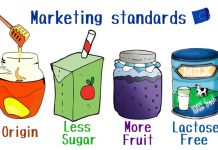 Honey, fruit juices, jams and marmalades, dehydrated milk. Proposals for reform of marketing standards in EU

