

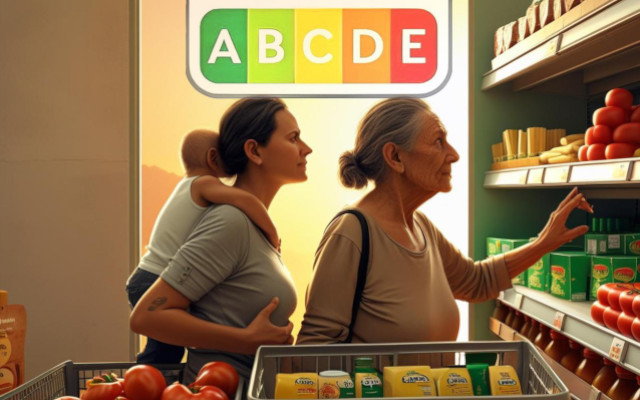
A recent study conducted in Italy with 810 low-income citizens (Caso et al., 2025) highlights significant support among vulnerable population groups for Nutri-Score, the only front-of-pack nutrition labelling system validated by international scientific research, endorsed by the governments of eight European countries, and widely used by consumers through popular apps such as Yuka and OpenFoodFacts.
This study is particularly noteworthy because social acceptance is a critical factor in the effectiveness of public health policies, yet research on the perceptions of vulnerable groups regarding behavioural nudges remains limited.
In a context marked by rising food insecurity (Eurostat, 2025), escalating adult obesity rates (38% in the EU; World Obesity Federation, 2023), and the significant economic burden of non-communicable diseases (NCDs) on healthcare budgets (8.4% of public expenditure; OECD, 2019), the European Commission and Member States can no longer delay mandatory adoption of Nutri-Score.
Introduction
The global shift towards prevention-oriented food policies has intensified as governments grapple with rising obesity rates and diet-related diseases. In 2022, one in eight people worldwide were obese, with 2.5 billion adults aged 18 and older classified as overweight (World Health Organization, 2024). This public health crisis extends beyond individual health risks to encompass broader societal impacts, including rising healthcare costs and reduced economic productivity (Swinburn et al., 2019).
Contemporary food policy approaches range from informational strategies – often limited in scope and effectiveness, such as educational campaigns – educational campaigns, to more restrictive measures like taxation (Rogers et al., 2024). Among these, behavioural interventions such as nudging have gained considerable attention as complementary tools (Benartzi et al., 2017). Unlike traditional economic frameworks assuming stable and rational preferences, behavioural economics research demonstrates that preferences are dynamically constructed during decision-making processes and influenced by available information (Kahneman, 2011).
Nudge theory posits that altering how information is presented, making it more salient and accessible, can systematically influence individual decisions without restricting choice (Thaler & Sunstein, 2008). Compared to taxation, which disproportionately burdens low-income groups (Allcott et al., 2019), nudging strategies may be particularly effective for economically vulnerable populations as they ‘alter the architecture of choice without restricting options or significantly altering economic incentives’ (Caso et al., 2025).
Front-of-package labelling systems, particularly Nutri-Score, represent a critical intersection between traditional regulatory approaches and modern nudging strategies. Unlike nutrition labels based on detailed information, Nutri-Score summarises the overall nutritional value of food through an easily interpretable colour-coded system, simplifying decision-making processes whilst influencing purchasing behaviour without imposing direct restrictions (Egnell et al., 2019). The widespread adoption of Nutri-Score across multiple European Union Member States, including France, Belgium, Germany, Spain, Luxembourg, the Netherlands, and most recently Romania, demonstrates its established legitimacy as a policy tool. This institutional endorsement, also by OECD (2024), combined with strong support from health professionals, researchers, and widespread public adoption through applications such as Yuka and OpenFoodFacts, has transformed Nutri-Score from an experimental nudging approach into a recognised standard for nutritional information provision (Dubois et al., 2021).
Despite extensive research on general population attitudes towards health promotion interventions (Diepeveen et al., 2013), limited attention has focused on groups that would benefit most from such strategies. Low-income citizens often face dietary compromises due to financial constraints, making them a critical yet understudied demographic (Darmon & Drewnowski, 2015). This research gap represents a significant limitation in current policy design, as interventions targeting this vulnerable population require tailored approaches that consider their unique circumstances and preferences.
Methodology
Study design and participants
This research employed an experimental online survey conducted in July 2024 by a professional market research agency. The study targeted a nationally representative sample of low-income Italian citizens earning below the national median, stratified by age, sex at birth, and geographical region of residence (Caso et al., 2025).
Of the original 906 respondents, 810 met the quality criteria and were included in the final analysis. Participants were required to be over 18 years old, have at least partial responsibility for household grocery shopping, and maintain a low monthly household income below €2,200.
The study was granted formal ethical approval and preregistered on the Open Science Framework (OSF), in accordance with the principles of the Declaration of Helsinki.
Sample characteristics
The final sample comprised 408 females (50.4%) and 402 males (49.6%) with a mean age of 47 years. The most represented age groups were 55-64 years (28%) and 30-44 years (25%). More than half of respondents (56%) held a high school diploma, and just over one-third were single (35.7%). Body mass index calculations revealed approximately 50% of respondents had normal weight, 32% were overweight, and 15% were obese.
Intervention assessment
Participants evaluated seven policy interventions designed to promote healthy food choices: five nudging strategies (Nutri-Score labelling, salience, checkouts, prompts, and placements) and two traditional approaches (taxation and educational campaigns). The selection of nudging strategies was based on Cadario and Chandon’s (2020) classification, incorporating cognitively oriented, behaviourally oriented, and affectively oriented interventions.
Each intervention was briefly described with visual illustrations and practical examples. Respondents rated all strategies on three key dimensions using 7-point Likert scales:
- policy support (1 = not at all favourable, 7 = strongly favourable);
- perceived effectiveness for self and others (1 = not at all effective, 7 = strongly effective);
- perceived intrusiveness (1 = not at all intrusive, 7 = strongly intrusive).
Statistical analysis
Statistical analyses were carried out using Stata v15. To evaluate the impact of the interventions, a multivariate analysis of variance (MANOVA) was conducted, followed by detailed group comparisons using the Bonferroni method to identify significant differences.
To explore the key factors driving support for each of the seven nutritional policy interventions, a Seemingly Unrelated Regression (SUR) model was applied, accounting for potential interdependencies between repeated measures.
The SUR model comprised seven linear equations, one per intervention, with standardized explanatory variables to enable clear comparison of effect sizes across predictors and policy options. To reduce the risk of multicollinearity, highly correlated measures of perceived policy effectiveness were combined into a single composite variable.
Results
Public support for interventions
All interventions received mean support scores of 4.5 or higher, indicating moderate to strong acceptance amongst the low-income demographic:
- Nutri-Score labelling achieved the highest support level among nudging strategies, with a mean score of 5.41, representing strong approval from over 70% of participants. This finding positions Nutri-Score as a flagship intervention for health promotion amongst economically vulnerable populations;
- educational campaigns achieved comparable support levels (5.46), whilst taxation emerged as the most intrusive strategy (M = 4.49) but was not the least supported overall;
- nudging interventions, such as rearranging food products at supermarket checkouts and using targeted informational cues or alerts, have shown levels of support comparable to taxation. Public support remains moderate, above the midpoint of the scale, reflecting a growing awareness of the negative health impacts of unbalanced diets (Reisch & Sunstein, 2016; Crosetto et al., 2025);
- salience (M = 5.01) and placement strategies (M = 4.97) received significantly higher support scores than other nudging approaches but remained below Nutri-Score levels.
The distinctive performance of Nutri-Score labelling
Nutri-Score labelling demonstrated exceptional performance across multiple evaluation dimensions, establishing itself as the most promising single intervention for low-income populations. In terms of perceived effectiveness, Nutri-Score emerged as the most effective intervention across both personal and social perspectives (self: M = 4.92; others: M = 5.10), significantly outperforming other nudging strategies and matching educational campaigns.
The unique positioning of Nutri-Score becomes particularly evident when examining its effectiveness-intrusiveness profile. Whilst maintaining relatively low intrusiveness ratings (M = 3.29), significantly lower than taxation (M = 4.49), Nutri-Score achieved the highest effectiveness ratings among nudging interventions. This optimal balance suggests that Nutri-Score represents an ideal compromise between intervention impact and public acceptability, consistent with research demonstrating the effectiveness of simplified nutritional information systems (Crosetto et al., 2016).
Notably, Nutri-Score support patterns revealed interesting demographic and behavioural correlations. Older respondents demonstrated significantly higher support for Nutri-Score labelling, similar to patterns observed for taxation, suggesting that mature consumers may particularly value transparent nutritional information (Reynolds et al., 2019). Additionally, consumers reporting family members with health-related conditions showed increased support for Nutri-Score, indicating that personal health relevance amplifies appreciation for clear nutritional guidance.
Perceived effectiveness and intrusiveness
All interventions were considered moderately effective, with average ratings never falling below 4 on the 7-point scale. However, Nutri-Score’s superior effectiveness ratings distinguished it from other nudging approaches, particularly in personal effectiveness assessments where it achieved the highest scores among all evaluated interventions.
Perceived effectiveness was consistently higher when respondents assessed impacts on others rather than themselves across most interventions, suggesting a third-person effect whereby individuals believe behavioural policies impact others more significantly than themselves (Perloff, 1999). Interestingly, Nutri-Score showed the smallest gap between self and other effectiveness ratings, suggesting that participants recognised its personal relevance more readily than other nudging strategies.
Regarding perceived intrusiveness, Nutri-Score maintained moderate ratings that positioned it favourably between highly intrusive fiscal measures and minimally intrusive educational approaches. This balanced profile contributes to its high overall support levels and practical implementation potential, aligning with findings from European studies on front-of-pack labelling acceptance (Hagmann et al., 2018).
Drivers of policy support
The SUR model showed that perceived effectiveness was the strongest and most consistent positive predictor of policy support (β between 0.42 and 0.60, p < 0.01). For Nutri-Score specifically, perceived effectiveness showed one of the strongest coefficients (β = 0.60), explaining its high support levels among low-income consumers.
Perceived intrusiveness showed stable and significant negative associations across all interventions (β between -0.22 and -0.34, p < 0.01). Nutri-Score demonstrated moderate sensitivity to intrusiveness concerns (β = -0.29), suggesting that whilst intrusiveness affects support, the intervention’s high perceived effectiveness compensates for these concerns.
Uniquely among nudging strategies, Nutri-Score support showed significant sensitivity to psychological reactance, with individuals scoring high on reactance scales expressing lower support. This pattern, typically observed only for more overtly persuasive interventions like taxation and educational campaigns, suggests that Nutri-Score may be perceived as a more explicit attempt to influence food choices compared to other nudging approaches. However, this sensitivity should be interpreted within the context of Nutri-Score’s established institutional legitimacy and widespread professional endorsement, which may mitigate reactance concerns in real-world implementation.
Trust in nudging consistently and positively predicted support across interventions, though this variable was excluded from Nutri-Score analysis due to correlation issues with labelling effectiveness measures. This exclusion itself indicates the strong association between Nutri-Score and nudging trust, suggesting that the intervention embodies positive nudging principles in consumers’ minds (Sunstein et al., 2019).
Behavioural and demographic factors
Several psychographic factors influenced intervention support patterns. For Nutri-Score specifically, individuals with higher self-efficacy in making healthy food choices demonstrated stronger support, potentially reflecting alignment between perceived autonomy and willingness to accept informational aids that enhance decision-making capability.
External aid perception emerged as a significant predictor of Nutri-Score support, with individuals valuing external assistance for healthier food choices showing greater acceptance. This finding reinforces Nutri-Score’s positioning as a supportive tool rather than a restrictive measure, aligning with libertarian paternalistic principles (Thaler & Sunstein, 2008).
Sociodemographic characteristics revealed that having family members with diet-related diseases significantly increased Nutri-Score support, indicating that personal relevance of health risks amplifies appreciation for clear nutritional information. The age-related support pattern for Nutri-Score suggests that mature consumers particularly value transparent nutritional guidance systems, consistent with research on health information seeking behaviours across age groups (Nguyen & De Steur, 2021).
Discussion
Nutri-Score as a mature policy intervention
The exceptional performance of Nutri-Score labelling across multiple evaluation dimensions reflects its evolution from experimental nudging approach to established policy standard. The widespread institutional adoption across European Union Member States, combined with strong endorsement from health professionals and researchers, has created a legitimacy foundation that enhances public acceptance and implementation feasibility (Julia & Hercberg, 2017).
The widespread public interest in Nutri-Score is corroborated by the success of applications such as Yuka and OpenFoodFacts, indicating genuine consumer demand for simplified nutritional information and supporting the validity of Nutri-Score’s design and practical applicability. This bottom-up acceptance complements top-down policy endorsement, creating a robust foundation for continued expansion and implementation.
Nutri-Score’s established credibility contributes to both its appeal and its distinctive characteristics compared to other nudging interventions. Unlike experimental behavioural approaches that may face scepticism, Nutri-Score benefits from proven track record and scientific validation that enhances consumer confidence and policy maker commitment.
The finding that Nutri-Score effectiveness ratings showed minimal self-other gaps suggests that low-income consumers recognise its personal relevance more readily than other nudging strategies. This personal relevance recognition represents a crucial advantage for policy implementation, as interventions perceived as personally beneficial are more likely to achieve behavioural impact (Bos et al., 2015).
Implications for vulnerable populations
This study by Caso and colleagues (2025) addresses a critical gap in food policy research by focusing exclusively on low-income populations who face unique dietary challenges due to financial constraints. The findings reveal that this vulnerable group demonstrates considerable openness to health promotion interventions, particularly established informational strategies like Nutri-Score that enhance decision-making without imposing financial burdens.
The high support for Nutri-Score labelling among low-income citizens is particularly significant given this population’s tendency to prioritise food quantity and palatability over nutritional value due to financial constraints (Drewnowski & Specter, 2004). The intervention’s ability to simplify nutritional information into an easily interpretable format may be especially valuable for consumers navigating complex trade-offs between cost, taste, and health.
The institutional endorsement and widespread adoption of Nutri-Score provides additional confidence for low-income consumers who may be sceptical of novel policy interventions. The system’s established legitimacy reduces implementation barriers and enhances credibility amongst economically vulnerable populations who may distrust experimental approaches (Mazzocchi et al., 2015).
The effectiveness-intrusiveness trade-off
The study confirms the existence of an acceptability-effectiveness trade-off in public health policy, with perceived effectiveness consistently outweighing intrusiveness concerns across interventions (Diepeveen et al., 2013). Nutri-Score exemplifies an optimal balance in this trade-off, achieving high effectiveness ratings whilst maintaining acceptable intrusiveness levels.
This balanced profile distinguishes Nutri-Score from other interventions that show more extreme trade-off patterns. Taxation exhibited the smallest effectiveness-intrusiveness gap due to high intrusiveness ratings, whilst some nudging strategies showed larger gaps due to lower effectiveness perceptions (Petrescu et al., 2016). Nutri-Score’s moderate position on both dimensions creates sustainable support levels that can withstand implementation challenges.
The maturity of Nutri-Score as a policy tool may contribute to its favourable trade-off profile, as established interventions with proven effectiveness records face fewer acceptability challenges than experimental approaches requiring public trust in untested mechanisms (Evers et al., 2018).
Trust and transparency
Trust in nudging strategies emerged as a significant positive predictor of intervention support across most policies. The correlation between Nutri-Score effectiveness and nudging trust suggests that Nutri-Score embodies positive nudging principles in consumers’ perceptions, reinforcing its potential as a flagship intervention for behaviourally informed policy frameworks.
The established credibility of Nutri-Score through institutional endorsement and professional support creates inherent trust advantages over experimental nudging approaches. This trust foundation facilitates implementation and reduces resistance that might emerge with novel interventions requiring public confidence in untested mechanisms (Lemken et al., 2023).
The importance of transparent communication about intervention purposes becomes particularly relevant for Nutri-Score implementation. Given its sensitivity to psychological reactance, policymakers should emphasise its evidence-based foundation and widespread professional endorsement, positioning it as a scientifically validated tool rather than experimental behavioural manipulation.
Policy implications
Nutri-Score as a foundational strategy
Nutri-Score labelling should serve as the primary foundational measure in comprehensive food policy frameworks targeting also low-income populations. Its exceptional support levels (above 70%), strong perceived effectiveness, and optimal balance between impact and acceptability make it the most politically viable and practically effective entry point for broader policy initiatives.
Implementation strategies should leverage Nutri-Score’s established legitimacy and widespread institutional endorsement. Communication campaigns should highlight the system’s scientific validation, professional support, and successful implementation across multiple European contexts to reinforce credibility and reduce implementation resistance (Caputo & Lusk, 2020).
The proven track record of Nutri-Score implementation provides valuable evidence for scaling and adaptation across different contexts. Policy makers can reference successful deployment examples and measurable outcomes to support implementation proposals and address potential opposition.
Sequential policy implementation
Nutri-Score implementation can create a foundation for introducing additional nudging strategies and traditional policy measures. Its high support levels, effectiveness recognition, and established legitimacy can build public confidence in behaviourally informed approaches, facilitating acceptance of complementary interventions such as placement modifications and salience enhancements.
The strategic sequencing of interventions should leverage Nutri-Score’s proven credibility to support more controversial measures. Educational campaigns can accompany Nutri-Score rollout to reinforce its evidence-based foundation and demonstrate government commitment to scientifically validated health promotion (Cadario & Chandon, 2019).
Cross-national learning from successful Nutri-Score implementations can inform optimal sequencing and complementary intervention selection. The growing network of adopting Member States provides valuable experience and best practice examples for new implementers.
Addressing implementation challenges
Nutri-Score implementation strategies should emphasise its unique scientific foundation and widespread professional endorsement to reinforce its credibility and legitimacy. Clear communication about evidence-based development, rigorous testing, and institutional validation can strengthen public confidence whilst highlighting the intervention’s choice-preserving benefits and supportive nature.
Demonstration of effectiveness through reference to successful implementations and measurable outcomes can reinforce public support and address any potential concerns. Given Nutri-Score’s high effectiveness ratings among low-income consumers and established track record across multiple European contexts, targeted evaluation studies and case study presentations can provide compelling evidence for broader implementation.
The institutional legitimacy provided by widespread Member State adoption and professional endorsement creates significant implementation advantages that address traditional barriers to novel policy interventions. This established foundation reduces political risks, enhances stakeholder confidence, and provides ready-made frameworks for successful deployment.
Communication strategies should build on Nutri-Score’s demonstrated user acceptance and its organic adoption via popular applications, which reflect genuine consumer demand. Highlighting the bottom-up consumer enthusiasm alongside top-down institutional support creates a compelling narrative for policy implementation that emphasises both scientific validity and practical utility.
Limitations and future directions
Several limitations warrant acknowledgement. The study focused on a restricted set of policy designs and investigated specific dimensions of support, potentially overlooking other influential factors such as political orientation and personal values. The exclusive focus on Italian low-income citizens limits generalisability across different cultural and economic contexts.
Nutri-Score research would benefit from comparative studies examining its acceptance across different income levels and cultural contexts. The intervention’s established implementation record suggests that future research should explore how different institutional frameworks and communication strategies affect public acceptance and effectiveness outcomes.
The measurement of perceived efficacy and intrusiveness immediately after support assessment may have inflated correlations among these variables. Future studies could benefit from temporal separation of measurements or alternative research designs that minimise such effects (Vugts et al., 2024).
Conclusions
This research provides crucial insights into how low-income citizens evaluate policy interventions designed to promote healthy food choices, with Nutri-Score labelling emerging as the most promising single intervention for this vulnerable population. The findings demonstrate that economically disadvantaged consumers show considerable openness to health promotion measures, particularly established informational strategies that enhance decision-making without imposing additional costs.
Nutri-Score’s exceptional performance across support, effectiveness, and intrusiveness dimensions positions it as an ideal foundation for comprehensive food policy frameworks. Its ability to achieve high effectiveness ratings whilst maintaining moderate intrusiveness levels creates sustainable support that can withstand implementation challenges, enhanced by its established institutional legitimacy and widespread professional endorsement.
The distinctive characteristics of Nutri-Score support patterns – including age-related preferences, sensitivity to family health concerns, and association with self-efficacy – provide clear guidance for targeted implementation strategies. These findings suggest that Nutri-Score can serve as both a standalone intervention and a gateway for broader policy initiatives, leveraging its proven credibility to facilitate acceptance of complementary measures.
For policymakers, these findings strongly support prioritising Nutri-Score implementation as a foundational measure in healthy eating promotion strategies targeting low-income populations. Strategic communication emphasising its scientific validation, institutional endorsement, and proven effectiveness record, combined with evidence from successful implementations, can maximise public acceptance and policy impact.
The study contributes to the growing body of evidence supporting behaviourally informed policy design whilst highlighting the critical importance of intervention selection and sequencing in ensuring public acceptability. By leveraging Nutri-Score’s optimal balance between effectiveness and acceptability, enhanced by its established legitimacy and widespread adoption, policymakers can create sustainable foundations for comprehensive dietary behaviour change initiatives amongst economically vulnerable populations.
Nutri-Score: a call to action
The compelling evidence presented, particularly from vulnerable populations like Italy’s low-income citizens demonstrating strong support (M = 5.41) and high perceived effectiveness for Nutri-Score (Caso et al., 2025), underscores the urgent necessity for decisive EU-wide public intervention. Mandating Nutri-Score as the harmonized FOPNL across all food products and fast-food menus is a critical, evidence-based step to combat the escalating obesity crisis – now affecting 38% of EU adults (World Obesity Federation, 2023) – and diet-related NCDs.
This intervention is grounded in robust scientific literature confirming its efficacy (Egnell et al., 2019; Dubois et al., 2021) and validated by positive outcomes in voluntarily adopting Member States (Julia & Hercberg, 2017). Furthermore, against rising poverty (95 million EU citizens at risk; Eurostat, 2024) and unsustainable NCD costs (8.4% of health budgets; OECD, 2019), Nutri-Score offers a cost-effective, equitable tool to empower vulnerable consumers. The EU cannot afford further delays. Implementing mandatory Nutri-Score is an urgent public health imperative to curb preventable suffering and economic strain.
Dario Dongo
Cover art copyright © 2025 Dario Dongo (AI-assisted creation)
References
- Allcott, H., Lockwood, B. B., & Taubinsky, D. (2019). Regressive sin taxes, with an application to the optimal soda tax. The Quarterly Journal of Economics, 134(3), 1557-1626. https://doi.org/10.1093/qje/qjz017
- Benartzi, S., Beshears, J., Milkman, K. L., Sunstein, C. R., Thaler, R. H., Shankar, M., & Galing, S. (2017). Should governments invest more in nudging? Psychological Science, 28(8), 1041-1055. https://doi.org/10.1177/0956797617702501
- Bos, C., van der Lans, I., van Rijnsoever, F., & van Trijp, H. (2015). Consumer acceptance of population-level intervention strategies for healthy food choices: The role of perceived effectiveness and perceived fairness. Nutrients, 7(9), 7842-7862. https://doi.org/10.3390/nu7095370
- Cadario, R., & Chandon, P. (2019). Effectiveness or consumer acceptance? Tradeoffs in selecting healthy eating nudges. Food Policy, 85, 1-6. https://doi.org/10.1016/j.foodpol.2019.04.002
- Cadario, R., & Chandon, P. (2020). Which healthy eating nudges work best? A meta-analysis of field experiments. Marketing Science, 39(3), 465-486. https://doi.org/10.1287/mksc.2018.1128
- Caputo, V., & Lusk, J. L. (2020). What agricultural and food policies do US consumers prefer? A best–worst scaling approach. Agricultural Economics, 51(1), 75-93. https://doi.org/10.1111/agec.12542
- Caso, G., Sapio, S., & Vecchio, R. (2025). Low-income citizens’ evaluation of policy interventions to promote healthy food choices. Food Policy, 135, 102928. https://doi.org/10.1016/j.foodpol.2025.102928
- Crosetto, P., Muller, L., & Ruffieux, B. (2016). Helping consumers with a front-of-pack label: Numbers or colors? Experimental comparison between Guideline Daily Amount and Traffic Light in a diet-building exercise. Journal of Economic Psychology, 55, 30-50. https://doi.org/10.1016/j.joep.2016.03.007
- Crosetto, P., Muller, L., & Ruffieux, B. (2025). Label or taxes: Why not both? Testing nutritional mixed policies in the lab. Journal of Economic Behavior & Organization. Advance online publication. https://doi.org/10.1016/j.jebo.2024.106825
- Darmon, N., & Drewnowski, A. (2015). Contribution of food prices and diet cost to socioeconomic disparities in diet quality and health: A systematic review and analysis. Nutrition Reviews, 73(10), 643-660. https://doi.org/10.1093/nutrit/nuv027
- Diepeveen, S., Ling, T., Suhrcke, M., Roland, M., & Marteau, T. M. (2013). Public acceptability of government intervention to change health-related behaviours: A systematic review and narrative synthesis. BMC Public Health, 13, 756. https://doi.org/10.1186/1471-2458-13-756
- Drewnowski, A., & Specter, S. E. (2004). Poverty and obesity: The role of energy density and energy costs. The American Journal of Clinical Nutrition, 79(1), 6-16. https://doi.org/10.1093/ajcn/79.1.6
- Dubois, P., Albuquerque, P., Allais, O., Bonnet, C., Bertail, P., Combris, P., … Chandon, P. (2021). Effects of front-of-pack labels on the nutritional quality of supermarket food purchases: Evidence from a large-scale randomized controlled trial. Journal of the Academy of Marketing Science, 49(1), 119-138. https://doi.org/10.1007/s11747-020-00723-5
- Egnell, M., Ducrot, P., Touvier, M., Allès, B., Hercberg, S., Kesse-Guyot, E., & Julia, C. (2018). Objective understanding of Nutri-Score front-of-package nutrition label according to individual characteristics of subjects: Comparisons with other format labels. PLoS One, 13(8), e0202095. https://doi.org/10.1371/journal.pone.0202095
- Egnell, M., Talati, Z., Hercberg, S., Pettigrew, S., & Julia, C. (2019). Objective understanding of front-of-package nutrition labels: An international comparative experimental study across 12 countries. Nutrients, 11(10), 2519. https://doi.org/10.3390/nu11102519
- Egnell, M., Kesse-Guyot, E., Galan, P., Touvier, M., Rayner, M., Jewell, J., Breda, J., Hercberg, S., & Julia, C. (2018). Impact of front-of-pack nutrition labels on portion size selection: An experimental study in a French cohort. Nutrients, 10(9), 1268. https://doi.org/10.3390/nu10091268
- Eurostat. (2025). People at risk of poverty or social exclusion. [Dataset]. Eurostat Database. Last updated 17 July 2025. https://ec.europa.eu/eurostat/databrowser/view/ilc_peps01/default/table?lang=en
- Evers, C., Marchiori, D., Junghans, A. F., Cremers, J., & de Ridder, D. T. (2018). Citizen approval of nudging interventions promoting healthy eating: The role of intrusiveness and trustworthiness. BMC Public Health, 18, 1182. https://doi.org/10.1186/s12889-018-6097-y
- Hagmann, D., Siegrist, M., & Hartmann, C. (2018). Taxes, labels, or nudges? Public acceptance of various interventions designed to reduce sugar intake. Food Policy, 79, 156-165. https://doi.org/10.1016/j.foodpol.2018.06.008
- Julia, C., & Hercberg, S. (2017). Development of a new front-of-pack nutrition label in France: The five-colour Nutri-Score. Public Health Panorama, 3(4), 712-725. https://apps.who.int/iris/handle/10665/325207
- Kahneman, D. (2011). Thinking, fast and slow. Farrar, Straus and Giroux. ISBN: 978-0374275631
- Lemken, D., Wahnschafft, S., & Eggers, C. (2023). Public acceptance of default nudges to promote healthy and sustainable food choices. BMC Public Health, 23, 2311. https://doi.org/10.1186/s12889-023-17127-z
- Mazzocchi, M., Cagnone, S., Bech-Larsen, T., Niedzwiedzka, B., Saba, A., Shankar, B., … & Traill, W. B. (2015). What is the public appetite for healthy eating policies? Evidence from a cross-European survey. Health Economics, Policy and Law, 10(3), 267-292. https://doi.org/10.1017/S1744133114000346
- Nguyen, L., & De Steur, H. (2021). Public acceptability of policy interventions to reduce sugary drink consumption in urban Vietnam. Sustainability, 13(23), 13422. https://doi.org/10.3390/su132313422
- Organisation for Economic Co-operation and Development (OECD). (2019). The heavy burden of obesity: The economics of prevention. OECD Health Policy Studies. OECD Publishing. https://doi.org/10.1787/67450d67-en
- Perloff, R. M. (1999). The third person effect: A critical review and synthesis. Media Psychology, 1(4), 353-378. https://doi.org/10.1207/s1532785xmep0104_4
- Petrescu, D. C., Hollands, G. J., Couturier, D. L., Ng, Y. L., & Marteau, T. M. (2016). Public acceptability in the UK and USA of nudging to reduce obesity: The example of reducing sugar-sweetened beverages consumption. PLoS One, 11(6), e0155995. https://doi.org/10.1371/journal.pone.0155995
- Reisch, L. A., & Sunstein, C. R. (2016). Do Europeans like nudges? Judgment and Decision Making, 11(4), 310-325. https://doi.org/10.1017/S1930297500003740
- Reynolds, J. P., Archer, S., Pilling, M., Kenny, M., Hollands, G. J., & Marteau, T. M. (2019). Public acceptability of nudging and taxing to reduce consumption of alcohol, tobacco, and food: A population-based survey experiment. Social Science & Medicine, 236, 112395. https://doi.org/10.1016/j.socscimed.2019.112395
- Rogers NT, Cummins S, Jones CP, et al. (2024). Estimated changes in free sugar consumption one year after the UK soft drinks industry levy came into force: controlled interrupted time series analysis of the National Diet and Nutrition Survey (2011–2019). J Epidemiol Community Health. DOI: 10.1136/jech-2023-221051
- Sunstein, C. R., Reisch, L. A., & Kaiser, M. (2019). Trusting nudges? Lessons from an international survey. Journal of European Public Policy, 26(10), 1417-1443. https://doi.org/10.1080/13501763.2018.1531912
- Swinburn, B. A., Kraak, V. I., Allender, S., Atkins, V. J., Baker, P. I., Bogard, J. R., … & Dietz, W. H. (2019). The global syndemic of obesity, undernutrition, and climate change: The Lancet Commission report. The Lancet, 393(10173), 791-846. https://doi.org/10.1016/S0140-6736(18)32822-8
- Thaler, R., & Sunstein, C. (2008). Nudge: Improving decisions about health, wealth and happiness. Yale University Press. ISBN: 978-0300122237
- Vugts, A., van den Heuvel, E., & Havermans, R. C. (2024). Factors affecting public acceptance of healthy lifestyle nudges. Social Science & Medicine, 350, 116899. https://doi.org/10.1016/j.socscimed.2024.116899
- World Health Organization. (2024). Obesity and overweight. https://www.who.int/news-room/fact-sheets/detail/obesity-and-overweight
- World Obesity Federation. (2023). World Obesity Atlas 2023. World Obesity Federation https://www.worldobesityday.org/resources/entry/world-obesity-atlas-2023

Dario Dongo, lawyer and journalist, PhD in international food law, founder of WIISE (FARE - GIFT - Food Times) and Égalité.


