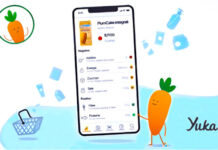


Yuka app today represents one of the most significant cases of digital innovation applied to nutrition, health and responsible consumption, redefining the way citizens evaluate food and cosmetic products. This article analyses the reasons behind its extraordinary success, illustrating its functioning, rapid diffusion and the elements that make it unique.
Particular attention is dedicated to its 100% independent business model, which ensures maximum transparency and credibility, and to the ‘Call-out the Brand’ feature, which turns Yuka into a platform for consumer activism.
The analysis also documents the app’s transformative impact – as demonstrated by the Intermarché case – and outlines the emerging market opportunities for companies in the food, cosmetics and retail sectors.
Yuka: independence in the service of transparency
The fundamental value of Yuka is independence. Its mission is to help consumers make better choices for their health and, in doing so, encourage producers to offer higher-quality products. The app is financed 100% independently, ensuring that the information provided is free from any influence from brands or manufacturers and focused exclusively on consumer wellbeing (TechCrunch, 2024).
The app was launched in France in January 2017 by three co-founders: brothers Benoît and François Martin and their friend Julie Chapon. The system evaluates food and cosmetic products by scanning barcodes, assigning a score ranging from ‘excellent’ to ‘poor’, and providing recommendations for healthier alternatives (App Store, 2025).
Yuka: food product scores
Yuka scores are assigned to food products according to three criteria:
- 60% for the nutritional profile, based on the Nutri-Score attributed to individual products through the algorithm developed in France by the CRESS-EREN research group and updated by the Nutri-Score International Scientific Committee;
- 30% for the absence of ‘problematic’ food additives, i.e. those subject to peer-reviewed scientific studies or reports by competent food-safety authorities that have associated specific health risks with their intake (even if currently authorised in the EU. e.g. smoke flavourings);
- 10% for organic certification. Yuka awards an additional 10 points to organically certified food products, in compliance with Regulation (EU) 2018/848.
Cosmetic evaluation
The method for evaluating cosmetic products is based on the analysis of all the ingredients of each product which, under Regulation (EC) No 1223/2009, must be listed in descending order and identified according to the INCI (International Nomenclature of Cosmetic Ingredients).
Yuka assigns a risk level to each ingredient, based on the latest scientific research (App Store, 2025), using a colour-coded classification:
- green: no risk
- yellow: low risk
- orange: moderate risk
- red: risk.
Premium version and business model
The premium version is available for €10 per year and includes additional functions such as:
- advanced search bar (without needing to scan the product’s QR code)
- offline mode
- searches by specific preferences (e.g. vegetarian, gluten-free, lactose-free, palm-oil-free)
- history of previous searches.
In 2023, Yuka’s revenues reached 20.3 million USD (Getlatka, 2025), with a team of 79 employees (Getlatka, 2025). The business model relies exclusively on premium subscriptions and sales of food guides, maintaining independence from both producers and advertisers.
Distribution and impact
| Indicator | Data |
| Total downloads | > 76 million users |
| Product database | > 6 million products (4 M food, 2 M cosmetics) |
| Country coverage | 12 countries (France, Italy, Spain, United Kingdom, USA, Canada, Germany, Belgium, Switzerland, Luxembourg, Ireland, Australia) |
| Italy distribution | > 8 million users |
| USA distribution | > 22 million users (estimates Wall Street Journal, 2025) |
Impact on consumers
According to a 2024 impact study conducted in the United States, 94% of users stopped purchasing products flagged for containing dangerous additives after they began using Yuka (Sustainable Brands, 2024).
In Italy, the data (2022) are equally impressive:
- 97% stopped purchasing certain products;
- 95% put back on the shelf products rated negatively;
- 84% buy more organic products;
- 90% of Yuka users believe that the app can motivate brands and companies to offer better products.
Main milestones and latest developments
- January 2017: launch of the Yuka app in France, for food products only
- June 2018: addition of cosmetics and personal-care products
- March 2019: start of international expansion
- May 2019: 10 million users reached
- September 2020: launch in Italy
- 2022: virality on TikTok and expansion in the USA
- March 2024: 50 million users reached
- November 2024: launch of the ‘Call-out the Brand’ function in the USA, allowing users to challenge companies directly (TechCrunch, 2024)
- October 2025: launch of the ‘Call-out the Brand’ function in Europe; more than 76 million global users reached.
New features and innovations 2024–2025
Call-out the Brand: empowering consumers
The new ‘Call-out the Brand’ function, launched in the USA in November 2024 and in Europe in October 2025, allows users to challenge companies directly.
When a user scans a product marked with Yuka’s red label – indicating potential health risks – they see an option to send an email to the product’s brand owner, inviting them to reconsider the use of harmful additives (TechCrunch, 2024).
Yuka provides a predefined email message but allows users to personalise it. Users can also choose to post on X, LinkedIn and Instagram to publicly support their call for change.
Expansion in the US market
Yuka’s expansion in the United States in 2022 brought about 25,000 new users per day (ScanGeni, 2025), making the USA the fastest-growing market.
The Secretary of Health and Human Services, Robert F. Kennedy Jr., is a supporter of the app, stating that both he and his wife use it (AEI, 2025).
Impact on producers and retail
The Intermarché case: an example of radical transformation
The most emblematic case of Yuka’s impact on the industry is that of the French supermarket chain Intermarché. The retailer reformulated the nutritional and environmental quality of over 2,300 private-label products (ESM Magazine, 2022), a significant increase from the 900 initially announced.
Following consumer and Yuka-user pressure, the Intermarché group removed 142 controversial additives from its products (Sustainable Brands, 2024; TechCrunch, 2024).
On the Yuka app, the entire range of Intermarché private-label products gained an average of four points, positioning the retailer at the top of the private-label food rankings, almost on par with the best-performing branded products (ESM Magazine, 2022).
The impact of consumer complaints
Conagra received thousands of complaints about additives found in its products, using a feature on the app that allows shoppers to send a pre-formulated message via email or social media, asking food manufacturers to remove the additives (AEI, 2025).
Jack McNamara, the group’s CEO, stated that he first heard of Yuka while handing out samples at a Costco store in Los Angeles. Shoppers began taking out their phones and scanning the barcode of Tru Seltzer.
McNamara said that he does not fully agree with Yuka’s methodology, but recognises that ‘platforms like [Yuka] will have massive repercussions’ (AEI, 2025). These apps are therefore destined to play a key role in the strategic decisions of both food and retail industries.
Yuka in Italy: a success story
Explosive growth
The Yuka app was downloaded in Italy by 2 million consumers within just one year of launch, and today exceeds 8 million users (Yuka App, 2025).
This success was achieved without advertising campaigns, relying firmly on four factors: free access, immediacy, reliability and independence.
Market opportunities for operators
For producers
- Product reformulation. Martin believes Yuka is making a difference: ‘Every day we see products being reformulated. We have seen a strong trend over the last five years, at least in Europe, where producers and brands are improving the composition of their products, and some have told us it was thanks to Yuka’ (FoodNavigator, 2022).
- Partnership with Yuka. Through collaboration with Yuka, companies can scan products undergoing reformulation and save time by adjusting various parameters in real time (L’Usine Nouvelle, 2019).
- Competitive advantage. Products with high Yuka scores can use this as a strength in marketing and communication.
For distributors
- Product selection. Prioritising products with high Yuka scores can increase loyalty among health-conscious customers.
- Premium private label. As demonstrated by Intermarché, investing in the quality of private-label products can position a retailer almost on par with the best-performing branded products (ESM Magazine, 2022).
- In-store communication. Highlighting products with excellent Yuka scores can guide purchase decisions.
For startups and innovators
The global scanner market was valued at USD 5.2 billion in 2022 and is expected to grow to USD 8.7 billion by 2032, with a CAGR of 5.7% from 2023 to 2032 (Medium, 2025).
Opportunities include:
- development of complementary or specialised apps;
- consulting services for product reformulation;
- B2B platforms for score optimisation;
- integration with e-commerce systems.
Criticisms and controversies
In France, in 2021, the National Federation of Charcuterie Producers (Fédération des entreprises françaises de charcuterie-traiteur – FICT) initiated legal action against Yuka because the app flagged cured-meat products containing nitrites and nitrates. After losing at first instance, Yuka won the case at the Courts of Appeal of Aix-en-Provence (2022) and Paris (2023).
In Italy, also in 2021, the Competition and Market Authority (AGCM, Antitrust) opened an investigation against Yuka and eight operators who displayed the Nutri-Score logo on their product labels. The investigation concluded with an agreement covering only information-related clauses.
Prospects
Yuka represents far more than a simple scanning app: it has become a catalyst for change in the food and cosmetics industries. With 76 million global users and a documented impact on the reformulation strategies of major producers, the app demonstrates that transparency and information can drive significant market transformations.
For industry operators and retailers, Yuka represents both a challenge and an opportunity. Companies that embrace transparency and invest in product improvement can turn Yuka from a potential threat into a powerful ally for building consumer trust and loyalty.
The future will likely see continued evolution of this ecosystem, with greater personalisation, AI integration, and possibly new evaluation metrics that include environmental sustainability (e.g. Planet-Score) and ethical aspects of production. Operators who anticipate and adapt to these changes will be better positioned to thrive in a market increasingly driven by consumer awareness and informed choices.
Dario Dongo
References
- AEI. (2025, 7 maggio). Tech-enabled power to the people: AI chatbots and Yuka food app. American Enterprise Institute. https://www.aei.org/op-eds/tech-enabled-power-to-the-people-ai-chatbots-and-yuka-food-app/
- App Store. (2025). Yuka – Food & cosmetic scanner. Apple. https://apps.apple.com/us/app/yuka-food-cosmetic-scanner/id1092799236
- BCG. (2025, 15 maggio). CPG companies need a new recipe as consumers seek healthier choices. Boston Consulting Group. https://www.bcg.com/publications/2025/cpg-companies-need-new-recipe-consumers-seek-healthier-choices
- ESM Magazine. (2022, 20 luglio). Intermarché reformulates over 2,300 private-label products. https://www.esmmagazine.com/private-label/intermarche-reformulates-over-2300-private-label-products-181016
- FoodNavigator. (2022, 11 agosto). Five years of Yuka: Co-founder talks strategy, impact, and evolution of food scanning app. https://www.foodnavigator.com/Article/2022/08/10/Five-years-of-Yuka-Co-founder-talks-strategy-impact-and-evolution-of-food-scanning-app/
- Getlatka. (2025). How Yuka hit $20.3M revenue with a 79 person team in 2023. https://getlatka.com/companies/yuka.io
- Glossy. (2024, 7 ottobre). The rise of the Gen-Z-loved Yuka app — and its growing cohort of critics. https://www.glossy.co/beauty/yuka-beauty-wellness-product-scanning-app/
- L’Usine Nouvelle. (2019, 22 settembre). Intermarché lance son “plan Yuka”. https://www.usinenouvelle.com/article/intermarche-lance-son-plan-yuka.N884714
- ScanGeni. (2025, 7 agosto). What is the Yuka app? An honest review from a daily user. https://scangeni.us/what-is-the-yuka-app-an-honest-review-from-a-daily-user/
- Sensor Tower. (2024). Top health and fitness apps in Italy Q3 2024: Unified platform analysis. https://sensortower.com/blog/2024-q3-unified-top-5-health%20and%20fitness-units-it-600af518241bc16eb8dce802
- Sustainable Brands. (2024, 19 novembre). Yuka users can now appeal directly to brands for healthier products. https://sustainablebrands.com/read/yuka-users-appeal-directly-brands-healthier-products
- TechCrunch. (2024, 19 novembre). Yuka, the app that rates food and makeup, now lets users complain to companies directly. https://techcrunch.com/2024/11/18/yuka-the-app-that-rates-food-and-makeup-lets-users-complain-to-brands-with-its-new-feature/
- Wall Street Journal. (2025, May 4). Meet Yuka, the app that’s driving food-scan tech and companies. https://www.wsj.com/tech/personal-tech/yuka-app-food-scanning-companies-a8d526b6

Dario Dongo, lawyer and journalist, PhD in international food law, founder of WIISE (FARE - GIFT - Food Times) and Égalité.