

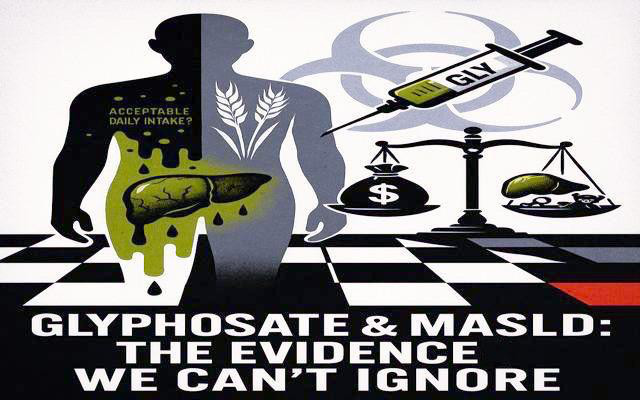
The potential connection between glyphosate exposure and liver disease, particularly metabolic dysfunction-associated steatotic liver disease (MASLD), is gaining increasing attention. MASLD – formerly non-alcoholic fatty liver disease (NAFLD) – now affects around 30% of the global population, with prevalence rising by over 50% in the past three decades. Its complex pathogenesis involves metabolic disruptions in the liver, adipose tissue, and gut microbiome.
In parallel, global herbicide use – dominated by glyphosate – has nearly tripled between the mid-1990s and the mid-2010s, particularly following the introduction and widespread adoption of glyphosate-tolerant genetically modified (GM) crops starting in 1996. Glyphosate, the active ingredient in many herbicides, is applied at a rate of roughly 825 million kilograms per year and its widespread use has resulted in persistent environmental residues and chronic human exposure via food and water (Benbrook, 2016).
In this context, the comprehensive narrative review by Riechelmann-Casarin et al. (2025) examines the potential relationship between glyphosate exposure and the development of metabolic dysfunction-associated steatotic liver disease (MASLD) through systematic evaluation of epidemiological, in vitro, and animal-based studies published between 2008 and 2025. The researchers sought to determine whether emerging evidence supports an association between glyphosate/GBH exposure and MASLD outcomes through effects on key pathological axes involved in the disease’s pathogenesis.
Methodology
The authors conducted a systematic search of the PubMed database for literature published between 2008 and 2025, employing specific keyword combinations to identify relevant studies:
- For human/population studies: ‘population’ or ‘human’ + ‘relative risk’ or ‘odds ratio’ + ‘glyphosate’ or ‘urine glyphosate’ or ‘glyphosate urinary levels’;
- For cellular studies: ‘cell’ or ‘in vitro’ + ‘adipocyte’ or ‘hepatocyte’ or ‘monocyte’ or ‘macrophage’ + ‘glyphosate’;
- For animal studies: ‘rodent’ or ‘mice’ or ‘rats’ or ‘in vivo’ + ‘MASLD’ or ‘NAFLD’ or ‘NASH’ or ‘MASH’ or ‘steatosis’ or ‘overweight’ or ‘obesity’ or ‘microbiome’ + ‘glyphosate’.
Inclusion criteria specified peer-reviewed studies published in English that directly addressed the central theme of the review:
- the literature search yielded 42 primary research articles, comprising 6 human studies, 15 in vitro studies, and 21 in vivo animal studies;
- selection prioritized investigations with robust methodologies, clear objectives, and findings pertinent to the potential relationship between glyphosate/GBH exposure and liver disease.
Epidemiological evidence
The authors identified six human studies, predominantly based on analyses of U.S. National Health and Nutrition Examination Survey (NHANES) data, that demonstrated significant associations between urinary glyphosate levels and various MASLD-related outcomes.
Han et al. (2024) reported a positive correlation between urinary GLY concentration and fatty liver index (FLI) scores, with this association being more pronounced in women aged 40-60 with borderline diabetes history. In a clinical investigation, Mills et al. (2020) observed that GLY residue excretion was significantly higher in patients with non-alcoholic steatohepatitis (NASH) compared to non-NASH patients, and patients with advanced liver fibrosis (stages 2-4) exhibited higher GLY excretion than those with no or early fibrosis.
Further supporting these findings, Xiao et al. (2023) demonstrated that increased urinary GLY concentrations were strongly associated with markers of liver injury, including decreased serum albumin and elevated alkaline phosphatase (ALP), alanine aminotransferase (ALT), aspartate aminotransferase (AST), and fibrosis-4 (FIB-4) scores. In a cross-sectional analysis, Li et al. (2023) found that groups with higher urinary GLY levels showed a higher proportion of individuals with steatosis, type 2 diabetes mellitus, hypertension, cardiovascular diseases, chronic kidney diseases, and obesity, all established comorbidities of MASLD.
In a mortality analysis, Gao et al. (2024) observed that increased urinary GLY was associated with a 29% higher risk for all-cause mortality and a 32% higher risk for cardiovascular disease mortality, with a dose-response relationship evident between GLY levels and mortality outcomes.
Of particular interest, Eskenazi et al. (2023) conducted a prospective cohort study demonstrating that a two-fold increase in urinary aminomethylphosphonic acid (AMPA, the primary GLY metabolite) between ages 5 and 18 was associated with a 14% higher risk of elevated liver transaminases and a 55% higher risk of metabolic syndrome at age 18. Moreover, living near agricultural GLY applications during early childhood correlated with a 53% increased risk for metabolic syndrome in adult life.
While these epidemiological studies offer compelling evidence of an association between glyphosate (GLY) exposure and MASLD-related outcomes, the authors highlight an opportunity to expand research beyond the predominantly U.S.-focused literature. Regions such as Latin America – characterised by both high MASLD prevalence and widespread GLY use – represent promising areas for future investigation.
Cellular mechanisms
The review identified 15 in vitro studies investigating the cellular and molecular mechanisms through which GLY and GBH might contribute to MASLD pathogenesis. These studies examined effects on various cell types relevant to MASLD development, including adipocytes, hepatocytes, and macrophages/monocytes.
Studies using mouse 3T3-L1 fibroblasts, an established model for adipocyte differentiation, showed that GBH exposure (~240 µg/mL of GLY) inhibited proliferation and chemical-induced differentiation of preadipocytes by downregulating peroxisome proliferator-activated receptor gamma (PPARγ), a key regulator of adipogenesis. GBH exposure also increased lipid peroxidation and superoxide dismutase activity, indicative of oxidative stress induction, a hallmark of MASLD pathogenesis (Martini et al., 2016).
In the same cell line, GBH exposure increased caspase-3 activity and annexin-V positive cells, both markers of apoptosis induction. However, when pure GLY was tested for lipid accumulation effects during adipocyte differentiation, it scored negative at all concentrations tested, suggesting that formulation components beyond the active ingredient may contribute to the observed effects (Biserni et al., 2019; Martini et al., 2012).
Studies in human HepG2 hepatocytes produced variable results. At concentrations based on acceptable daily intake (0.5 µg/mL), residential exposure level (2.91 µg/mL), and occupational exposure level (3.5 µg/mL), GLY had limited effects on reactive oxygen species (ROS) levels, reduced glutathione, and genotoxicity. However, it decreased total antioxidant capacity and glutathione peroxidase enzyme activity at higher concentrations (Kaˇsuba et al., 2017).
Multiple investigations demonstrated that GBHs typically exhibited greater toxicity than pure GLY in cell culture models, suggesting that formulation components significantly influence biological effects. For instance, a GBH containing the co-formulant POE-15 tallow amine induced cytotoxicity in HepG2 hepatocytes with membrane disruption, whereas pure GLY only increased ROS production in a concentration-dependent manner (Mesnage et al., 2022a). Similarly, another GBH (45 mg/L) increased ROS and activated caspases 3/7, inducing apoptosis in HepG2 cells, effects not observed with equivalent concentrations of pure GLY or its AMPA metabolite (Chaufan et al., 2014).
Animal-based evidence
The review identified 21 rodent studies providing the most comprehensive insights into the effects of GLY/GBH on multiple systems involved in MASLD pathogenesis. These studies demonstrated that GLY/GBH exposure primarily induces oxidative stress and inflammation in the liver while causing dysbiosis and metabolic alterations in the gut microbiome.
Liver effects
Pandey et al. (2019) reported that subacute GBH exposure in rats resulted in dose-dependent histopathological changes suggestive of steatosis development, including macrovesicular and microvesicular steatosis, macrophage infiltration, and bridging fibrosis. These changes were accompanied by upregulation of pro-inflammatory cytokines IL-1β and TNF-alpha, key mediators of inflammatory response in MASLD progression.
In mice exposed to GBH, Qi et al. (2023) observed significant liver damage characterized by inflammatory cell aggregation, impaired lobular structure, hepatocyte edema, ballooning, and vacuolization – all hallmarks of MASLD/NASH. Treatment also induced oxidative stress, evidenced by increased hydrogen peroxide and malondialdehyde levels alongside reduced antioxidant enzyme activities (catalase and glutathione peroxidase). Transcriptomic analysis revealed upregulation of pathways associated with lysosome function, protein processing, and complement/coagulation cascades, while oxidative phosphorylation pathways were notably downregulated.
Ford et al. (2017) demonstrated that GLY is metabolized to reactive metabolites that interact with key proteins in the liver, predominantly targeting cysteine residues. Several enzymes involved in lipid metabolism were identified as potential targets, including those involved in fatty acid β-oxidation and intracellular lipid transportation. Consistent with these findings, lipidomic profiling revealed increased levels of triglycerides and cholesterol in exposed animals.
Particularly notable was a two-year study by Mesnage et al. (2015; 2017) evaluating the effects of chronic ultra-low dose GBH exposure (~4 ng/kg body weight/day of GLY, below regulatory acceptable daily intake levels). Treated rats exhibited elevated serum triglyceride levels, cellular alterations including increased cell and cytoplasmic areas, and transcriptomic changes affecting mitochondrial metabolism, mTOR signaling, and pathways associated with necrosis, phospholipidosis, apoptosis, and fibrosis – all processes relevant to MASLD pathogenesis.
A follow-up investigation of the same animals revealed that chronic GBH exposure significantly affected ‘response to drug’ processes, particularly concerning organonitrogen compounds like GLY. Proteins involved in homocysteine metabolism, electron transport, HMG-CoA synthesis, fatty acid hydroxylation, and glutathione conjugation were altered, forming a possible ‘signature’ of GLY metabolic effects. Disruptions in redox balance and lipid homeostasis were evident, with toxicity ontology analysis revealing a lipotoxic state characterized by peroxisomal proliferation and steatosis (Mesnage et al., 2017).
Two studies by Romualdo et al. (2023; 2023) specifically examined GLY effects in a Western diet-induced MASLD mouse model. At European Food Safety Authority (EFSA) No Observed Adverse Effect Level (NOAEL) doses (50 mg/kg), GLY exposure exacerbated hepatic inflammation, as evidenced by increased CD68-positive macrophage density and elevated levels of inflammatory markers. GLY exposure also induced oxidative stress and impaired the antioxidant system, with transcriptomic analysis revealing upregulation of xenobiotic metabolic processes and downregulation of cell cycle-related genes. Notably, lower GLY doses (0.05 and 5 mg/kg) did not significantly affect MASLD progression in this model.
Adipose tissue effects
While fewer studies examined GLY effects on adipose tissue, available evidence suggests significant impacts. GBH exposure (250 mg/kg) led to increased expression of pro-inflammatory cytokines IL-1β and IL-6 in adipose tissue, with trends toward elevated TNF-alpha expression (Pandey et al., 2019). In a study examining early-life exposure, pubertal GBH treatment (50 mg/kg) exacerbated high-fat diet-induced obesity in adulthood, with exposed females exhibiting increased body weight, hyperphagia, and fat mass, alongside white adipocyte hypertrophy and increased plasma cortisol levels (Rosolen et al., 2024).
Remarkably, a transgenerational study demonstrated that GLY exposure during pregnancy (25 mg/kg) resulted in increased obesity prevalence in both the F2 (direct germline exposure) and F3 (no direct exposure) generations, but not in the F0 (direct exposure) or F1 (fetal exposure) generations. Epigenetic analysis revealed differential DNA methylation regions in sperm across generations, with affected pathways strongly associated with metabolic regulation (Kubsad et al., 2019).
Gut microbiome effects
Several studies identified significant impacts of GLY/GBH on the gut microbiome and intestinal physiology. Tang et al. (2020) reported that GLY exposure decreased villus depth and villus-to-crypt ratio in the duodenum and jejunum, potentially impairing digestive and absorptive capacity. Exposure also induced intestinal oxidative stress, disrupted ion balance, and upregulated inflammation and apoptosis-related genes.
Using metagenomic sequencing, Lehman et al. (2023) found that GLY exposure at environmentally relevant doses decreased gut microbial diversity over time, with significant reductions in beneficial bacteria (Lactobacillus, Bifidobacterium) and increases in the Bacteroidetes/Firmicutes ratio. These changes were accompanied by decreased short-chain fatty acid production and increased inflammatory markers in the colon.
In a mechanistic investigation, Duan et al. (2024) demonstrated that GBH-induced gut dysbiosis played a pivotal role in driving oxidative stress, inflammation, and morphological changes in the intestine. Notably, fecal microbiota transplantation from GBH-exposed rats to unexposed animals reproduced these adverse effects, while transplantation from healthy rats to GBH-exposed animals reversed them, confirming the central role of the gut microbiome in mediating GBH toxicity.
Mesnage et al. (2021) provided direct evidence that GLY affects the gut microbiome by inhibiting the shikimate pathway, showing accumulation of pathway intermediates (shikimate and 3-dehydroshikimate) in both GLY and GBH-exposed groups. GBH exposure also altered the microbiome composition, decreasing bacterial diversity while increasing fungal diversity, with significant changes in the relative abundance of various bacterial and fungal genera (Mesnage et al., 2022c).
Discussion and conclusions
Based on the comprehensive review of epidemiological, in vitro, and animal studies, Riechelmann-Casarin et al. (2025) conclude that glyphosate and GBHs induce pro-oxidative and pro-inflammatory disturbances in key axes of MASLD pathogenesis. These effects appear to be mediated through multiple mechanisms:
- Hepatic effects. GLY/GBH exposure induces oxidative stress, inflammatory responses, and mitochondrial dysfunction in the liver, contributing to steatosis, fibrosis, and impaired lipid metabolism – all hallmarks of MASLD progression.
- Adipose tissue effects. Exposure promotes inflammation, lipid peroxidation, and adipocyte dysfunction, potentially contributing to systemic metabolic disruption and liver lipotoxicity.
- Gut microbiome effects: GLY/GBH alters gut microbial composition and function, leading to dysbiosis characterized by reduced beneficial bacteria, increased pathogenic species, and dysregulated metabolic pathways. These changes may contribute to intestinal inflammation, increased gut permeability, and altered metabolic signaling.
The authors suggest that the weight of evidence supports a potential link between GLY/GBH exposure and MASLD outcomes, aligning with previous reviews by Myers et al. (2016) and Vandenberg et al. (2017) suggesting that current regulatory NOAEL values for GLY may need revision. They emphasize that commercial GBH formulations consistently demonstrate greater toxicity than pure GLY, highlighting the need for regulatory agencies to assess the effects of complete commercial formulations rather than focusing solely on the active ingredient.
Looking forward, the authors recommend several key directions for future research:
- investigations of ‘cocktail effects’ from exposure to multiple pesticide residues, reflecting real-world exposure scenarios;
- development of more complex in vitro models incorporating fatty acid-based steatotic backgrounds and heterotypical 2D/3D systems;
- additional in vivo studies comparing GBH versus pure GLY effects specifically within MASLD contexts;
- studies in underrepresented geographic regions with high MASLD prevalence and GLY usage.
In conclusion, this comprehensive review suggests that GLY/GBH exposure may contribute to MASLD development and progression through effects on multiple physiological axes involved in disease pathogenesis. As both MASLD prevalence and herbicide use continue to rise globally, these findings underscore the importance of further research into potential causal relationships and consideration of agricultural chemical exposures in public health approaches to metabolic liver disease.
Call for action
The mounting evidence linking glyphosate exposure to MASLD and other adverse health outcomes necessitates an urgent reassessment of glyphosate safety regulations. Given the widespread environmental presence of this herbicide and its detection in human biospecimens worldwide, regulatory frameworks must evolve to reflect emerging scientific understanding of low-dose and chronic exposure effects.
The consistent observation that commercial glyphosate-based formulations demonstrate greater toxicity than the active ingredient alone highlights a critical gap in current regulatory approaches that primarily evaluate pure compounds rather than the actual products used in agriculture.
Until comprehensive safety evaluations can definitively exclude risks to human health at current exposure levels, the precautionary principle should guide policy decisions regarding glyphosate usage, particularly considering the potential transgenerational consequences suggested by animal studies. Public health protection demands a more conservative approach to chemical regulation, especially for compounds with near-universal human exposure and plausible mechanistic links to conditions with significant population health burdens, such as MASLD.
#Égalité
Dario Dongo
References
- Benbrook, C. M. (2016). Trends in glyphosate herbicide use in the United States and globally. Environmental Sciences Europe, 28(1), 1–15. https://doi.org/10.1186/s12302-016-0070-0
- Biserni, M., Mesnage, R., Ferro, R., Wozniak, E., Xenakis, T., Mein, C. A., & Antoniou, M. N. (2019). Quizalofop-p-Ethyl induces adipogenesis in 3T3-L1 adipocytes. Toxicological Sciences, 170(2), 452–461. https://doi.org/10.1093/toxsci/kfz097
- Chaufan, G., Coalova, I., & Ríos de Molina, M. C. (2014). Glyphosate commercial formulation causes cytotoxicity, oxidative effects, and apoptosis on human cells: Differences with its active ingredient. International Journal of Toxicology, 33(1), 29–38. https://doi.org/10.1177/1091581813517906
- Duan, T., Alim, A., Tian, H., & Li, T. (2024). Roundup-induced gut dysbiosis, irrelevant to aromatic amino acid deficiency, impairs the gut function in rats. Journal of Agricultural and Food Chemistry, 72(41). https://doi.org/10.1021/acs.jafc.4c04045
- Eskenazi, B., Gunier, R. B., Rauch, S., Kogut, K., Perito, E. R., Mendez, X., Limbach, C., Holland, N., Bradman, A., Harley, K. G., Mills, P. J., & Mora, A. M. (2023). Association of lifetime exposure to glyphosate and aminomethylphosphonic acid (AMPA) with liver inflammation and metabolic syndrome at young adulthood: Findings from the CHAMACOS study. Environmental Health Perspectives, 131(3), 1–11. https://doi.org/10.1289/EHP11721
- Ford, B., Bateman, L. A., Gutierrez-Palominos, L., Park, R., & Nomura, D. K. (2017). Mapping proteome-wide targets of glyphosate in mice. Cell Chemical Biology, 24(2), 133–140. https://doi.org/10.1016/j.chembiol.2016.12.013
- Gao, Y., Shu, S., Zhang, D., Wang, P., Yu, X., Wang, Y., & Yu, Y. (2024). Association of urinary glyphosate with all-cause mortality and cardiovascular mortality among adults in NHANES 2013–2018: Role of alkaline phosphatase. Toxics, 12(8). https://doi.org/10.3390/toxics12080559
- Han, K., Gao, L., Xu, H., Li, J., Han, L., Shen, J., Sun, W., & Gao, Y. (2024). Analysis of the association between urinary glyphosate exposure and fatty liver index: A study for US adults. BMC Public Health, 24(1), 1–13. https://doi.org/10.1186/s12889-024-18189-3
- Kaˇsuba, V., Mili´c, M., Rozgaj, R., Kopjar, N., Mladini´c, M., Zunec, S., Vrdoljak, A. L., Paviˇci´c, I., Cermak, A. M. M., Pizent, A., Lovakovi´c, B. T., & Zelje ˇzi´c, D. (2017). Effects of low doses of glyphosate on DNA damage, cell proliferation and oxidative stress in the HepG2 cell line. Environmental Science and Pollution Research International, 24, 19267–19281. https://doi.org/10.1007/s11356-017-9438-y
- Kubsad, D., Nilsson, E. E., King, S. E., Sadler-Riggleman, I., Beck, D., & Skinner, M. K. (2019). Assessment of glyphosate induced epigenetic transgenerational inheritance of pathologies and sperm epimutations: Generational toxicology. Scientific Reports, 9(1), 6372. https://doi.org/10.1038/s41598-019-42860-0
- Lehman, P. C., Cady, N., Ghimire, S., Shahi, S. K., Shrode, R. L., Lehmler, H. J., & Mangalam, A. K. (2023). Low-dose glyphosate exposure alters gut microbiota composition and modulates gut homeostasis. Environmental Toxicology and Pharmacology, 100, 104149. https://doi.org/10.1016/j.etap.2023.104149
- Li, W., Lei, D., Huang, G., Tang, N., Lu, P., Jiang, L., Lv, J., Lin, Y., Xu, F., & Qin, Y. J. (2023). Association of glyphosate exposure with multiple adverse outcomes and potential mediators. Chemosphere, 345, 140477. https://doi.org/10.1016/j.chemosphere.2023.140477
- Martini, C. N., Gabrielli, M., Brandani, J. N., & Vila, M. C. (2016). Glyphosate inhibits PPAR gamma induction and differentiation of preadipocytes and is able to induce oxidative stress. Journal of Biochemical and Molecular Toxicology, 30, 404–413. https://doi.org/10.1002/jbt.21804
- Martini, C. N., Gabrielli, M., & Vila, M. C. (2012). A commercial formulation of glyphosate inhibits proliferation and differentiation to adipocytes and induces apoptosis in 3T3-L1 fibroblasts. Toxicology in Vitro, 26(6), 1007–1013. https://doi.org/10.1016/j.tiv.2012.04.017
- Mesnage, R., Arno, M., Costanzo, M., Malatesta, M., Séralini, G. E., & Antoniou, M. N. (2015b). Transcriptome profile analysis reflects rat liver and kidney damage following chronic ultra-low dose Roundup exposure. Environmental Health, 14, 70. https://doi.org/10.1186/s12940-015-0056-1
- Mesnage, R., Ferguson, S., Brandsma, I., Moelijker, N., Zhang, G., Mazzacuva, F., Caldwell, A., Halket, J., & Antoniou, M. N. (2022a). The surfactant co-formulant POEA in the glyphosate-based herbicide RangerPro but not glyphosate alone causes necrosis in Caco-2 and HepG2 human cell lines and ER stress in the ToxTracker assay. Food and Chemical Toxicology, 186. https://doi.org/10.1016/j.fct.2022.113380
- Mesnage, R., Panzacchi, S., Bourne, E., Mein, C. A., Perry, M. J., Hu, J., Chen, J., Mandrioli, D., Belpoggi, F., & Antoniou, M. N. (2022c). Glyphosate and its formulations roundup bioflow and rangerpro alter bacterial and fungal community composition in the rat caecum microbiome. Frontiers in Microbiology, 13, 888853. https://doi.org/10.3389/fmicb.2022.888853
- Mesnage, R., Renney, G., Séralini, G. E., Ward, M., & Antoniou, M. N. (2017). Multiomics reveal non-alcoholic fatty liver disease in rats following chronic exposure to an ultra-low dose of Roundup herbicide. Scientific Reports, 7, 39328. https://doi.org/10.1038/srep39328
- Mesnage, R., Teixeira, M., Mandrioli, D., Falcioni, L., Ducarmon, Q. R., Zwittink, R. D., Mazzacuva, F., Caldwell, A., Halket, J., Amiel, C., Panoff, J. M., Belpoggi, F., & Antoniou, M. N. (2021a). Use of shotgun metagenomics and metabolomics to evaluate the impact of glyphosate or roundup MON 52276 on the gut microbiota and serum metabolome of sprague-dawley rats. Environmental Health Perspectives, 129(1), 17005. https://doi.org/10.1289/EHP6990
- Mills, P. J., Caussy, C., & Loomba, R. (2020). Glyphosate excretion is associated with steatohepatitis and advanced liver fibrosis in patients with fatty liver disease. Clinical Gastroenterology and Hepatology, 18(3), 741–743. https://doi.org/10.1016/j.cgh.2019.03.045
- Myers, J. P., Antoniou, M. N., Blumberg, B., Carroll, L., Colborn, T., Everett, L. G., Hansen, M., Landrigan, P. J., Lanphear, B. P., Mesnage, R., Vandenberg, L. N., Vom Saal, F. S., Welshons, W. V., & Benbrook, C. M. (2016). Concerns over use of glyphosate-based herbicides and risks associated with exposures: A consensus statement. Environmental Health, 15, 19. https://doi.org/10.1186/s12940-016-0117-0
- Pandey, A., Dabhade, P., & Kumarasamy, A. (2019). Inflammatory effects of subacute exposure of roundup in rat liver and adipose tissue. Dose-Response, 17(2). https://doi.org/10.1177/1559325819843380
- Qi, L., Dong, Y. M., Chao, H., Zhao, P., Ma, S. L., & Li, G. (2023). Glyphosate based-herbicide disrupts energy metabolism and activates inflammatory response through oxidative stress in mice liver. Chemosphere, 315, 137751. https://doi.org/10.1016/j.chemosphere.2023.137751
- Riechelmann-Casarin, L., Valente, L. C., Otton, R., Barbisan, L. F., & Romualdo, G. R. (2025). Are glyphosate or glyphosate-based herbicides linked to metabolic dysfunction-associated steatotic liver disease (MASLD)? The weight of current evidence. Environmental Toxicology and Pharmacology, 116, 104705. https://doi.org/10.1016/j.etap.2025.104705
- Romualdo, G. R., Valente, L. C., Dos Santos, A. C. S., Grandini, N. A., Camacho, C. R. C., Vinken, M., Cogliati, B., Hou, D. X., & Barbisan, L. F. (2023a). Effects of glyphosate exposure on western diet-induced non-alcoholic fatty liver disease in mice. Environmental Toxicology and Pharmacology, 104, 104286. https://doi.org/10.1016/j.etap.2023.104286
- Romualdo, G. R., Valente, L. C., de Souza, J. L. H., Rodrigues, J., & Barbisan, L. F. (2023b). Modifying effects of 2,4-D and glyphosate exposures on gut-liver-adipose tissue axis of diet-induced non-alcoholic fatty liver disease in mice. Ecotoxicology and Environmental Safety, 268, 115688. https://doi.org/10.1016/j.ecoenv.2023.115688
- Rosolen, A. P. F., Ribeiro, R. A., Teleken, J. L., de Oliveira Chaves, J., Padilha, S. C., Goes, M. E., Morari, J., Boschero, A. C., Balbo, S. L., & Bonfleur, M. L. (2024). Pubertal glyphosate-based herbicide exposure aggravates high-fat diet-induced obesity in female mice. Environmental Science and Pollution Research, 31(10), 15872–15884. https://doi.org/10.1007/s11356-024-32234-z
- Tang, Q., Tang, J., Ren, X., & Li, C. (2020). Glyphosate exposure induces inflammatory responses in the small intestine and alters gut microbial composition in rats. Environmental Pollution, 261, 114129. https://doi.org/10.1016/j.envpol.2020.114129
- Vandenberg, L. N., Blumberg, B., Antoniou, M. N., Benbrook, C. M., Carroll, L., Colborn, T., Everett, L. G., Hansen, M., Landrigan, P. J., Lanphear, B. P., Mesnage, R., Vom Saal, F. S., Welshons, W. V., & Myers, J. P. (2017). Is it time to reassess current safety standards for glyphosate-based herbicides? Journal of Epidemiology and Community Health, 71(6), 613–618. https://doi.org/10.1136/jech-2016-208463
- Xiao, T., Chen, Y., Xu, Y., Song, Y., Ren, X., Wang, W., Zhuang, K., Chen, X., & Cai, G. (2023). Higher urinary glyphosate exposure is associated with increased risk of liver dysfunction in adults: An analysis of NHANES, 2013-2016. Environmental Science and Pollution Research, 30, 58647–58658. https://doi.org/10.1007/s11356-023-30463-2

Dario Dongo, lawyer and journalist, PhD in international food law, founder of WIISE (FARE - GIFT - Food Times) and Égalité.




, is gaining increasing attention.)