

As negotiations on the European Union’s new Regulation on the Production and Marketing of Plant Reproductive Material (PRM) enter their final stages at Council level, a coalition of over 150 organisations across Europe – farmers’ organisations, seed savers, environmental NGOs, and agricultural associations – has united to sound the alarm over provisions they believe could accelerate the loss of crop diversity across Europe.
The joint letter, dated 25 November 2025 and signed by organisations spanning from Greece to Ireland and Sweden to Portugal, represents one of the most significant mobilisations of civil society around seed legislation in recent EU history. At stake, they argue, is nothing less than the future resilience of European food systems in an era of climate crisis and biodiversity collapse.
The agrobiodiversity crisis: a quiet catastrophe
The urgency underlying this coordinated action stems from a sobering reality: agricultural biodiversity has declined precipitously over the past century. According to United Nations data cited in the letter, three-quarters of crop diversity in agriculture has been lost since 1900, with 75% of the world’s food now derived from merely 12 plant species and five animal species.
This dramatic narrowing of our agricultural gene pool has been driven by decades of focus on uniformity and standardisation, coupled with the increasing concentration of the seed market amongst a handful of multinational corporations (the so-called Big 4). Most contemporary cultivars have been bred under high-input, intensive agricultural conditions, rendering them unsuitable for organic, agroecological, or low-input farming systems – precisely the approaches increasingly recognised as essential for climate adaptation and environmental sustainability.
The signatories emphasise that agrobiodiversity is not merely a conservation concern but a fundamental prerequisite for resilient food production. Diverse seeds and planting material enable crops to adapt to local and changing growing conditions, resist evolving pests and diseases, and support the production of varied, nutritious food. In the context of accelerating climate change, this genetic diversity represents farmers’ primary toolkit for adaptation.
The regulation: promise and peril
The proposed PRM regulation aims to modernise EU rules governing the production and marketing of seeds and plant reproductive material, replacing a patchwork of existing directives. The legislation includes some provisions welcomed by civil society, particularly adapted rules for the registration of organic varieties, which acknowledge the specific characteristics and breeding approaches required for organic agriculture.
However, the coalition argues that the current Council proposal falls dramatically short of what is needed to reverse biodiversity decline and support diverse farming systems. Their letter identifies critical shortcomings that, if left unaddressed, could impose new barriers to the conservation, exchange, and use of diverse plant genetic resources – the very activities essential to maintaining agrobiodiversity.
The civil society organisations stress that their concerns are not theoretical: they represent actors directly involved in the conservation, dynamic management, production, dissemination, and sustainable use of crop diversity across Europe. Their work includes maintaining seed banks, breeding varieties adapted to local conditions and organic systems, facilitating seed exchanges amongst farmers, and managing living collections of traditional and locally adapted varieties.
Six demands for agrobiodiversity protection
The coalition has articulated six specific demands to rectify what they view as fundamental flaws in the current proposal:
1. Excluding conservation activities from regulatory scope
The organisations call for activities undertaken for the purpose of conserving and dynamically managing genetic diversity to be explicitly excluded from the regulation’s scope. They argue that exchanges and transfers of plant reproductive material carried out for breeding, conservation, or dynamic management purposes should not be considered commercial marketing.
These practices, they contend, are essential for maintaining diversity in fields and gardens, and it would be ‘disproportionate and dangerous’ to subject agrobiodiversity conservation to rules designed to regulate commercial markets. They advocate for adding conservation purposes to the existing exemptions in Article 2.4, which currently covers exhibitions, research, breeding, and official tests.
2. Guaranteeing farmers’ rights to seeds
The letter emphasises that farmers’ rights to save, use, and exchange their own seeds including with financial compensation – are recognised under international law through the International Treaty on Plant Genetic Resources for Food and Agriculture (ITPGRFA), the UN Declaration on the Rights of Peasants (UNDROP), and the Convention on Biological Diversity (CBD).
These practices have historically created rich agrobiodiversity and enabled farmers to adapt seeds to their specific needs whilst supporting one another during crises. The coalition welcomes the aim of allowing farmer seed exchanges through Article 30 but maintains that farmers exchanging material for breeding, conservation, and dynamic management purposes in the context of their agricultural production should not be considered professional operators subject to commercial marketing rules.
3. Facilitating registration of conservation varieties
Conservation varieties are described as ‘extremely important’ for organic and agroecological farmers and breeders. The organisations oppose restricting these varieties to a limited number of species or to their region of origin, arguing such limitations would be ‘highly detrimental’ to those currently relying on them.
They call for simple, free registration accessible to any individual or legal entity, with a clear definition specifying that conservation varieties must be non-hybrid, free from genetic modification or new genomic techniques, and not covered by intellectual property rights. Additionally, they advocate for existing varieties developed for particular conditions and commonly known fruit varieties to be entered as conservation varieties in the new register without additional bureaucratic burden.
4. Conducting sustainability testing under organic conditions
The coalition argues that sustainability cannot be reduced to single traits or genes and must be assessed through a system-based approach. They call for Value for Sustainable Cultivation and Use (VSCU) testing to be conducted under organic or low-input conditions for all varieties.
Specifically, for varieties suitable for organic production, they insist that VSCU testing must be conducted under organic conditions across all species and in all Member States. This reflects the recognition that varieties perform differently under varying management systems, and that testing under conventional high-input conditions cannot adequately predict performance in organic or agroecological systems.
5. Reducing administrative burden for nano-enterprises
The organisations highlight a concerning contradiction: whilst the European Commission has pledged to reduce administrative burdens for small and medium enterprises by at least 35%, the new obligations for professional operators would considerably increase bureaucracy, potentially forcing many small seed producers to cease operations.
Nano-enterprises – characterised by turnover below €100,000 – play a crucial role in making diverse varieties and species available to farmers and gardeners. These small-scale operators often specialise in regionally adapted seed diversity and species neglected by larger companies. The coalition calls for nano-enterprises to be exempted from new notification, administrative, and traceability obligations to prevent further market concentration.
6. Ensuring transparency on breeding methods and intellectual property
The final demand centres on transparency regarding breeding methods and intellectual property rights (IPR). The organisations argue that transparency is essential to enable informed choices and fair access, ensuring that breeders and farmers have the knowledge needed to develop new, diverse, and resilient cultivars.
They call for mandatory public databases listing the general breeding technologies used to produce varieties and any granted intellectual property rights, with this information to be included in national and Union variety registers. This transparency is particularly relevant given ongoing debates about new genomic techniques and patent claims on plant varieties.
A pan-European coalition
The breadth of the coalition behind this letter is remarkable, encompassing over 150 organisations from across the European Union and beyond. Signatories include major European networks such as the European Coordination Via Campesina, IFOAM Organics Europe, and the Biodynamic Federation Demeter International, alongside national farming unions, seed saving networks, environmental organisations, and specialist breeding initiatives.
The list spans from Austria’s renowned ARCHE NOAH seed saving organisation to Spain’s extensive network of regional seed organisations, from Permakultur Danmark to Greece’s Agroecological Network, and from Germany’s extensive organic breeding infrastructure to Ireland’s burgeoning seed sovereignty movement. This geographical and organisational diversity underscores both the pan-European nature of the concerns and the breadth of civil society engagement with seed policy.
Notably, the coalition includes not only advocacy organisations but also practical actors: organic farmers’ associations, small-scale seed producers, agricultural cooperatives, permaculture networks, and breeding initiatives working specifically on varieties adapted to organic and low-input systems. These are organisations representing practitioners with direct, daily experience of the challenges and opportunities in maintaining crop diversity.
Implications for European food sovereignty
The civil society position articulated in this letter raises fundamental questions about the future direction of European agriculture and food policy. As climate impacts intensify and the vulnerabilities of simplified, high-input agricultural systems become increasingly apparent, the case for agrobiodiversity as a cornerstone of resilience grows stronger.
The tension at the heart of these negotiations reflects deeper questions about how we balance legitimate regulatory interests – such as plant health protection and quality standards – with the need to maintain the living diversity upon which long-term agricultural sustainability depends. It also touches on questions of power and access: who controls seeds, who can breed and exchange them, and under what conditions?
The coalition argues that the current proposal, despite some positive elements, tips this balance too far towards harmonisation and control, potentially criminalising or rendering impractical the very activities – farmer seed saving and exchange, small-scale seed production, conservation and dynamic management of genetic resources – that are essential to maintaining diversity.
Their critique also highlights potential contradictions between the PRM regulation and other EU policy commitments, including the European Green Deal, the Farm to Fork Strategy, and the Biodiversity Strategy, all of which emphasise the need to enhance biodiversity and support sustainable agricultural systems.
The road ahead
As Member State representatives prepare for final negotiations at Council level, the pressure from civil society is intensifying. ARCHE NOAH recently collected over 200,000 signatures in support of its petition ‘Raise our Forks – For Diversity’ (www.hochdiegabeln.at), which will be formally handed over to the EU institutions. ‘We have spoken with many farmers, breeders, and small- and medium-sized enterprises affected by this proposal, and none of them can see any rationale behind the Council’s current position’, e. The political establishment seems unable to grasp the far-reaching consequences of a new seed law – or it is simply following the playbook of the agrochemical giants that dominate the market’, explains ARCHE NOAH seed policy expert Magdalena Prieler.
The outcome of these negotiations will shape the legal framework governing seeds across the EU for years to come, with implications extending far beyond regulatory compliance to touch fundamental questions about agricultural diversity, farmer autonomy, and food system resilience in an era of environmental crisis.
Whether EU policymakers will heed the call from this broad civil society coalition remains to be seen. What is clear is that the organisations involved view these final negotiations as a critical juncture – a moment when European legislators must choose between a regulatory approach that supports diversity, adaptation, and resilience, or one that risks further narrowing the genetic base upon which European agriculture depends.
Dario Dongo
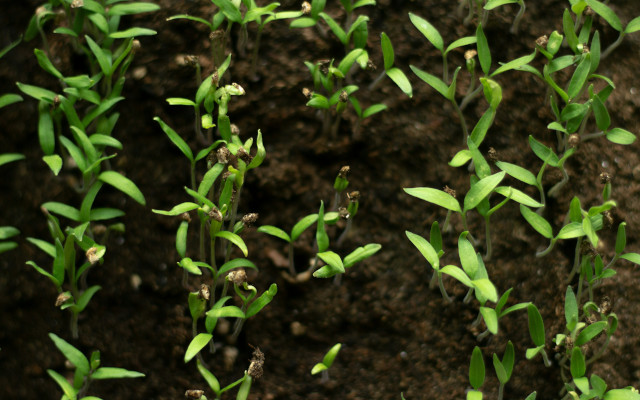
Photo by Anton Darius on Unsplash
References
- Convention on Biological Diversity. (1992). Convention on Biological Diversity. United Nations. https://www.cbd.int/doc/legal/cbd-en.pdf
- European Commission. (2020). Communication from the Commission to the European Parliament, the Council, the European Economic and Social Committee and the Committee of the Regions: A Farm to Fork Strategy for a fair, healthy and environmentally-friendly food system (COM/2020/381 final). https://eur-lex.europa.eu/legal-content/EN/TXT/?uri=CELEX:52020DC0381
- European Commission. (2020). Communication from the Commission to the European Parliament, the Council, the European Economic and Social Committee and the Committee of the Regions: EU Biodiversity Strategy for 2030(COM/2020/380 final). https://eur-lex.europa.eu/legal-content/EN/TXT/?uri=CELEX:52020DC0380
- European Union. (2008). Council Directive 2008/90/EC of 29 September 2008 on the marketing of fruit plant propagating material and fruit plants intended for fruit production. Official Journal of the European Union, L 267/8. https://eur-lex.europa.eu/legal-content/EN/TXT/?uri=CELEX:32008L0090
- European Union. (2009). Council Directive 2009/145/EC of 26 November 2009 providing for certain derogations, for acceptance of vegetable landraces and varieties which have been traditionally grown in particular localities and regions and are threatened by genetic erosion. Official Journal of the European Union, L 312/44. https://eur-lex.europa.eu/legal-content/EN/TXT/?uri=CELEX:32009L0145
- Food and Agriculture Organization. (2001). International Treaty on Plant Genetic Resources for Food and Agriculture. FAO. https://www.fao.org/plant-treaty/en/
- Joint letter: Production and marketing of plant reproductive material reform. (2025, November 25). NGOs, farmers’ and breeder representatives urge Member States to protect and enhance agrobiodiversity. Coalition of European civil society organisations. https://www.arche-noah.at/jointletteronprm
- United Nations General Assembly. (2018). United Nations Declaration on the Rights of Peasants and Other People Working in Rural Areas (A/RES/73/165). https://undocs.org/A/RES/73/165
- United Nations. (n.d.). Biodiversity for food and agriculture. Food and Agriculture Organization. Retrieved November 25, 2025, from http://www.fao.org/biodiversity/en/

Dario Dongo, lawyer and journalist, PhD in international food law, founder of WIISE (FARE - GIFT - Food Times) and Égalité.