

Listeria monocytogenes is a dangerous pathogenic bacterium with high hospitalization and mortality rates that is still underestimated. Or worse, out of control. In Italy-where Listeria causes 12 percent of food safety alerts-but also in Europe, as RASFF and ‘One Health‘ reports show. Insight.
1) Listeria, introduction
Gram-positive pathogenic bacteria (such as Bacillus spp., Clostridium botulinum and C. perfringens, Enterococcus, Mycobacterium bovis, Staphylococcus aureus, Streptococcus spp.), Listeria monocytogenes has exclusive food transmission (WHO, 2015). Thirteen serotypes are known, three of which (1/2a, 1/2b, 4b) are associated with most foodborne infections.
‘L. monocytogenes is resistant. It tolerates salt and, unlike many other pathogens, can not only survive but also grow at temperatures below +1°C. It is thus also distinguished by its persistence in food production environments. The bacterium is ubiquitous in the environment and is found in moist environments, soil and decaying vegetation‘ (FDA, 2012). (1)
2) Listeriosis
The prevalence of Listeria is relatively low compared with other bacteria (e.g., Salmonella ssp., Campylobacter, Escherichia coli ssp.). This bacterium, nonetheless, is one of the leading causes of premature mortality from food poisoning. Listeria infection can cause two forms of illness:
– Acute febrile gastroenteritis. It can manifest with various symptoms (nausea, vomiting, pain, fever, sometimes even diarrhea), ranging from mild to intense. It generally resolves in young, healthy people. Not so for the vulnerable ones, who may incur the
– Invasive or systemic listeriosis. The infection manifests with subtle symptoms (e.g., fever, diarrhea) that are followed, after even long incubation (up to 90 days), by septicemia or infection of the nervous system (meningitis) and various complications of even lethal outcome.
2.1) Population groups at risk
The elderly-a rapidly growing segment of the population in the Old Continent(1 in 4 in Italy) and beyond-are particularly vulnerable to Listeria monocytogenes. Thus pregnant women, with high risk of fetal and unborn death, as well as preschool children.
People with weak immune systems are more vulnerable-i.e., people with AIDS or other chronic diseases including diabetes, people taking immunosuppressive drugs (including chemotherapy and cortisone) following transplantation, cancer, arthritis, and other diseases-are also at risk of contracting systemic listeriosis (1,2,3).
3) Listeria monocytogenes and food safety. The situation in Italy
Twelve percent of food safety risk recalls recorded on the Italian Ministry of Health website over the past 20 months involve Listeria monocytogenes contamination. The 63 alerts out of a total of 535, it should be noted, also affect industrial giants that thus demonstrate unacceptable shortcomings in self-control, in spite of billions in turnovers. Following is a review of cases recorded between January 1, 2022, and August 15, 2023, broken down by food categories. (4)
3.1) Meat, meat preparations and meat products.
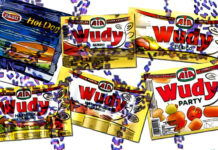
Sixty-four percent of Listeria alerts examined in Italy (40 out of 63 cases) involved meat, meat preparations and meat products. Topping the list is the AIA – Veronesi group (€ 6.5 bn turnover, 8,500 employees), with 9 opaque recalls in Italy on
frankfurters
chicken and turkey (5.6). The Veroni Group (280 employees in Italy and 70 in the U.S., where it is the Italian leader in sliced meats and was acquired in 2023 by SugarCreek Packing) also stands out, with its super-giant sliced mortadella (7 recalls). Listeria in Jomi SpA’s mortadella and pork neck , as well as in Motta Srl’s high-quality cooked ham.
Six Listeria alerts involved salami, mostly from small and medium-sized enterprises. Felino PDO salami is joined by Parma PDO ham in a mixed appetizer by Brendolan Service Srl. Also contaminated were porchetta di Ariccia IGP (Salumificio San Michele, Parmafood Group), salted pancetta, horse filets from Veneto (also sold as ‘good flavors of Tuscany‘), beef and chicken (17 recalls in total). Fresh beef, in turn, has been the subject of recalls for Listeria monocytogenes contamination, by Juvica Srl (scottona tartare) and Piatti Freschi italia SpA (vitello tonnato).
3.2) Cheeses
Cheeses ranked second in the number of recalls in Italy caused by Listeria during the period examined, with 11 out of 63 alerts (17 percent of the total). Italy’s leading PDO gorgonzola producer, Igor Srl, stands out with two recalls followed by a third from another small producer. This was followed by Emilio Mauri SpA, with two recalls on taleggio also in PDO version (where the pathogen is not specified ). Other cheeses recalled for Listeria contamination include a ‘cacio del casaro‘ semi-cooked (or semi-cured) cheese, mozzarella piacentina, ‘brillo di Treviso,’ and truffle pecorino aretino. Perhaps also a ‘first salt‘ from (no longer) raw milk, with pathogen once again undeclared.
3.3) Fish products
Smoked salmon-at the top of international rankings of seafood products contaminated with Listeria monocytogenes-has been the subject of only one recall in Italy during the period under review in connection with a product arriving from Scotland. Another recall involved a Nordic cod preparation, from Denmark, and a third involved frozen tropical shrimp from Vietnam. The occasion is worth a reminder of how frozen products are themselves not free of food safety risks from Listeria contamination. (7)
3.4) Other foods
Ready-To-Eat foods (RTE) are foods typically at risk of contamination by Listeria monocytogenes. During the period examined, the Ministry of Health recorded only three recalls in Italy on sandwiches, with salmon and mayonnaise and with equine fillets.
Deserving attention in this regard is yet another omission of pathogen citation by the leading supplier to HoReCa in the Triveneto region (Bertolini group Srl, part of CH&F Bertolini).
A tuna and radicchio sauce with Listeria cost the Veneto-based Cucina Nostrana Srl four recalls. Finally, aRussian salad, which involved a microenterprise from Lazio, and a chocolate pancake made in France.
4) Listeria and food safety in Europe. Under-reporting
Sixteen percent of the notifications on pathogenic microorganisms in food and 17 percent of the outbreaks reported to the Rapid Alert System on Food and Feed (RASFF), in the year 2022, concern Listeria monocytogenes.(8) But the alerts recorded on the RASFF represent the tip of theiceberg, as noted above. (9) In fact, the 132 notifications of contamination and the 7 outbreaks of L. monocytogenes do not include the vast majority of recalls recorded nationwide, in Italy and in the other 26 member countries.
Under-reporting
. The incomplete scenario offered by the RASFF report did not allow EFSA and ECDC(European Centre for Disease Prevention and Control) to fully assess the appropriateness of shared action on Listeria, a pathogen tragically more dangerous than Salmonella. Thus, in 2022, four Rapid Outbreak Assessments (ROAs ) and one Joint Notification Summary (JNS) were dedicated to Salmonella spp. But none to Listeria monocytogenes.
4.1) EFSA – ECDC report on zoonoses.
‘EUOne Health Zoonoses Summary Report‘ (EUOHZ), published by EFSA(European Food Safety Authority) and ECDC(European Center for Disease Control and Prevention), provides and interprets key statistics on monitoring and surveillance activities on zoonoses and zoonotic agents in humans, food, animals and feed. (10)
The latest EUOHZ report-in presenting analyses conducted in 2021 in 27 member states in addition to the United Kingdom (Northern Ireland alone), the three states participating in EFTA(European Free Trade Association. Iceland, Norway, Switzerland and Liechtenstein) and the four countries in pre-accession status (Albania, Bosnia and Herzegovina, Republic of North Macedonia, Montenegro and Serbia)-confirms the under-reporting problem. (11)
4.2) Listeria in Europe. The numbers don’t add up
Twenty-four member states reported the results of Lysteria monocytogenes analyses performed in 2021 on a total of 244,357 samples of different categories of Ready-To-Eat (RTE) foods, taken ‘from farm to fork.’
– the highest values (contamination on 2-5% of samples) were observed on fish and fishery products, beef and pork products, fruits and vegetables, and cheeses made from sheep’s milk. 2.3 percent was the average contamination rate among 40,710 samples of meat and meat products,
– At the retail level, the highest contamination rates were observed in ‘meat products, fermented sausages’ (3.1 percent) and ‘fish’ (1.5 percent),
– production, the highest contamination indices were observed on ‘fishery products’ (3.1 percent), ‘meat products other than fermented sausages’ (2.5 percent) and fish (1.8 percent),
– in primary agricultural production, the absence of minimum legal requirements for harmonized sampling and reporting have made it impossible to collect sufficient data.
The contamination rates of the analyzed samples-to be considered together with the volumes of the categories of risky foods placed on the EU market-have an order of magnitude well above the numbers of notifications in the RASFF system, as was intended.
4.3) Listeriosis in Europe. The numbers don’t add up
‘In 2021,the highest number of deaths was associated with listeriosis (N = 196; 13.7%), followed by salmonellosis (N = 71; 0.18%) and STEC infections (N = 18; 0.41%)‘ (EFSA – ECDC, EU One Health Zoonoses Summary Report 2021).
2,183 human cases of invasive or systemic listeriosis were confirmed in 2021, of which 1,482 were in the European Union. In a context of under-reporting that is structural in at least half of the countries, as well as in the RASFF system:
– only 16 out of 35 states were able to provide clinical data on 956 of these cases (43.8 percent), while reporting a hospitalization rate of 96.5 percent. And only 14 countries reported 196 deaths, out of 1,457 confirmed cases (65.4%. See notes 12,13),
– EFSA conversely learned of 23 listeriosis outbreaks (compared with 4 recorded in the 2021 RASFF report), only 104 cases and 12 deaths. The numbers do not add up.
5) Interim Conclusions
A serious food safety risk plagues Europe and is still systematically underestimated by institutions (European Commission and member states), national authorities in charge of official controls, and industry and retail operators. Until when?
Dario Dongo
Notes
(1) Bad Bug Book. Handbook of Foodborne Pathogenic Microorganisms and Natural Toxins. 2nd edition (2012). https://tinyurl.com/5n6wvkhm FDA(Food and Drug Administration), USA. Pages 99-102
(2) Listeria. Maladie – Recommandations CNR Listériose. https://www.pasteur.fr/fr/sante-publique/CNR/les-cnr/listeria/la-maladie-recommandations Institute Pasteur
(3) Silvia Bonardi, Dario Dongo. Listeria and listeriosis, an in-depth study. FT (Food Times). 3.9.18
(4) Ministry of Health of the Italian Republic. Food product recalls by operators https://tinyurl.com/y95uzzne
(5) Dario Dongo. Listeria in AIA sausages, false allegations against Asiago cheese. FT (Food Times). 30.9.22
(6) The question remains how the Ministry of Health (DGISAN, Office 8) can publish product recalls with undeclared pathogens. Combination, by a giant such as the Veronesi Group and various other industries
(7) Silvia Bonardi, Dario Dongo. Listeria and frozen vegetables, here’s why. FT (Food Times). 10.7.18
(8) 2022 Annual Report – Alert and Cooperation Network. https://tinyurl.com/yfdcp8tw European Commission. doi: 10.2875/941288. See paragraphs 3.1.3, 3.1.4
(9) Dario Dongo, Marta Strinati. RASFF 2022, EU food security report. FT (Food Times). 1.8.23
(10) From 2020, the production of the annual EUOHZ report is supported by the ZOE Consortium(Zoonoses under a One health perspective in the EU) composed of the Istituto Superiore di Sanità (ISS. Rome, Italy), the Istituto Zooprofilattico Sperimentale delle Venezie (Padua, Italy), the French Agency for Food, Environmental and Occupational Health and Safety (Maisons-Alfort, France), the Istituto Zooprofilattico Sperimentale dell’Abruzzo e del Molise (Teramo, Italy) and the Istituto Zooprofilattico Sperimentale della Lombardia e dell’Emilia Romagna (Brescia, Italy), under the coordination of the Istituto Zooprofilattico Sperimentale dell’Abruzzo e del Molise (Teramo, Italy)
(11) The European Union One Health 2021 Zoonoses Report. EFSA, ECDC. EFSA Journal / Volume 20, Issue 12 / e07666. https://doi.org/10.2903/j.efsa.2022.7666
(12) In 2021, the highest notification rates were observed in Finland, Denmark, Sweden and Slovenia, with 1.3, 1.1, 1.0 and 0.9 cases per 100,000 population, respectively. The lowest reporting rates were reported by Bulgaria, Croatia, Cyprus, Greece and Romania (≤ 0.20 per 100,000). Italy is still at the low end of the ranking, with 0.41 cases per 100,000 population (241 cases in total), albeit an improvement over previous years (0.29 cases per 100,000 population, 178 in total, compared to 2018)
(13) France reported the most deaths (75), followed by Spain (34), Poland (25) and Germany (20). Listeria monocytogenes infections were mainly reported in the age group over 64 years old. At the European level, the percentage of listeriosis cases in this age group has steadily increased, from 56.1 percent in 2008 to 64.5 percent in 2019 and 72.5 percent in 2020
(14) Dario Dongo. U.S. and Canada, in silence the biggest draw of 2018. FT (Food Times). 18.1.19

Dario Dongo, lawyer and journalist, PhD in international food law, founder of WIISE (FARE - GIFT - Food Times) and Égalité.