
In contrast, insects at the table-a relative novelty in Europe, beyond the worms in the Sardinian cheese casu marsu and a few others (1,2)-are rooted in culture and tradition in Mexico, where anthropologist Julieta Ramos-Elorduy has identified 530 different species that are in fact the object of food consumption, so-called entomophagy.
The role of insects moreover far exceeds the production of food, food additives (e.g., cochineal. See note 3) and feed, cosmetic and medicinal ingredients. Since they are able to exert ecosystem functions, useful for biodiversity as well as the conversion of organic waste into biomass. Insight.
1) Insects in Mexico. Culture and cosmogony
The Institute of Biology at the Universidad Nacional Autónoma de México (UNAM) has been engaged in research on the role of insects for 50 years. And it is to his Julieta Ramos-Elorduy that we owe the most outstanding research on entomophagy, thanks in part to numerous missions to indigenous communities in the various territories.
Indigenous culture gives insects a leading role, in daily life as well as in cosmogony:
– the butterfly Papilio daunus was revered by the Teotihuacans as the goddess of flowers, beauty and youth,
– the Huichol celebrated certain species of wasps as escorts of souls to the afterlife,
– fire ants (genus Pogonomyrmex), with the shape of their nest, would have suggested to the feathered serpent Quetzalcoatl that maize should be stored to ensure year-round food.
2) Pre-Columbian Entomophagy.
Food consumption of insects in Mexico dates back to pre-Hispanic times (i.e., pre-1521). And ancient indigenous knowledge is still passed down in the responsible use of these resources. Starting with the harvest stage, which is linked to the cycles of nature (e.g., moon phases, flowering of certain plants, migration of animal species).
Centuries of experience has demonstrated the safety of consuming many edible insect species, outside of only cases of chemical contamination by pesticide and agrotoxic residues. So much so that in some areas, such as Oaxaca and Hidalgo, insects are still an essential source of protein. (5)
3) Harvesting and breeding
Researchers have documented the culture, collection and consumption of insects by about 3,000 ethnic groups around the world. In contrast, breeding is still minimal, partly due to regulatory hurdles that have only found possible solutions in recent years (6,7). In Mexico as in various countries in Asia, small herds of:
– bees(Apis, Melipona, Trigona),
– Aquatic bugs (genera Krizousacorixa, Corisella, Notonecta, Graptocorixa y Hespecorixa, Lethocerus y Belostoma),
– Bombyx mori butterflies,
– water fly(Ephydra hians) and Musca domestica (whose larva is known as cheese worm),
– beetles (
Tenebrio molitor
, Zophobas morio),
– coccidia (genus Dactylopius),
– common crickets (
Acheta domestica
),
– black soldier fly. (8)
4) Mexico, insects at the table.
Mexican researcher Julieta Ramos-Elorduy has surveyed 530 species of insects subject to food consumption. In recent years, there has been the greatest growth in consumption of the species listed below, whose survival, moreover, is threatened by overexploitation and various external factors (pollution, agrotoxics, abandonment of agave cultivation, etc.).
4.1) Crickets, ants and mezcal worm.
– chapulines. Crickets are the most widely consumed insects in Mexico. The most common cricket species, among the 54 found in the territory, are Sphenarium histrio Gerstaecker, Sphenarium purpurascens Charpentier, Sphenarium magnum Márquez, Sphenarium sp., Melanoplus femurrubrum DeGeer, and Melanoplus mexicanus Sauss,
– chicatanas, ants. Species Atta mexicana Smith, Atta cephalotes Linnaeus, Atta texana Buckley,
– escamoles, ant eggs of the species Liometopum apiculatum Mayr and L. occidentale var. luctuosum Wheeler. Their nests are found in agave plants. ‘Ant caviar’ is a delicious but very expensive dish,
– red agave worm(Comadia redtembacheri Hammerschmidt) and white agave worm(Aegiale hesperiaris Walker). The former is the star of mezcal, the famous agave distillate, and is also cleared by theFood and Drug Administration (FDA) for import into the US.
4.2) Bugs, beetles and stingless bees.
– jumil sagrado, bug. Edessa cordifera Walker is the most consumed species of the 51 in use. A ceremony is held to collect this insect (in Taxco, south-central Mexico).
– Ahuahutle, Axayacatl, aquatic bugs and their eggs) (Buenoa af. Margaritacea Bueno, Corisella edulis Champion, orisella mercenaria Say, Corisella tarsalis Fieber, Corisella texcocana Jacz,, Corisella sp., Graptocorixa abdominales Say, Graptocorixa bimaculata Guér, Hesperocorixa laevigata Uhler, Risousacorixa azteca Jacz., Krisousacorixa femorata Guér., Krisousacorixa sp., Trichocorixa sp., Notonecta unifasciata Guérin-Meneville, Notonecta sp,
– jumil de Morelos, beetle(Euschistus sulcacitus Rolston),
– Stingless bees, bred for hundreds of years in the Yucatan Peninsula. The most common species are Melipona beecheii Bennett, Scaptotrigona mexicana Guérin, captotrigona hellwegeri Friese, Plebeia sp., Nannotrigona testaceicornis Cresson, Trigona (Tetragona) jaty Schwarz- Trigona (Tetragonisca) angustula Lepeletier.
5) Insects, farmers’ income and sustainable development
Experience in Mexico shows how insects can contribute substantially to farmers’ income supplementation, food sovereignty and sustainable development. Julieta Ramos-Elorduy documented the practices of peasant agriculture, showing how a family of 5 members can harvest 400-500 kg of crickets, the quintessential edible insect, every day.
The 100 percent biomass yield, high protein content (up to 77 percent), and the ability to preserve crickets for a long time by drying them in the sun (or in a frying pan, or in the oven) allows small-scale farmers in Mexico to supplement their families’ diets as well as their livelihoods. With minimal investment in economic, human and natural resources. Some species are available year-round, others only in certain seasons.
6) Body and mind
Anthropologist Julieta Ramos-Elorduy has initiated and continued her own research in Mexico on numerous communities where the indigenous tradition in entomophagy is so strong that it has been absorbed into the customs of a substantial proportion of the members of so-called modern society. In an authentic continuity of body language that well appreciates crisp texture and delicate flavor, feeling the benefit of the prevailing protein.
The difficulty of some urban populations in accepting insects at the table, conversely, cannot be explained in terms of a cultural barrier. Rather, according to Julieta Ramos-Elorduy, the widespread consumption of ultra-processed foods has altered the ability to appreciate the tastes of natural foods. Mexico is indeed plagued by an epidemic of obesity and related diseases that has forced the government to adopt special label warnings and restrictions on junk food sales. (9)
7) Insects at the table, perspectives
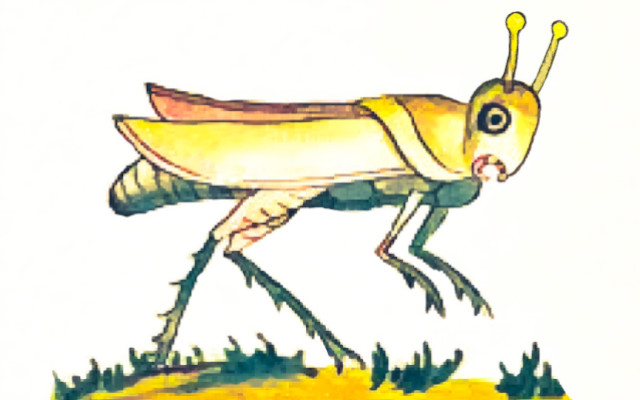
The Mexican government in recent years (2018) has expanded the list of native edible insect species to 549, just under one-third of the 1,681 species reviewed globally. (10) Already in 1588, after all, the Franciscan friar Bernardino de Sahagún had described-in Book XI of the Florentine Codex (11)-the presence in Mexico of 96 species of edible insects. Referring to the cricket, on the cover, as ‘a thunderbolt-like grasshopper‘ because of its rapid flight and shrill noise that distinguishes it from the former.
It seems logical that ‘sustainable food systems,’ a recurring concept in political proclamations everywhere, include insects. In fact, it is estimated that such species have inhabited the planet for 300 million years (299.7 million beforehomo sapiens) and are still the most widespread. Their role in ecosystems is essential, as mentioned above. But in order for ‘sustainability’ to be talked about, much attention must be paid to respecting peoples’ traditions and cultures, redistributing economic benefits, and respecting ecosystems.
8) Socio-environmental challenges, ESG.
Countries in the Global North are now working on introducing insects, especially in the form of meals, into human and animal nutrition. The FAO 2022 report ‘Thinking about the future of food safety – A foresight report‘ recalled this perspective, already introduced in a large study (2013) devoted by the Food and Agriculture Organization to entomophagy (12,1). EU co-funded research in the Horizon and Horizon Europe programs in turn is boosting research in this direction. (13)
The socio-environmental challenges to be considered, from a sustainable development (#sdgs2030) and #ESG(Environmental, Social, Governance) perspective, essentially pertain to:
– economic conditions of the farmers who harvest and raise the insects, who in Mexico as elsewhere often still live in even extreme poverty. Producers must therefore be protected from the neocolonialist-style exploitation already witnessed in agribusiness supply chains rooted in low-to-middle income countries (e.g., palm, soy, coffee, cocoa),
– animal welfare. The current lack of regulations on insect harvesting and breeding must not lead to overexploitation of natural resources or other abuses that may cause unfair harm to the health and welfare of the animal and plant species involved. Therefore, the One Health concept must also find application in this livestock sector. (14) Without pesticides or antibiotics. (15)
Dario Dongo and Isis Consuelo Sanlucar Chirinos
Cover image elaborated from Brother Bernadine of Sahagún. Códice Florentino, Lib. XI, figure 101
Notes
(1) Dario Dongo.
Insects at the table in the EU.
. FT (Food Times). 28.2.17,
(2) Dario Dongo, Alfonso Piscopo.
Casu marsu, cheese with worms in Sardinian tradition.
. FT (Food Times). 10.1.19,
(3) Some examples of the use of cochineal-color additive E 120, carmine-in previous articles on orange-flavored beverages and milk drinks.
(4) Julieta Ramos-Elorduy, & Viejo Montesinos, J. L. (2007). Los insectos como alimento humano: Breve ensayo sobre la entomofagia, con especial referencia a México. Boletín Real Sociedad Española de Historia Natural. Sección Biología, 102(1-4), 61-84
(5) Julieta Ramos-Elorduy (2009)
¿Los Insectos se comen?
DGDC-UNAM.
(6) Dario Dongo, Andrea Adelmo Della Penna. Insects on the table, Novel Food approvals in EU. The state of the art. FT (Food Times). 13.2.22,
(7) Dario Dongo, Giulia Torre.
Notification of Traditional Foods from Third Countries as Novel Foods in the EU.
. FT (Food Times). 4.3.22,
(8) Dario Dongo, Andrea Adelmo Della Penna.
Black soldier fly larvae, proteins and oils from organic wastes.
. FT (Food Times). 11.4.22,
(9) Dario Dongo. Mexico, protecting minors from junk food. Bans are triggered. FT (Food Times). 26.8.20,
(10) Gobierno de México.
Insectos comestibles
. 4.3.18,
(11) Julieta Ramos-Elorduy (1999).
Insectos comestibles
. Arqueología Mexicana, núm. 35, pp. 18-23.
(12) Isis Consuelo Sanlucar Chirinos.
The Future of Food Safety, the FAO 2022 report.
GIFT(Great Italian Food Trade). 23.3.22,
(13) Andrea Adelmo Della Penna. Replace red meat with house crickets? The NovRBA project. FT (Food Times). 25.5.22,
(14) Dario Dongo. One Health. Animal, human, planetary health and welfare. What can we do? FT (Food Times). 2.6.21,
(15) Dario Dongo, Andrea Adelmo Della Penna. Animal husbandry, algae and microalgae to prevent antibiotic use. Algatan. FT (Food Times). 9.9.20,

Dario Dongo, lawyer and journalist, PhD in international food law, founder of WIISE (FARE - GIFT - Food Times) and Égalité.

Graduated in food engineering at the National Autonomous University of Mexico, she is attending the master's degree in 'Food Safety Lawyer and Consultant' at Alma Mater, University of Bologna.