

Fair trade, fair trade. The small brand is redolent among Christmas baskets and giveaways, a sign of a shred of affordable humanity surfacing from even the darkest hearts. But what does ‘fair’ mean, what is behind this logo? The Christmas we would all like, every single day, in any corner of the planet.
Fair trade
, the values behind a logo
Fair trade is an allegory, two vocabulary words express an abstract concept, so broad and indefinite that it cannot be subjected to effective cogent regulation. Because the entire production and distribution chain needs to be covered, from primary agricultural production wherever based to distribution and delivery to the final consumer. From cocoa bean to chocolate, #NoOneLeftBehind. However, a definition of fair trade was developed in 2001 by the four main organizations dealing with it.
‘
Fair trade is a partnership
trade
‘ based on dialogue, transparency and respect, which pursues greater equity in international trade, contributes to sustainable development by providing better trading conditions and securing the rights of marginalized producers and workers, especially in the South (of the world)
‘
Of ‘trade’ it is, since this is the lever that activates trade in the capitalist economy. But of a ‘good’ trade, such as our site-which in fact purely refers to ‘trade‘ – always invoked in every possible declension. Respect for basic human rights is the priority that cannot be ignored, and it is therefore among other things that we have initiated the battle in Italy against palm oil, to date the primary motive for land robberies on the planet.
The criteria underlying the ‘Fair Trade‘and its certification systems can be summarized in the following ABC.
A) Human Rights
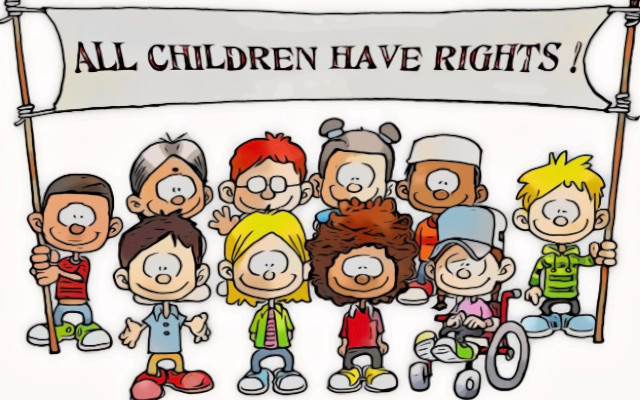
Children first. The UN Convention on the Rights of the Child (OHCHR)was adopted in 1989 and updated, in 1995, to extend essential protection to all children under the age of 18. (1) Moreover, child slavery is still the practice today, even in the supply chains that supply Big Food. Palm and cocoa lead the Shame. With the aggravating factor of exposing minors to
pesticides
poisonous
, without protection.
Recognizing the rights
of children, gender equality
,
social inclusion-and implementing them in practice, in agricultural and production activities-is a prerequisite for accessing fair trade programs.
B) Farmers’ rights
The rights of farmers
and rural communities are the subject of a recent UN declaration
. Farmers and food processors at short
will receive
protection, in Europe, against unfair business practices
put in place by distribution.
The value chain
is reversed, however, as it is always the downstream operators – trade intermediaries, importers and distributors in particular – who make the big profits, to the detriment of campesinos
. The equitable supply chain therefore aspires to create opportunities for communities
disadvantaged agriculture,
primarily
in developing countries.
Producers are recognized a higher commodity price, compared to possible alternatives (trade practices or international quotations). Transparent relationships must also be established to demonstrate and share, including with end consumers, the redistribution of value throughout the supply chain.
C) Rights of communities and the environment
Cooperation Is an essential element of the equitable supply chain. The promoters of which are responsible for transferring knowledge (
knowledge transfer
) and foster infrastructure development (
capacity
building
). To consolidate the value of production chains, improve the living conditions of local communities, and promote sustainable development.
Respecting of workers-who must work in safe conditions, and be able to organize in unions-and individuals. Who must be lifted out of extreme poverty, have access to nutritious food and clean water, access to education and health. To practically realize the Sustainable Development Goals (SDGs) only in theory affirmed by UN member countries.
Fair trade, history and certifications
Fair trade is a movement born in the middle of the last century. Thanks to some groups of European and American well-wishers who, beginning in the 1950s, took note of the unacceptable inequalities caused by the exploitation of the peoples of the ‘South’ of the planet. Between historical colonialism and neo-colonialism still in place
, the pioneers of ‘
fair trade
‘ decided to intervene with market instruments where revolutions have often failed.
The mechanism behind the ‘
fair trade
‘
is therefore to recognize a more ‘fair’ price for local productions, shortening where possible the distribution chain. To prevent the risk of speculation behind the backs of defenseless communities in the 1990s Paul Rice, founder of ‘Fair Trade USA, worked to develop an international standard. With the aim of monitoring and ensuring the suitability of fair trade practices, carried out in the meantime by various organizations, against the shared goals. Thus was born the ‘
Fair Trade Certification
, one of the best-known fair trade standards (along with, for example, Fairtrade, ‘
Fair for life
‘, Fair Guaranteed) which now has more than 1250 companies and covers more than 900,000 women and men farmers and workers.
The training course
Certification requires a rigorous and complex training course that generally requires at least 6-9 months of preparation, betweenwebinar introductions, meetings with the management and workers, audit Of third parties repeated over time. Once an ethical supply chain has been developed, tested and monitored, it must then give rise to the so-called ‘Premium Fund‘. That is, workers must cooperate with the committee ‘
Fair Trade
‘ to realize a shared project for the benefit of the worker community.
The ‘
Premium Fund
‘
Is a participatory project that has nothing to do with donations. Which, although useful in the short term, in themselves are not enough to ensure communities’ livelihood prospects in the medium to long term. It is therefore essential to work on ‘capacity building’, ‘capacity development’ e ‘capacity strenghtening‘. With concrete and consistent solutions to the
specific needs, such as transportation for
workers, kindergartens near workplaces, schools and health care facilities.
Equitable supply chains in a variety of contexts, geographic and productive
The exploitation of workers in agriculture
is a well-known scourge in Italy, as well as in Spain
, with no need to look further. The abomination is widespread and the authorities are still unable, unfortunately, to curb it. However, there are the virtuous examples of ethical supply chains that reject all forms of exploitation and therefore undergo special certifications. Like the ‘Good and Righteous’ project
by
Coop Italy and
the SA8000 standard
which Coop itself – the first large-scale retail chain in Italy – introduced some 20 years ago.
Home-based work is finally another noteworthy yet underestimated phenomenon, where exploitation dominates in various geographical and production contexts. The ‘
homeworkers
‘ are at least 300 million, according to ILO data (‘
International Labour Organization
‘). Mostly women, forced to work from home by security requirements or social and religious precepts. This form of work is essential tosupport family income, but it often turns into slavery-even child slavery-disguised behind sub-contracts even serving global industrial giants. Ensuring the dignity of home-based work is taken care of by, among others, the
a NGO Nest
.
Conclusions
Trade and the supply chains
underlying it should always be ‘
fair
‘, respecting the principles crystallized in various international conventions. It is a question of legality, which the protagonists of international production and trade nevertheless often evade, sometimes systematically.
The role of consumAtors, once again, is to force change. Through responsible purchasing choices of only those products and services that can guarantee the effective ethicality of the entire supply chain. Down to the last mile, the mile that separates goods from logistics warehouses to our homes, assuming home deliveries.
The purchase of
of goods that may feed the chain of exploitation, with attention to those critical supply chains such as fruit and vegetables andpalm oil
. On fruits and vegetables, direct relationships with producers and certifications can offer suitable guarantees. On palm oil, on the other hand, there is no escape; desecration of human rights and the environment is the rule-despite vacuous promises of ‘sustainability’ – And should therefore be avoided.
ConsumAtors – especially the younger ones – have the tools and attention they need to vote for a better world with their daily choices of purchases and services. Let us all make good use of it, so that Christmas will be for everyone and be renewed every day, everywhere, without abuse or deception.
#Égalité!
Dario Dongo and Giulia Baldelli
Notes
(1) UN
Convention on the Rights of the Child
, OHCHR, at https://www.ohchr.org/en/professionalinterest/pages/crc.aspx

Dario Dongo, lawyer and journalist, PhD in international food law, founder of WIISE (FARE - GIFT - Food Times) and Égalité.

Graduated in nutritional chemistry and pharmaceutical technologies, expert in quality management systems, social responsibility and supply chain


