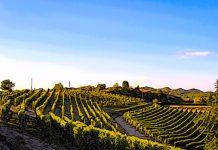


On 5/20/20 the European Commission-in addition to communicating the EU Farm to Fork Strategy, to which we have already devoted an in-depth article-presented the EU 2030 Biodiversity Strategy. Insight and notes on the plan announced in Brussels.
EU 2030 Biodiversity Strategy, introduction
The European 2030 Biodiversity Strategy aspires to safeguard nature, reverse the trend of ecosystem degradation, and prevent further zoonoses (of which Covid-19 is the latest example). Through the introduction of binding targets, complementary to those announced with the Farm to Fork strategy and the new Common Agricultural Policy (CAP). In the broader context of the EuropeanGreen Deal .
The ‘aspirational’ goal, stated in the title of the Communication, is ‘Bringing back Nature in ourlives‘. With the idea of defining new ways to implement the (weak) European regulations already in place. To which new commitments, measures, targets and governance mechanisms should be added. To put European biodiversity back on the road to recovery, better late than never, by 2030.
The global biodiversity crisis, which FAO reports annually, is out of control. So are the three first, anthropogenic causes of its loss:
– Unprecedented exploitation of soils and watersheds,
– climate change,
– pollution.
Biodiversity and Covid-19
Covid-19 simply exposed the fragility of the system. Bringing out, once again, the structural problems of food security and
water security
.
After all, the zoonosis at the origin of the new coronavirus, like the others that preceded it, results from the disruption of natural balances. Where bats-whose global population is estimated to account for 20 percent of the planet’s mammals-have become ‘urbanized’ as a result of the degradation of their natural habitats. (3) The policy program under consideration should therefore draw resources from, among other things, the long-awaited and debated recovery plan.
Biodiversity loss, data, and impacts
Biodiversity loss and ecosystem collapse have peaked in the last 40 years, with wildlife populations estimated to have plummeted by -60%. Nearly three-quarters of the Earth’s surface has been altered by humans, and about 1 million species are at risk of extinction in the coming decades. The loss of biodiversity impacts several spheres:
– climate. The devastation of soils and ecosystems is closely linked to the climate emergency.
As already noted by IPCC(Intergovernmental Panel on Climate Change) and WMO(World Meteorological Organization). As an obvious consequence of, among other things, the rarefaction of soils and primary forests that absorb and store CO2,
– economy and social security. Natural capital provides essential and renewable resources, where responsibly managed, to agriculture and industry. Conversely, the loss of natural resources is a cause of vulnerability and conflict, particularly in Low-Middle Income Countries (LMICs),
– food security
. Irresponsible land management also causes land deprivation(land grabbing) and food deprivation to the detriment of large segments of the population. These phenomena are exacerbated by the climate emergency and the genocide of pollinating insects, to the protection of which, among other things, theEuropean citizens’ initiative Save the Bees!
– public health. A healthy society cannot ignore the preservation of ecosystems. In fact, the destruction of nature increases the risk of disease and reduces human resilience, partly due topesticide abuse. As well as depriving individuals of the beneficial effects of nature on health and mental well-being,
– equity. Biodiversity loss, like natural disasters, systematically afflicts the poorest countries and the most vulnerable populations, starting with children.
Biodiversity and zoonoses
The pressure exerted on the environment by unsustainable food supply chains-such as palm oil, GMO soybeans, and U.S. meats, prime causes of land grabbing and ecocide at the planetary level-exposes communities to increasing risks related to zoonotic diseases.
The illegal (or poorly regulated) wildlife trade, including in so-called wet markets, must also be curbed to reduce the dangerous promiscuity between wild animal species and humans. ‘This trade contributes to the depletion or extinction of entire species, is the fourth most profitable black market in the world, and is believed to be one of the causes behind the emergence of zoonotic diseases. Dismantling it is a human, economic and environmental duty‘. (1)
The Commission commits to review the European Action Plan against wildlife trafficking, in 2021. And to propose a further tightening of EU rules on ivory trade by the end of the year. Other actions include:
– The ‘possible‘ revision of the environmental crime directive,
– The strengthening of the role of the European Anti-Fraud Office (OLAF),
– support for the One Health approach at theWorld Health Organization (WHO) to holistically address challenges pertaining to human, animal and environmental health.
Costs and opportunities
Inaction on environmental and climate issues is not sustainable, either socially or economically. Frequent extreme weather events will result in a significant reduction in average GDP in the EU. With reduced yields in agriculture and fisheries, as well as increased economic losses due to floods and other natural disasters. And further harm related to antibiotic resistance.
On the other hand, restoring nature could generate up to 500,000 new jobs. As well as stimulating agriculture, (bio)construction, food production and tourism. To this end, the European executive promises to invest in the protection of protected areas, with the following targets to 2030:
– protected areas should reach 30 percent of the land area and 30 percent of the seas in the EU,
– at least one-third of protected areas, including all ancient and primary forests that survived the Anthropocene era should be managed more effectively. By setting targets, conservation and monitoring measures,
– so-called ‘ecological corridors‘ will be integrated, so as to establish a ‘trans-European nature network‘.
EU nature restoration plan
The EU Nature Restoration Plan indicates a commitment to implement concrete change beyond the mandate of the current European Commission (2019-2024). With the purposes mentioned below, to be realized (ideally) by 2030:
1) Legally binding EU nature restoration targets, to be proposed in 2021 after impact assessment. With the idea of restoring, by 2030, at least 30 percent of ‘significant areas‘ in degraded, carbon-rich ecosystems,
2) Pollinators, reversal of declining trend,
3) Chemical pesticides, reduction of consumption and related risks by 50%, to apply to even the most dangerous pesticides,
4) high diversity ‘of landscape features‘, to be established in at least 10 percent of the utilized agricultural area (UAA),
5) Agroecology, extension of organic farming to at least 25 percent of the UAA,
6) New trees, three billion to be planted ‘in full accordance with ecological principles‘,
7) Contaminated sites, remediation,
8) Free-course rivers, restoration of at least 25,000 km,
9) Invasive alien species, reduction in the number of species under threat (-50%),
10) fertilizers, reduced consumption (-20%) and nutrient losses (-50%),
(11) Ambitious urban greening plans, for cities with a population of 20,000 or more,
12) sensitive areas (e.g., urban green areas), ban on the use of chemical pesticides,
13) Aquatic environments, substantial reduction of adverse impacts on sensitive species and habitats (including the seafloor),
(14) bycatch, elimination or reduction to a level that allows recovery and conservation of the species.
Agroecology
The EU Nature Restoration Plan recalls the goal of encouraging organic farming, within systems marked byagroecology. Refers to agroforestry, low-intensity permanent pasture, stricter animal welfare standards.
Agricultural machinery lobbies got the citation in this area ofprecision agriculture. With the clear goal of attracting public funding ‘inspired’ by biodiversity, although the technologies in question also lend themselves to divergent goals.
Implementation time will certainly not be short, as reform proposals will be adopted in the years to follow. As already provided in the Farm to Fork (f2f) strategy. The common agricultural policy (CAP) reform itself-where eco-schemes and payment schemes based on ecological performance are expected-has yet to be discussed and will come into effect, presumably, on 1.1.23.
Biodiversity, the governance that is missing
Biodiversity still lacks a governance system. That is to say, EU member states-beyond the merely formal obligations to implement regulations and transpose directives-are de facto unconstrained with regard to the actual implementation of adopted commitments. The ‘polluter pays’ criterion itself, theoretically the basis of European environmental legislation, is essentially lacking in experience and enforcement tools.
The bizarre application of the NAPs (National Action Plans on Pesticides)-as Égalité Onlus has already denounced, alongside the ‘No Pesticides’ Group-is a glaring example of the disapplication of regulations crucial to the protection of the environment and public health. With shameful paradoxes such as that of the Region of Tuscany, where the ‘utilizationplan for the sustainable use of plant protection products and fertilizers (PUFF)’ in ‘safeguard areas‘ allows the use of as many as 183 pesticides close to water bodies, wells and springs used to draw drinking water’ (!). (5)
Brussels then makes a commitment to ensure effective implementation of environmental legislation and, ‘where necessary,’ to review and revise it. (6) Not forgetting the Natura 2000 network, still awaiting completion as well as effective management of all sites, with appropriate measures to protect habitats and species showing declining trends. It also promises to support the role of civil society as a ‘compliance watchdog‘ and improve individuals’ and NGOs’ access to environmental justice in the courts.
At the global level, the EU has a responsibility to actively contribute to the ongoing work at the Conference on Biological Diversity (COP 15). Indeed, Parliament Resolution 16.1.20 had already indicated some of the objectives that have been taken up in this strategy. Ove also proposes to share good intentions at the level of finance, infrastructure development, research and know-how, technology, ‘a fair and equitable sharing of benefits from the use of genetic resources related to biodiversity.’
Toxic treaties
There is no shortage of good words. The European Commission today says it wants to ‘better assess‘ the impact on biodiversity of international partnership agreements already concluded, make new treaties conditional on its compliance, and accompany the ecological transition inLow-Middle Income Countries (LMICs). Also committing to recognizing the role of non-state actors and indigenous groups.
The current negotiations withIndonesia and the U.S. -as well as the recent treaties with the Mercosur countries, Singapore, Canada and Japan should therefore be revised, if words had any meaning.
Unsustainable raw materials
A legislative proposal and other measures to prevent or minimize the placing on the domestic market of products associated with deforestation or forest degradation will be submitted by 2021. Removing products from the supply-chain that derive from bloody and burning supply chains is precisely what a coalition of associations, at the initiative of Égalité Onlus and GIFT(Great Italian Food Trade), are clamoring for. But the Commission’s pitfall is already clear between the lines, where it refers to ‘promoting forest-friendly imports and value chains.’
The lobbying behemoths who speculate on palm oil, GMO soybeans and U.S. meats will therefore have already agreed on the recognition of their self-referential and false certificates of sustainability. It is no coincidence, moreover, that the Commission refers to the idea of introducing in 2021 an initiative on Corporation governance regarding human rights, environmental protection and due diligence within the supply chain. Eye does not see, crime does not pay. Instead, asserting the responsibility of corporations for crimes committed upstream in their supply chains is indispensable. #StopCorporateImpunity!
From words to deeds
On 5/30/20, Germany-home of European Commission President Ursula von Der Leyen-opened a new coal-fired power plant. Datteln 4, in the Ruhr region, lander of North Rhine-Westphalia, will bolster the CO2 emissions of Europe’s (coal-fired) locomotive, already responsible for 22 percent of emissions in the EU. (7) Much of the resources of the trillion-dollar Green Deal European is indeed intended to finance the conversion of Germany’s (and Poland’s) power plants, where in the meantime they persevere at everyone’s expense. European solidarity?
The so-called Action Plan, the action plan attached to the Communication under review, covers 39 initiatives. Which in turn include complex activities, such as the action plan for safeguarding fish stocks and protecting marine ecosystems. And they are in addition to the 27 reforms envisioned in the Farm to Fork strategy where, among other things, new GMOs, the antithesis of biodiversity, are applauded. From words to actions, let’s keep our guard up.
Dario Dongo and Giulia Torre
Notes
(1) Communication from the Commission to the European Parliament, the Council, the Economic and Social Committee and the Committee of the Regions. EU Biodiversity Strategy for 2030 Bringing nature back into our lives. COM(2020) 380 final. Brussels, 5/20/20 , https://ec.europa.eu/info/sites/info/files/communication-annex-eu-biodiversity-strategy-2030_en.pdf
(2) Dario Dongo et al. (2020). COVID-19, abc, the trilogy (Volume I – People, II – Society, III – Planet), at https://www.egalite.org/covid-19-abc-i-nostri-ebook-sul-nuovo-coronavirus/.
(3) Intergovernmental science-policy Plaform for Biodiversity and Ecosystem Services (IPBES) (2019). Summary for policymakers of the global assessment report on biodiversity and ecosystem services of the Intergovernmental Science-Policy Platform on Biodiversity and Ecosystem Services. pp. 12-13, A.2
(4) WHO. One Health, Q&A. 9/21/17, https://www.who.int/features/qa/one-health/en/
(5) Tuscany Region, DPGR no. 43/R/2018. Regulations for the implementation of regional law 28.12.11 no. 69, Article 28. Still awaiting a ruling from the Tuscany Regional Administrative Court, to which environmental and organic farming associations appealed in 2018. Shame!
(6) Some examples:
-dir. 2014/52/EU, Environmental impact assessment of certain public and private projects,
-dir. 2001/42/EC, Assessment of the effects of certain plans and programs on the environment,
-dir. 2004/35/EC, Environmental liability with regard to the prevention and remedying of environmental damage,
-dir. 2008/99/EC, criminal protection of the environment
(6) Dario Dongo. Brazilian meat, the weight of the Amazon on our plates. Buycott! GIFT(Great Italian Food Trade), 9.11.19, https://www.greatitalianfoodtrade.it/consum-attori/carne-brasiliana-il-peso-dell-amazzonia-nei-nostri-piatti-buycott
(7) Climate activists protest Germany’s new Datteln 4 coal power plant. DW. 5/30/20, https://www.dw.com/en/climate-activists-protest-germanys-new-datteln-4-coal-power-plant/a-53632887

Dario Dongo, lawyer and journalist, PhD in international food law, founder of WIISE (FARE - GIFT - Food Times) and Égalité.

Graduated in law, master in European Food Law, she deals with agro-food, veterinary and agricultural legislation. She is a PhD in agrisystem.