
Agriculture 4.0 may make it possible to reduce fertilizer use and thus nitrates in soils-that is, production costs and the environmental footprint of crops-thanks to a technological solution developed in Israel by startup DOTS(Data of the Soil). (1)
Consumption optimization is based on a simple logic, knowing in real time the nutrient requirements in soils to avoid the use of unnecessary agricultural inputs. Because too much costs money, pollutes groundwater, and increases greenhouse gas emissions.
1) Nitrates in soils, the European emergency.
The poisoning of soils and waters with nitrates is a problem that Europe has been trying to address for more than 30 years with Directive 1991/676/EEC. (2) The Nitrates Directive established a contamination threshold, 50 mg/l, above which groundwater qualifies as ‘nitrate-polluted’ and ‘vulnerable’ areas of land that discharge directly or indirectly to such waters.
Groundwater and surface water nitrate contamination levels, moreover, have not experienced the regressions that would have been logical to expect. Thus, the emergency is still ongoing, as shown by data collected and processed by EEA(European Environmental Agency). (3) Therefore, the EU Farm to Fork and Biodiversity 2030 strategies have indicated a target to reduce the use of nitrogen fertilizers by no less than 20 percent. (4)
2) Nitrate pollution, eutrophication and cyanotoxins.
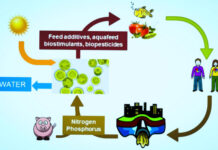
Nitrate pollution also triggers the phenomenon of eutrophication, which currently affects 40 percent of lakes and reservoirs planetwide. Excessive amounts of nitrogen and phosphorus stimulate the multiplication of cyanobacteria, which give the water an intense green color, as well as forming surface foams.
Eutrophication is closely related to anthropogenic activities (civil and industrial discharges, livestock and agricultural activities with nitrogen fertilizer abuse). And it can compromise the potability of water, its bathing use and reuse in agriculture, due to the formation of health-threatening cyanotoxins.
3) The solution from Israel, Data of the Soils (DOTS).
The solution developed in Israel by startup DOTS makes use of the technology of the same name, which is already protected with four industrial patents:
– an electronic optical sensor monitors the level of nutrients in water taken from the soil by spectro-photometry,
– the system collects other data (e.g., cultivar, temperature and humidity, weather forecast),
– AI(Artificial Intelligence) processes information to indicate optimal fertilization cycles to farmers.
4) Significant fertilizer savings
Applications of the DOTS system in Israeli greenhouses have already demonstrated 30% fertilizer savings, during the tomato growing season, with no reduction in yields. Reducing the use of nitrogen fertilizers is therefore possible, thanks to entirely new and effective research and innovation.
Opportunities for the large-scale development and use of unconventional fertilizers-such as those based on algae (6,7) and microorganisms (8)-deserve equal attention, in order to systemically address the emergence of nitrate pollution and achieve additional agro-ecological benefits.
Dario Dongo and Giulia Pietrollini
Notes
(1) DOTS https://dotsoil.com/
(2) Dir. 91/676/EEC concerning the protection of waters against pollution caused by nitrates from agricultural sources. https://eur-lex.europa.eu/legal-content/IT/LSU/?uri=CELEX:31991L0676
(3) EEA. European Environmental Agency. Waterbase-Water Quality ICM. 2022 https://www.eea.europa.eu/data-and-maps/data/waterbase-water-quality-icm-2
(4) Donato Ferrucci and Dario Dongo. Soil nutrition and crops, the integrated action plan in EU. FT (Food Times). 10.7.22
(5) Giulia Pietrollini. Implementation of EU Directive 2020/2184 on drinking water management. FT (Food Times). 31.3.23
(6) Dario Dongo and Andrea Adelmo Della Penna. Animal husbandry, algae and microalgae to prevent antibiotic use. Algatan. FT (Food Times). 9.9.20
(7) Dario Dongo and Alessandra Mei. Microalgae in agriculture, aquaculture, wastewater upcycling and greenhouse gases. FT (Food Times). 18.2.23
(8) Giulia Pietrollini. Biofertilizers to combat climate change. FT (Food Times). 1.4.23

Dario Dongo, lawyer and journalist, PhD in international food law, founder of WIISE (FARE - GIFT - Food Times) and Égalité.

Graduated in industrial biotechnology and passionate about sustainable development.