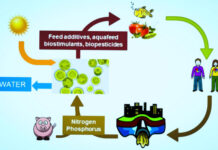


After Alt Meat, Alt Milk, Alt Cheese and Alt Egg-i.e., the substitutes for meat, milk, cheese and eggs-the time has come for Alt Fish, the plant-based alternatives to fish products.
A recent scientific review (Kazir et al., 2021) shows the actual possibility of obtaining plant-based foods similar to those derived from peaches, with appreciable organoleptic properties. (1)
Seafood products, virtues and limitations
Consumption of fish, shellfish and mollusks is highly recommended-in every diet and health guideline-because of the nutritional and health virtues associated with them. High biological value protein, Omega 3 fatty acids(EPA + DHA) and micronutrients.
Illegal, Unregulated and Unregistered Fishing(Illegal, Unregulated and Unregistrated. IUU fishing) on the other hand is causing the depletion of planetary fish stocks, as seen. Sustainable aquaculture, preferably organic aquaculture, is therefore essential to sustaining the increased demand for fish resources.
Fish, safety issues
Other issues to be addressed include food safety. A first critical issue is the concentration of heavy metals(methylmercury, nickel, cadmium, chromium, lead) in fishing areas close to industrialized areas. (2) Another critical issue, however, relates to the sometimes excessive use of antibiotics in aquaculture.
Microplastics and nanoplastics are then an emerging risk, in all food supply chains, including fish. In the latter regard, it is worth noting that microplastic pollution also affects the Mediterranean Sea as well as Italian lakes. And so presumably are other watersheds, taking into account that microparticles also travel through the air.
Alt Fish, plant-based alternatives to fish products
Thus, plant-based alternatives to fish products(Alt Fish) are emerging as a new area of substitute food research and development. And it is easy to guess that this category will also be able to attract investment, under the banner of ‘sustainability’ of production and consumption. With the further promise of expanding the portfolio of foods available to those vegetarian, vegan and flexitarian consumers interested in foods that emulate-even organoleptically-those of animal origin.
Proteins of plant origin are the necessary ingredient-in the productions covered by the scientific review under consideration (3)-to obtain products that can mimic structure and texture similar to those of fish products, in addition to fulfilling nutritional objectives. Using by-products of vegetable processing help limit waste, with a view to a circular economy.
Plant raw materials and finished products
Legumes–of peas in particular–are of interest for plant-based alternatives to fish products, as well as for Alt Meat (where oilseed proteins are also used).
Instead, the most innovative and promising raw materials appear to be mycoproteins obtained from the fungus Fusarium venenatum, which naturally has a structure very similar to that of meat. (4)
Available food technologies-with the help of extrusion and 3D printing-enable ready-to-eat products such as burgers, sticks, and surimi, as well as foods from the appearance of the original fish.
Organoleptic properties
Texture and appearance-but also other organoleptic attributes such as smell, color, and taste-can play a crucial role in bringing substitute products to new segments of consumers, who tend to seek organoleptic properties as similar as possible to the original foods. The technological challenge is to maintain comparable attributes even following cooking, which generally brings out the differences between different matrices.
Indeed, neophobia (literally, ‘fear of the new’) remains the first obstacle to overcome in the commercial proposition of innovative foods. And it is particularly pronounced-as noted in the case of insects-in countries where gastronomic culture is entrenched. Although, as our first entomophagy survey also revealed, (5) young people are in any case inclined to try and accept new foods. (6)
Nutritional opportunities and risks
The use of plant-derived proteins helps to endow Alt Fish with nutrients and bioactive compounds not normally found in fish. That is, to increase its intake, for example, of vitamin E, minerals (e.g., magnesium, potassium) and various antioxidants. Plant fibers, which in turn are added to improve product texture, are completely absent in fish.
The absence of marine Omega-3s (EPA and DHA) is generally the main shortcoming of these types of alternative foods, even when terrestrial Omega-3s (e.g., α-linolenic acid, ALA) are used. (7) Exaggeration in replicating the organoleptic characteristics of the original products can also lead to the use of food additives, salt, and ingredients typical of ultra-processed foods, as noted above.
Labeling and clean labeling
Labeling can play a key role in the acceptance of new products, through the use of so-called
clean labels
. Namely, transparent information about the source of the protein and as comprehensive and concise a list as possible of the ingredients used. (8)
The suitability of processed foods for consumption by vegetarian and vegan consumers also deserves to be confirmed on a case-by-case basis. Not through self-declarations, but through product certifications based on the ISO 23622:2021 standard or those of European Vegetarian Union. (9)
Dario Dongo and Andrea Adelmo Della Penna
Notes
(1) Kazir et al. (2021). Plant-based Seafood Analogs. Molecules 26:1559, https://doi.org/10.3390/molecules26061559
(2) Liang et al. (2018). The role of antibiotics in mercury methylation in marine sediments. Journal of Hazardous Materials 360:1-5, https://doi.org/10.1016/j.jhazmat.2018.07.096
(3) Alcorta et al. (2021). Foods for Plant-Based Diets: Challenges and Innovations. Foods 10:293, https://doi.org/10.3390/foods10020293
(4) On cell culture, see Rubio et al. (2019). Cell-Based Fish: A Novel Approach to Seafood Production and an Opportunity for Cellular Agriculture. Front. Sustain. Food Syst., June 11, 2019. https://doi. org/10.3389/fsufs.2019.00043
(5) Carlotta Totaro Fila, Dario Dongo. Insect foods, the largest survey ever conducted in Italy. FT (Food Times). 1/30/19, https://www.greatitalianfoodtrade.it/mercati/alimenti-con-insetti-il-più-ampio-sondaggio-mai-condotto-in-italia
(6) Tuorila et al. (2020). Consumer Responses to Novel and Unfamiliar Foods. Curr. Opin. Food Sci. 33:1–8, https://doi.org/10.1016/j.cofs.2019.09.004
(7) Marine Omega 3s could moreover be added through microalgae. V. Dario Dongo and Andrea Adelmo Della Penna. Superfood microalgae, champion Chlorella. Science review. FT (Food Times). 12.10.20, https://www.greatitalianfoodtrade.it/progresso/microalghe-superfood-la-campionessa-chlorella-rassegna-scientifica
(8) Delgado-Pando et al. (2021). Clean Label Alternatives in Meat Products. Foods 10(7):1615, https://doi.org/10.3390/foods10071615
(9) Dario Dongo and Andrea Adelmo Della Penna. ISO 23622:2021, Veg, vegetarian and vegan food labeling criteria. GIFT(Great Italian Food Trade). 22.3.21, https://www.greatitalianfoodtrade.it/etichette/iso-236222021-criteri-di-etichettatura-alimenti-veg-vegetariani-e-vegani/

Dario Dongo, lawyer and journalist, PhD in international food law, founder of WIISE (FARE - GIFT - Food Times) and Égalité.

Graduated in Food Technologies and Biotechnologies, qualified food technologist, he follows the research and development area. With particular regard to European research projects (in Horizon 2020, PRIMA) where the FARE division of WIISE Srl, a benefit company, participates.