
A multidisciplinary research group from the Department of Food and Drug Sciences of the University of Parma has recently filed a research patent for industrial invention, ‘Production of antimicrobials from plant waste’. It concerns the preparation of an extract with antimicrobial activity starting from by-products of the fruit and vegetable supply chain (1).
Professor Camilla Lazzi – Associate Professor in Agricultural Microbiology at the Department of Food and Drug Sciences of the University of Parma – explains the project.
Antimicrobials from plant waste: what is it about?
It is a new line of research that allows the valorisation of waste materials for the production of innovative, high-value-added compounds. These may find application in various industrial sectors (food, feed, chemical and pharmaceutical). The main players are GRAS (Generally Recognised As Safe) microorganisms, which, through their metabolic activity, convert low-value substrates into molecules of commercial interest.

Which result have you achieved, and what applications may derive from it?
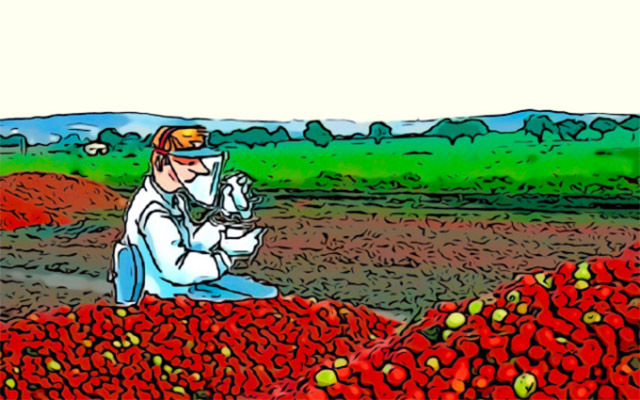
We have managed to patent a process based on solid-state fermentation, using lactic acid bacteria, of by-products from the processing of tomato, melon and carrot, as well as on the subsequent extraction phase. The product obtained has shown significant antibacterial activity – in vitro and in situ (in food) – against the most common foodborne pathogens such as Listeria monocytogenes, Staphylococcus aureus, Escherichia coli, Bacillus cereus, Salmonella and against spoilage microflora, showing better performance than some traditional preservatives.

The new product, which does not contain synthetic molecules, may be used as an ingredient to increase the shelf life of food products. Given the stability of the antibacterial extract at high temperatures, it will also be possible to assess its use in transformation processes combined with thermal or non-thermal stabilisation technologies, in order to reduce time, costs and negative impacts on the organoleptic and nutritional quality of products.
How did this work originate?
At the Food Microbiology Laboratory of the University of Parma, there is a microbial collection of over 4,000 strains, representing a heritage of biodiversity to be protected and valorised. Phenotypic diversity is a resource for differentiating and bringing innovation to the food sector, but it can also be used for fermentation processes aimed at the production and recovery of molecules of interest.
The project began about three years ago within a broader research theme concerning, on the one hand, the production of new fruit- and vegetable-based fermented beverages, and on the other, the production of commercially interesting molecules through the valorisation of fruit and vegetable by-products, with the aim of achieving greater biosustainability throughout the agri-food chain.
We believe that research focusing on these topics can have a strong industrial impact, enabling the development of new products currently absent from the market (processing companies), new clean-label ingredients (ingredient companies), and also identifying new potential applications of bacterial strains, which will see their field of application and market of interest broadened (starter culture companies).

In your opinion, what are the reasons for this result?
Enthusiasm and great passion for one’s work, teamwork and the integration of the various skills present within the Department. Last but not least, the contribution of the Cariparma Foundation, which enabled the start of this new line of research.
Galiano Quartaroli
Notes
(1) Patent filing no. 102019000006815, 14.5.19. The research group is composed of Prof. Camilla Lazzi, Prof. Valentina Bernini, Prof. Erasmo Neviani, Prof. Gianni Galaverna, Dr Martina Cirlini, Dr Annalisa Ricci, Dr Antonietta Maoloni, Dr Luca Calani and Ms Silvia Zanetti.

Food technologist, he worked in the first and second industrial transformation, in catering, now in the GDO.