
A comprehensive review by Contreras-Angulo et al. (2025) published in the Journal of Food Science examines sustainable upcycling of olive oil by-products through green extraction of phytochemicals, encapsulation strategies, and food applications. The study provides critical insights into transforming agricultural waste streams into high-value resources whilst addressing environmental challenges associated with olive oil production in Mediterranean regions.
The challenge
The olive oil industry generates approximately 30 million cubic metres of by-products annually, including olive leaves and pruning residues, olive pomace, olive mill wastewater, and olive stones (Contreras-Angulo et al., 2025). While these materials are rich in valuable bioactive compounds – particularly polyphenols and secoiridoids with potent antioxidant, anti-inflammatory, and antimicrobial properties – they present significant environmental challenges (Di Donato et al., 2018).
A single cubic metre of olive mill wastewater creates pollution equivalent to 200 cubic metres of domestic sewage, representing one of the most pressing environmental issues in Mediterranean olive-producing regions (El-Abbassi et al., 2012). The annual global production reached 3,010,000 tonnes in 2022, generating millions of tonnes of liquid and solid by-products that require sustainable management strategies (Contreras-Angulo et al., 2025; Otero et al., 2021).
Most promising green extraction technologies
Deep Eutectic Solvents (DES): the future of green extraction
Natural deep eutectic solvents represent the most innovative breakthrough in sustainable extraction, demonstrating superior performance compared to conventional organic solvents (Lobato-Rodríguez et al., 2023). Research shows that choline chloride-based DES formulations achieve remarkable results: choline chloride:acetic acid (1:2 ratio) with 50% water extracted 470 mg/kg of phenolic compounds from olive leaves – 15% higher than ethanol extraction (de Almeida Pontes et al., 2021).
Similarly, Mir-Cerdà et al. (2024) demonstrated that choline chloride:glycerol (1:5 ratio) with 30% water proved more efficient than conventional solvents for extracting oleuropein, luteolin, 3-hydroxytyrosol, and verbascoside. Chanioti and Tzia (2018) successfully applied various choline chloride-based natural deep eutectic solvents combined with citric acid, lactic acid, maltose, or glycerol to recover phenolic compounds and secoiridoids from olive pomace, with choline chloride:citric or lactic acids demonstrating superior efficacy compared to conventional solvents.
These biodegradable solvents, derived from food-grade components, offer non-toxic, recyclable alternatives whilst maintaining high extraction efficiency (Contreras-Angulo et al., 2025). However, high production costs continue to hinder the immediate industrial implementation (Cvjetko Bubalo et al., 2018).
Ultrasound-Assisted Extraction (UAE): industrial-ready technology
UAE emerges as the most industrially viable green technology, combining efficiency with practical scalability (Contreras-Angulo et al., 2025). Operating at frequencies of 20–100 kHz, ultrasound creates cavitation bubbles that form microchannels in cellular structures, dramatically increasing solvent penetration and compound release (Pereira et al., 2025). Ünlü (2021) demonstrated that UAE using glucose:fructose:water (1:1:11) natural DES extracted 1,631 mg/kg oleuropein from olive leaves at 75°C for 60 minutes.
For olive pomace, Quero et al. (2022) reported that ethanol-water mixture (50%) achieved 18 mg gallic acid equivalents per gram total phenolic content, significantly outperforming water-only extraction (12 mg gallic acid equivalents per gram).
Gómez-Cruz et al. (2021) investigating UAE effects using ultra-pure water on olive pomace identified hydroxytyrosol, tyrosol, verbascoside, oleuropein, oleacein, ligustroside, elenolic acid, quercetin, and luteolin, among numerous other bioactive compounds. The technology’s simplicity, low cost, and compatibility with existing industrial infrastructure make it the most promising candidate for immediate commercial adoption (Contreras-Angulo et al., 2025).
Microwave-Assisted Extraction (MAE): superior efficiency
MAE demonstrates the highest extraction efficiency among reviewed technologies, with water-based MAE (2.45 GHz, 1,000 W, 86°C for 3 minutes) achieving 104 mg gallic acid equivalents per gram total phenolic content from olive leaves – significantly higher than UAE‘s 81 mg/g under comparable conditions (Rosa et al., 2021). The technology’s non-contact heating mechanism enhances selectivity and heating efficiency, particularly when using water as a highly responsive polar solvent (Elmas et al., 2025).
Chanioti et al. (2016) demonstrated that combining MAE with enzymatic treatment (microwave-assisted enzymatic extraction) yields even more impressive results: hydroxytyrosol recovery increased from 202.9 to 374.8 µg/g dry weight, whilst luteolin recovery surged from 731.7 to 1,754.9 µg/g dry weight.
This synergistic approach represents the most efficient extraction methodology for maximum bioactive compound recovery (Contreras-Angulo et al., 2025). Chanioti and Tzia (2018) further confirmed that MAE at 500 W improved recovery of antioxidant-rich extracts with substantial polyphenol content including hydroxytyrosol, oleuropein, rutin, caffeic acid, luteolin, and vanillin.
Ohmic Heating-Assisted Extraction (OHAE): emerging sustainable technology
OHAE represents the most sustainable emerging technology, reducing environmental footprint through decreased water consumption and waste generation (Contreras-Angulo et al., 2025).
By converting electric energy directly into thermal energy through the Joule effect, OHAE achieves oleuropein concentrations of 26.18 mg/g extract from olive leaves at 75°C with 80% ethanol – significantly higher than conventional heating methods (Markhali & Teixeira, 2024). The same study reported verbascoside (1.04 mg/g), tyrosol (0.34 mg/g), hydroxytyrosol (1.38 mg/g), luteolin 7-O-glucoside (4.12 mg/g), apigenin 7-O-glucoside (3.47 mg/g), and rutin (3.78 mg/g) at 75°C with 80% ethanol.
The technology’s fast homogeneous heating, high energy conversion efficiency, and selectivity position it as a promising next-generation extraction approach (Rodrigues et al., 2022), though further optimisation for industrial-scale application remains necessary.
Most effective encapsulation strategies
Spray drying with optimal wall materials: industry standard
Spray drying combined with maltodextrin and arabic gum (60:40 ratio) represents the most industrially proven encapsulation technology, achieving 87.3% yield whilst maintaining phenolic compound content and antioxidant capacity (Aliakbarian et al., 2015). This technique offers excellent cost-effectiveness, scalability, and compatibility with existing food processing infrastructure (Contreras-Angulo et al., 2025).
Vitali Čepo et al. (2018) demonstrated that encapsulation using cyclodextrins (particularly hydroxypropyl-β-cyclodextrin and randomly methylated-β-cyclodextrin) exhibits superior antioxidant capacity according to total reducing capacity, DPPH radical inhibition, trolox equivalent antioxidant activity (TEAC), and oxygen radical activity assay (ORAC) methods.
These encapsulated olive pomace extracts presented higher antioxidant capacity and ability to inhibit lipid peroxidation compared to chemical compounds when applied in food and biological models, making them ideal for functional food applications.
Supercritical Assisted Atomisation (SSA): superior nanoencapsulation
For nanoencapsulation applications, SSA using 10% maltodextrin at 95°C chamber temperature produces optimal nanoparticles with 712 nm size, spherical shape, 98.8 mg trolox equivalents per millilitre DPPH antioxidant capacity, and 69.9% encapsulation efficiency (Aliakbarian et al., 2017).
These nanoparticles demonstrate exceptional potential as nutraceutical ingredients, offering enhanced bioavailability and controlled release properties (Contreras-Angulo et al., 2025). Paulo et al. (2022) investigated ethylcellulose-based microencapsulation through double emulsion development, demonstrating that microparticles with encapsulation efficiency above 85% were thermogravimetrically stable, making them suitable for foods produced by thermal processes.
The technology particularly excels for pharmaceutical and cosmetic applications where particle size critically influences efficacy (Kesente et al., 2017).
Natural gum-based nanoencapsulation: highest efficiency
Rocket seed gum nanoencapsulation achieves the highest efficiency (82.26%) with 318 nm particle size, outperforming chia seed gum (67.01% efficiency, 490 nm size) for olive pomace phenolic compound stabilisation (Akcicek et al., 2021).
These nanoparticles delay phenolic compound release for 24 hours under physiological pH conditions whilst increasing antioxidant capacity by approximately 50% compared to non-encapsulated extracts. This technology represents the most promising approach for developing sustained-release nutraceutical and pharmaceutical formulations (Contreras-Angulo et al., 2025).
Mohammadi et al. (2016) demonstrated that whey protein and pectin-based nanoencapsulation (W/O/W) of olive leaf extract achieved 96.64% encapsulation efficiency, with pectin stabilising the double emulsion and delaying release of phenolic compounds at 22 days of storage, providing high antioxidant potential.
High-impact food applications
Natural preservation systems
Hydroxytyrosol-rich extracts from olive oil by-products demonstrate remarkable efficacy as natural preservatives, preventing α-tocopherol biodegradation in refined oils while significantly inhibiting growth of foodborne pathogens including Staphylococcus aureus and Listeria monocytogenes in fresh sausages (Fasolato et al., 2016). Esposto et al. (2015) documented that addition of hydroxytyrosol-rich-polyphenol extract to refined oil prevented biodegradation of α-tocopherol and increased antioxidant capacity.
This application offers immediate commercial viability, addressing consumer demand for synthetic preservative alternatives whilst extending shelf life and enhancing food safety (Contreras-Angulo et al., 2025). Yangui et al. (2010) reported that hydroxytyrosol has been incorporated as active ingredient in spreads, dressings, and derived tomato products as natural fungicide against Botrytis cinerea, functioning as a powerful preservative agent.
Maillard reaction inhibition
Spray-dried olive mill wastewater microparticles (maltodextrin and acacia fibre, 1:1 ratio) added at concentrations of 0.05–0.1% w/v to milk before ultra-high-temperature treatment significantly reduce reactive carbonyl species formation, inhibiting undesirable flavour development (Troise et al., 2014). This technology demonstrates dual benefits: improved sensorial quality and enhanced nutritional functionality through hydroxytyrosol, tyrosol, and verbascoside retention.
Troise et al. (2020) reported similar effects in bakery products, finding that microparticles of maltodextrin and acacia fibre loaded with olive mill wastewater incorporated in cookie formulation inhibited the Maillard reaction, positioning this application as highly promising for dairy and baked goods industries. Navarro et al. (2015) further demonstrated that nano-encapsulation of olive mill wastewater with maltodextrin and acacia fibre showed antiglycative characteristics due to capacity to trap reactive carbonyl species.
Biodegradable packaging materials
Cellulose extracted from olive leaves and pruning residues offers sustainable alternatives to forest-based paper, producing lightweight yet strong sheets for food packaging whilst reducing dependence on traditional wood resources (Fillat et al., 2018; Selim et al., 2022). Ben Mabrouk et al. (2023) demonstrated valorisation of olive leaf waste as a new source of fractions containing cellulose nanomaterials.
Cellulose nanofibres and lignin nanoparticles demonstrate excellent potential for developing biodegradable packaging materials, aligning with circular economy principles and zero-waste value chains (Contreras-Angulo et al., 2025). Tolisano et al. (2023) reported that lignin nanoparticles from olive pomace could be used to biostimulate maize plants, demonstrating agricultural applications.
This application addresses growing regulatory pressure for sustainable packaging solutions in food industry whilst contributing to achievement of United Nations Sustainable Development Goals (SDGs).
Key success factors for industrial implementation
Economic viability. UAE and spray drying encapsulation represent the most cost-effective technologies for immediate industrial adoption, offering favourable investment-to-return ratios with existing infrastructure compatibility (Contreras-Angulo et al., 2025). However, comprehensive techno-economic assessments comparing operational costs across technologies remain limited, necessitating further analysis to justify large-scale investment (López-Salas et al., 2024).
Regulatory compliance. Technologies using water, ethanol, and GRAS-approved encapsulating agents (maltodextrin, arabic gum, cyclodextrins) face minimal regulatory barriers, accelerating market entry particularly for food applications (García-Pastor et al., 2023). Current European Union legislation, while encouraging reduction of synthetic additives, requires comprehensive safety assessments and regulatory approval for novel food ingredients derived from agricultural waste streams (Contreras-Angulo et al., 2025). Our FARE (Food and Agriculture Requirements) unit supports researchers and industry stakeholders in meeting these regulatory and innovation goals.
Scalability. MAE and UAE demonstrate excellent scalability characteristics with proven pilot-scale implementations (Rosa et al., 2021; Quero et al., 2022), whereas OHAE and DES-based extractions require further optimisation for industrial-scale continuous operation (Markhali & Teixeira, 2024; Cvjetko Bubalo et al., 2018). Nakilcioğlu-Taş and Ötleş (2020) successfully optimised olive stone phenolic extraction using pilot-scale pressurised water extractor, demonstrating industrial scalability potential.
Environmental impact. OHAE emerges as the most environmentally sustainable extraction technology through reduced water consumption and waste generation (Rodrigues et al., 2022), followed closely by DES-based extractions using biodegradable, recyclable solvents (Lobato-Rodríguez et al., 2023). Servian-Rivas et al. (2022) conducted techno-economic and environmental impact assessment of an olive tree pruning waste multiproduct biorefinery, highlighting the importance of integrated approaches for sustainability.
Future outlook and recommendations
The most promising pathway for industrial upcycling of olive oil by-products involves integrated biorefinery approaches combining (Contreras-Angulo et al., 2025):
- primary extraction using UAE or MAE with optimised green solvents (water, ethanol, or approved DES formulations) for maximum phenolic and secoiridoid recovery (Gómez-Cruz et al., 2021; Rosa et al., 2021);
- encapsulation via spray drying with cyclodextrin or natural gum-based wall materials for stability enhancement and controlled release (Vitali Čepo et al., 2018; Akcicek et al., 2021);
- application development focusing on natural preservatives for meat and dairy products (Fasolato et al., 2016; Troise et al., 2014), Maillard reaction inhibitors for processed foods (Troise et al., 2020), and biodegradable packaging materials (Ben Mabrouk et al., 2023; Fillat et al., 2018)
Critical research priorities include: comprehensive techno-economic assessments comparing operational costs across technologies; regulatory pathway development for DES-based extracts and novel encapsulated ingredients; pilot-scale demonstration projects in Mediterranean olive-producing regions (Italy, Spain, Portugal, Greece, Turkey, Morocco); and consumer acceptance studies for products containing olive by-product derivatives (Contreras-Angulo et al., 2025). Gullón et al. (2020) emphasise the need for valorisation of olive oil industry by-products and added-value applications for innovative functional foods, supporting integrated biorefinery approaches.
Investment recommendations favour UAE technology adoption for immediate implementation given its proven industrial scalability and favourable cost structure (Pereira et al., 2025), whilst positioning for longer-term DES technology integration (Cvjetko Bubalo et al., 2018).
Mediterranean horizon
The market potential exceeds €2 billion annually across nutraceutical, functional food, and natural preservative sectors, with Mediterranean producers best positioned to capture value through integrated valorisation strategies (García-Pastor et al., 2023). Difonzo et al. (2021) highlight that functional compounds from olive pomace can be used to obtain high-added value foods, supporting the economic viability of upcycling approaches.
The transformation of olive oil by-products from environmental liability to valuable resource exemplifies circular economy principles, demonstrating that sustainable innovation can simultaneously address environmental challenges, create economic value, and meet consumer demand for natural, health-promoting food ingredients (Contreras-Angulo et al., 2025).
Success requires coordinated action across research institutions, industrial stakeholders, regulatory agencies, and policy makers to accelerate technology transfer and market adoption of these promising green technologies. As Otero et al. (2021) emphasise, integrated biorefinery approaches position olive oil by-products as powerful, untapped sources of phytoactive compounds with high economic value, driving force in future bioeconomies.
Dario Dongo
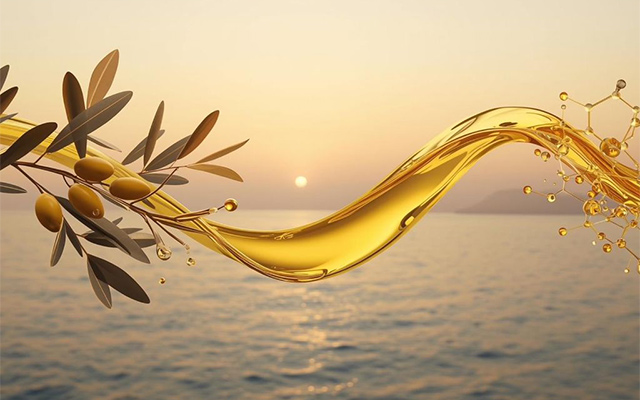
Cover art copyright © 2025 Dario Dongo (AI-assisted creation)
References
- Akcicek, A., Bozkurt, F., Akgül, C., & Karasu, S. (2021). Encapsulation of olive pomace extract in rocket seed gum and chia seed gum nanoparticles: Characterization, antioxidant activity and oxidative stability. Foods, 10, 1735. https://doi.org/10.3390/foods10081735
- Aliakbarian, B., Paini, M., Adami, R., Perego, P., & Reverchon, E. (2017). Use of supercritical assisted atomization to produce nanoparticles from olive pomace extract. Innovative Food Science & Emerging Technologies, 40, 2–9. https://doi.org/10.1016/j.ifset.2016.09.016
- Aliakbarian, B., Paini, A. A., Casazza, A. A., & Perego, P. (2015). Effect of encapsulating agent on physical-chemical characteristics of olive pomace polyphenols-rich extracts. Chemical Engineering Transactions, 43, 97–102. https://doi.org/10.3303/CET1543017
- Ben Mabrouk, A., Putaux, J.-L., & Boufi, S. (2023). Valorization of olive leaf waste as a new source of fractions containing cellulose nanomaterials. Industrial Crops and Products, 202, 116996. https://doi.org/10.1016/j.indcrop.2023.116996
- Chanioti, S., Siamandoura, P., & Tzia, C. (2016). Evaluation of extracts prepared from olive oil by-products using microwave-assisted enzymatic extraction: Effect of encapsulation on the stability of final products. Waste and Biomass Valorization, 7, 831–842. https://doi.org/10.1007/s12649-016-9533-1
- Chanioti, S., & Tzia, C. (2018). Extraction of phenolic compounds from olive pomace by using natural deep eutectic solvents and innovative extraction techniques. Innovative Food Science & Emerging Technologies, 48, 228–239. https://doi.org/10.1016/j.ifset.2018.07.001
- Contreras-Angulo, L. A., Laaroussi, H., Ousaaid, D., Bakour, M., Lyoussi, B., & Ferreira-Santos, P. (2025). Sustainable valorization of olive oil by-products: Green extraction of phytochemicals, encapsulation strategies, and food applications. Journal of Food Science, 90, e70412. https://doi.org/10.1111/1750-3841.70412
- Cvjetko Bubalo, M., Vidović, S., Radojčić Redovniković, I., & Jokić, S. (2018). New perspective in extraction of plant biologically active compounds by green solvents. Food and Bioproducts Processing, 109, 52–73. https://doi.org/10.1016/j.fbp.2018.03.001
- de Almeida Pontes, P. V., Ayumi Shiwaku, I., Maximo, G. J., & Caldas Batista, E. A. (2021). Choline chloride-based deep eutectic solvents as potential solvent for extraction of phenolic compounds from olive leaves: Extraction optimization and solvent characterization. Food Chemistry, 352, 129346. https://doi.org/10.1016/j.foodchem.2021.129346
- Di Donato, P., Taurisano, V., Tommonaro, G., Pascale, D., Poli, A., Di Cicco, M. R., Nicolaus, B., & De Rosa, M. (2018). Biological properties of polyphenols extracts from agro industry’s wastes. Waste and Biomass Valorization, 9, 1567–1578. https://doi.org/10.1007/s12649-017-9939-4
- Difonzo, G., Troilo, M., Squeo, G., Pasqualone, A., & Caponio, F. (2021). Functional compounds from olive pomace to obtain high-added value foods—A review. Journal of the Science of Food and Agriculture, 101, 15–26. https://doi.org/10.1002/jsfa.10478
- El-Abbassi, A., Kiai, H., & Hafidi, A. (2012). Phenolic profile and antioxidant activities of olive mill wastewater. Food Chemistry, 132, 406–412. https://doi.org/10.1016/j.foodchem.2011.11.013
- Elmas, E., Şen, F. B., Kublay, İ. Z., Çağlar, M. Y., Güzel, E., Yaman, M., Capanoglu, E., & Esatbeyoglu, T. (2025). Green extraction of antioxidants from hazelnut by-products using microwave-assisted extraction, ultrasound-assisted extraction, and pressurized liquid extraction. Food and Bioprocess Technology, 18, 5388–5406. https://doi.org/10.1007/s11947-025-03775-z
- Esposto, S., Taticchi, A., Di Maio, I., Urbani, S., Veneziani, G., Selvaggini, R., Sordini, B., & Servili, M. (2015). Effect of an olive phenolic extract on the quality of vegetable oils during frying. Food Chemistry, 176, 184–192. https://doi.org/10.1016/j.foodchem.2014.12.036
- Fasolato, L., Carraro, L., Facco, P., Cardazzo, B., Balzan, S., Taticchi, A., Andreani, N. A., Veronese, G., Di Lecce, G., Lanciotti, R., Novelli, E., & Fasolato, L. (2016). Agricultural by-products with bioactive effects: A multivariate approach to evaluate microbial and physicochemical changes in a fresh pork sausage enriched with phenolic compounds from olive vegetation water. International Journal of Food Microbiology, 228, 34–43. https://doi.org/10.1016/j.ijfoodmicro.2016.04.003
- Fillat, Ú., Wicklein, B., Martín-Sampedro, R., Ibarra, D., Ruiz-Hitzky, E., Valencia, C., Sarrión, A., Castro, E., & Eugenio, M. E. (2018). Assessing cellulose nanofiber production from olive tree pruning residue. Carbohydrate Polymers, 179, 252–261. https://doi.org/10.1016/j.carbpol.2017.09.072
- García-Pastor, M. E., Ródenas-Soriano, M., Dobón-Suárez, A., Zapata, P. J., & Giménez, M. J. (2023). Use of olive industry by-products for value-added food development. Agronomy, 13, 718. https://doi.org/10.3390/agronomy13030718
- Gómez-Cruz, I., Contreras, M., del, I. Romero, M., & Castro, E. (2021). Recovery of bioactive compounds from industrial exhausted olive pomace through ultrasound-assisted extraction. Biology, 10, 514. https://doi.org/10.3390/biology10060514
- Gullón, P., Gullón, B., Astray, G., Carpena, M., Fraga-Corral, M., Prieto, M. A., & Simal-Gandara, J. (2020). Valorization of by-products from olive oil industry and added-value applications for innovative functional foods. Food Research International, 137, 109683. https://doi.org/10.1016/j.foodres.2020.109683
- Kesente, M., Kavetsou, E., Roussaki, M., Blidi, S., Loupassaki, S., Chanioti, S., Siamandoura, P., Stamatogianni, C., Lost, A., Detsi, A., & Tzia, C. (2017). Encapsulation of olive leaves extracts in biodegradable PLA nanoparticles for use in cosmetic formulation. Bioengineering, 4, 75. https://doi.org/10.3390/bioengineering4030075
- Lobato-Rodríguez, Á., Gullón, B., Romaní, A., Ferreira-Santos, P., Garrote, G., & Del-Río, P. G. (2023). Recent advances in biorefineries based on lignin extraction using deep eutectic solvents: A review. Bioresource Technology, 388, 129744. https://doi.org/10.1016/J.BIORTECH.2023.129744
- López-Salas, L., Expósito-Almellón, X., Borrás-Linares, I., Lozano-Sánchez, J., & Segura-Carretero, A. (2024). Design of experiments for green and GRAS solvent extraction of phenolic compounds from food industry by-products—A systematic review. TrAC Trends in Analytical Chemistry, 171, 117536. https://doi.org/10.1016/j.trac.2024.117536
- Markhali, F. S., & Teixeira, J. A. (2024). Extractability of oleuropein, hydroxytyrosol, tyrosol, verbascoside and flavonoid-derivatives from olive leaves using ohmic heating (a green process for value addition). Sustainable Food Technology, 2, 461–469. https://doi.org/10.1039/D3FB00252G
- Mir-Cerdà, A., Granados, M., Saurina, J., & Sentellas, S. (2024). Olive tree leaves as a great source of phenolic compounds: Comprehensive profiling of NaDES extracts. Food Chemistry, 456, 140042. https://doi.org/10.1016/j.foodchem.2024.140042
- Mohammadi, A., Jafari, S. M., Assadpour, E., & Faridi Esfanjani, A. (2016). Nano-encapsulation of olive leaf phenolic compounds through WPC–pectin complexes and evaluating their release rate. International Journal of Biological Macromolecules, 82, 816–822. https://doi.org/10.1016/j.ijbiomac.2015.10.025
- Nakilcioğlu-Taş, E., & Ötleş, S. (2020). Polyphenols from olive stones: Extraction with a pilot scale pressurized water extractor, microencapsulation by spray-dryer and storage stability evaluation. Journal of Food Measurement and Characterization, 14, 849–861. https://doi.org/10.1007/s11694-019-00333-y
- Navarro, M., Fiore, A., Fogliano, V., & Morales, F. J. (2015). Carbonyl trapping and antiglycative activities of olive oil mill wastewater. Food & Function, 6, 574–583. https://doi.org/10.1039/C4FO01049C
- Otero, P., Garcia-Oliveira, P., Carpena, M., Barral-Martinez, M., Chamorro, F., Echave, J., Fraga-Corral, M., Cao, H., Xiao, J., Simal-Gandara, J., & Prieto, M. A. (2021). Applications of by-products from the olive oil processing: Revalorization strategies based on target molecules and green extraction technologies. Trends in Food Science & Technology, 116, 1084–1104. https://doi.org/10.1016/j.tifs.2021.09.007
- Paulo, F., Tavares, L., & Santos, L. (2022). Extraction and encapsulation of bioactive compounds from olive mill pomace: Influence of loading content on the physicochemical and structural properties of microparticles. Journal of Food Measurement and Characterization, 16, 3077–3094. https://doi.org/10.1007/s11694-022-01408-z
- Pereira, T. C., Souza, V. P., Padilha, A. P. F., Duarte, F. A., & Flores, E. M. (2025). Trends and perspectives on the ultrasound-assisted extraction of bioactive compounds using natural deep eutectic solvents. Current Opinion in Chemical Engineering, 47, 101088. https://doi.org/10.1016/j.coche.2024.101088
- Quero, J., Ballesteros, L. F., Ferreira-Santos, P., Velderrain-Rodriguez, G. R., Rocha, C. M. R., Martin-Belloso, O., Teixeira, J. A., Martín-Belloso, O., & Osada, J. (2022). Unveiling the antioxidant therapeutic functionality of sustainable olive pomace active ingredients. Antioxidants, 11, 828. https://doi.org/10.3390/antiox11050828
- Rodrigues, R. M., Genisheva, Z., Ferreira-Santos, P., Rocha, C. M., Rocha, R. N. Pereira, & Vicente, A. A. (2022). Electro-based technologies for the extraction of phenolic compounds. In M. A. Prieto, M. A. Murado, & M. F. Barroso (Eds.), Technologies to recover polyphenols from agrofood by-products and wastes (pp. 169–188). Elsevier. ISBN 978-0-323-85273-9 (electronic), 978-0-323-85274-6 (print)
- Rosa, G. S., Martiny, T. R., Dotto, G. L., Cansian, R. L., Colla, L. M., Corazza, M. L., & Costa, J. A. V. (2021). Eco-friendly extraction for the recovery of bioactive compounds from Brazilian olive leaves. Sustainable Materials and Technologies, 28, e00276. https://doi.org/10.1016/j.susmat.2021.e00276
- Selim, S., Albqmi, M., Al-Sanea, M. M., Alnusaire, T. S., Almuhayawi, M. S., AbdElgawad, H., Al Jaouni, S. K., Elkelish, A., & Hussein, S. (2022). Valorizing the usage of olive leaves, bioactive compounds, biological activities, and food applications: A comprehensive review. Frontiers in Nutrition, 9, 1008349. https://doi.org/10.3389/fnut.2022.1008349
- Servian-Rivas, L. D., Pachón, E. R., Rodríguez, M., González-Miquel, M., González, E. J., & Díaz, I. (2022). Techno-economic and environmental impact assessment of an olive tree pruning waste multiproduct biorefinery. Food and Bioproducts Processing, 134, 95–108. https://doi.org/10.1016/j.fbp.2022.05.003
- Tolisano, C., Luzi, F., Regni, L., Di Michele, A., Del Buono, D., Puglia, D., & Proietti, P. (2023). A way to valorize pomace from olive oil production: Lignin nanoparticles to biostimulate maize plants. Environmental Technology & Innovation, 31, 103216. https://doi.org/10.1016/j.eti.2023.103216
- Troise, A. D., Colantuono, A., & Fiore, A. (2020). Spray-dried olive mill wastewater reduces Maillard reaction in cookies model system. Food Chemistry, 323, 126793. https://doi.org/10.1016/j.foodchem.2020.126793
- Troise, A. D., Fiore, A., Colantuono, A., Kokkinidou, S., Peterson, D. G., & Fogliano, V. (2014). Effect of olive mill wastewater phenol compounds on reactive carbonyl species and Maillard reaction end-products in ultrahigh-temperature-treated milk. Journal of Agricultural and Food Chemistry, 62, 10092–10100. https://doi.org/10.1021/jf503329d
- Ünlü, A. E. (2021). Green and non-conventional extraction of bioactive compounds from olive leaves: Screening of novel natural deep eutectic solvents and investigation of process parameters. Waste and Biomass Valorization, 12, 5329–5346. https://doi.org/10.1007/s12649-021-01411-3
- Vitali Čepo, D., Radić, K., Jurmanović, S., Jug, M., Rajković, M. G., Pedisić, S., Moslavac, T., & Albahari, P. (2018). Valorization of olive pomace-based nutraceuticals as antioxidants in chemical, food, and biological models. Molecules, 23, 2070. https://doi.org/10.3390/molecules23082070
- Yangui, T., Sayadi, S., Rhouma, A., & Dhouib, A. (2010). Potential use of hydroxytyrosol-rich extract from olive mill wastewater as a biological fungicide against Botrytis cinerea in tomato. Journal of Pest Science, 83, 437–445. https://doi.org/10.1007/s10340-010-0314-5

Dario Dongo, lawyer and journalist, PhD in international food law, founder of WIISE (FARE - GIFT - Food Times) and Égalité.