


World Bee Day, 20 May 2024, is dedicated to young people precisely because their help and cooperation with each other is invaluable for the preservation of these important pollinating insects. FAO has published a guide to promote the involvement of young people and others in these initiatives. (1)
The problems of pollinators
Protection of pollinators
World Bee Day was established as a measure to protect these important pollinating insects (genus Apis), safeguard biodiversity and food production. Honey bees (i.e. Apis mellifera, A.m. ligustica, A.m. carnica, A.m. scutellata) are the species of greatest interest due to their economic potential, but other species must also be adequately protected, along with non-Apis insects. (2)
Many species are endangered at national and European level, and measures are needed to mitigate the risks and promote the conservation of species in all environments, including urban ones.
The Commission led by Ursula von der Leyen has disregarded the repeated requests of European citizens, merely promoting and revising already developed initiatives without any tangible results. So much so that even the European Parliament moved with a resolution to encourage the Commission to be more concrete in this respect. (3)
Inappropriate authorisations of pesticides
The absence of appropriate policy implementation is accompanied by contradictions such as the lack of bans on pesticides and other products harmful to bees, as well as continuous authorisations that do not take into account the adverse effects these products may have on these insects.
Cypermethrin is a case in point. The association Pesticide Action Network (PAN) Europe had to force itself to bring an appeal against the renewal of the authorisation (following a first defeat) before the European Court of Justice (4). PAN Europe contests the poor evaluation of the EFSA opinion on cypermethrin, which identified several gaps in the available data, and some concerns for bees, the presence of metabolites in pollen and nectar, and consumer health issues, also more recently identified with potential acute and chronic risks. (5,6)
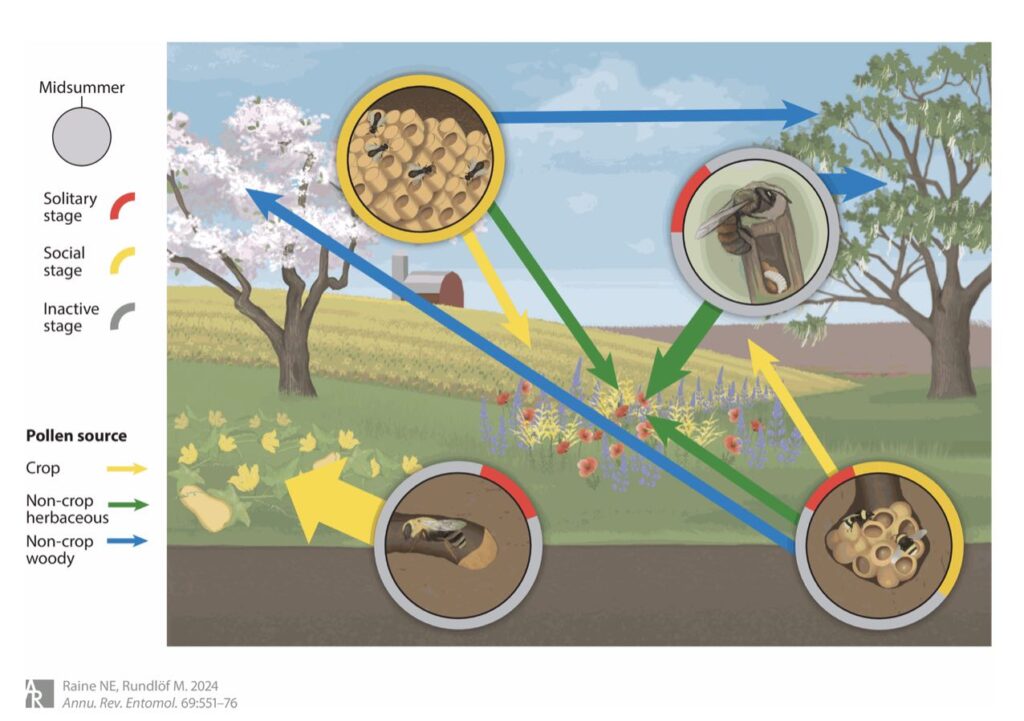
The main studies on the effects of pesticides are on the genus Apis, while the effects on non-Apis species are still in their infancy. However, the effects observed for honeybees may indeed translate very similarly for other insect species, especially with regard to the effects of interaction with plants, in combination with contact of mixtures of different formulations, and synergy due to other stress factors (e.g. climate change, parasites, nutritional deficiencies). (7)
Consequences of climate change
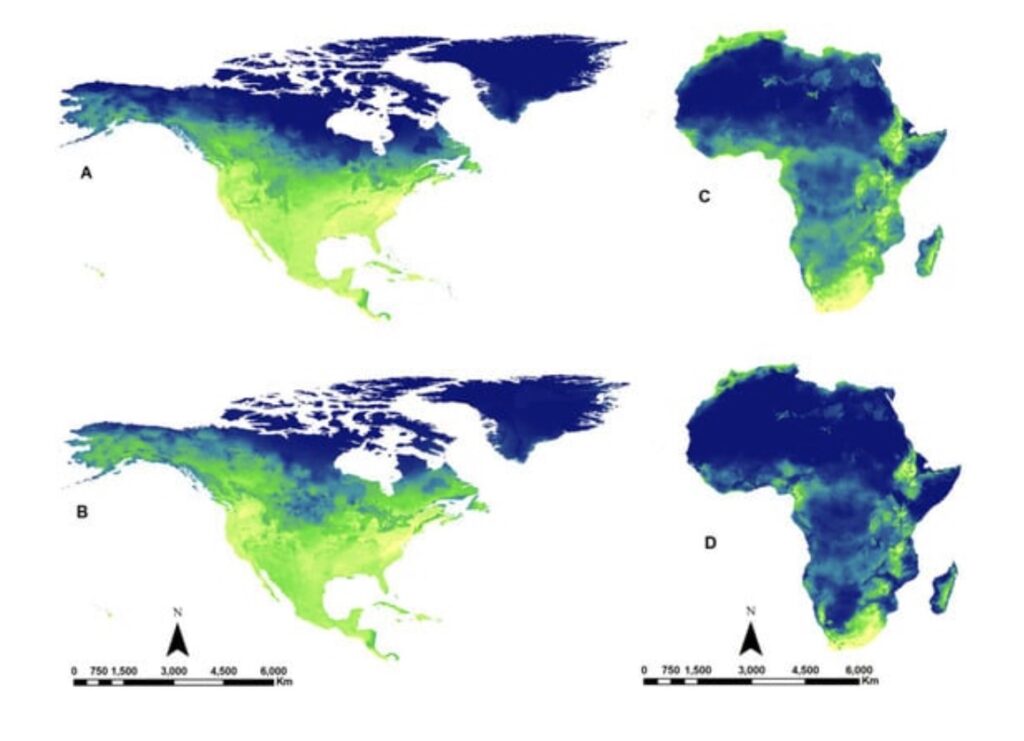
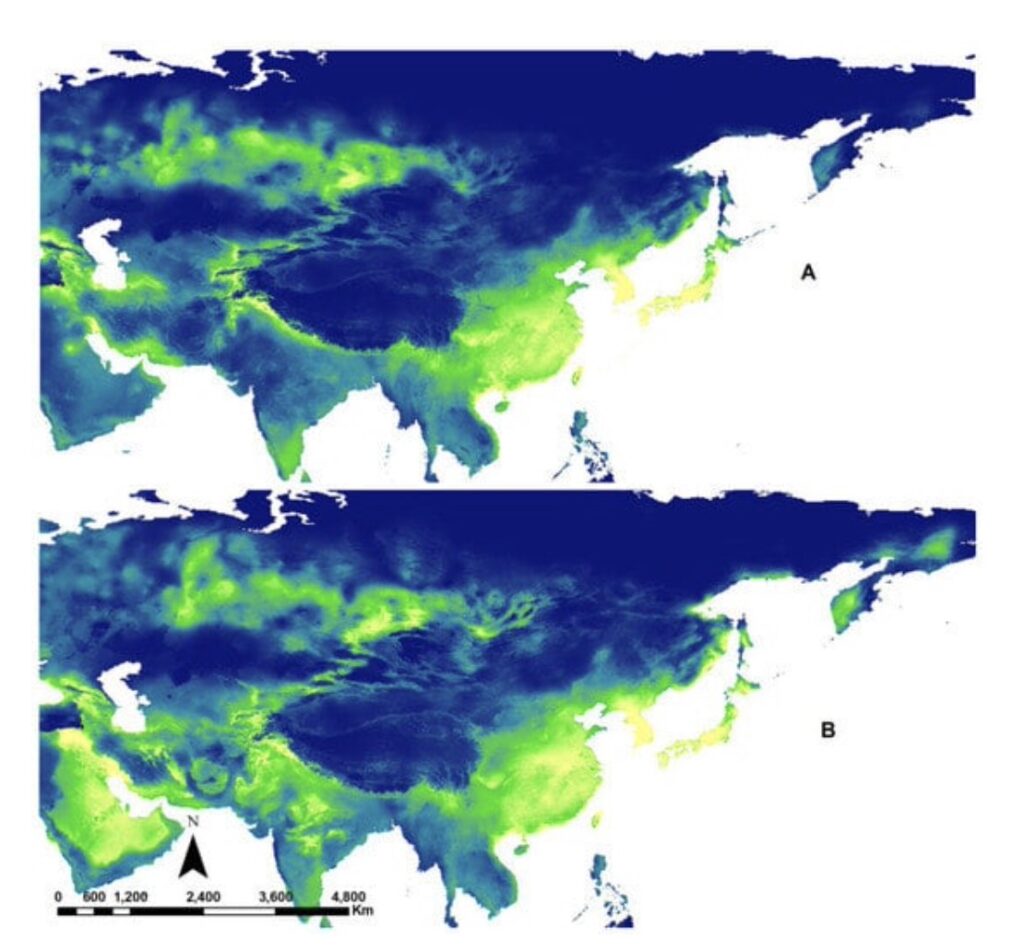
A study has developed several models to assess the future effects of climate change on several crucial pollinators, including bees. (8) The results are not comforting, and it is predicted that 65% of bees (out of a total of 1,365 species) will see a sharp reduction in their average distribution in 2070. In Europe, this reduction is estimated at 56%, while in some cases, such as North America, the distribution could even increase, for the remaining 35% of bees analysed. Of course, various uncertainties must be taken into account, such as the impossibility of predicting future climate changes and the adoption of innovations to counter these changes.
Habitat alteration, considered as the main influencing factor due to rising temperatures, can be both positive and negative. For example, previously inhospitable scenarios could become suitable for the survival of certain bees, but the biological cycles of plants could be compromised and not follow those of the bees themselves, limiting the availability of pollen and nectar. Similar reasoning can be made for pathogens and diseases.
Young people for pollinators
Young people are considered to be the future custodians of bees and beekeeping, and therefore FAO aims to raise awareness among this segment of the population, and to involve them in various educational initiatives and events, in which policy makers, teachers, beekeepers and many other parties interested in bees and pollinators can also participate.
Their involvement can be promoted in several ways:
– By promoting World Bee Day in cities or towns, even beyond 20 May, and it is possible to involve local institutions or businesses to carry out communication activities for this day;
– By promoting initiatives in kindergartens and schools, to carry out teaching and practical activities for the defence of pollinators and respect for health and the environment;
– Tasting different types of honey – obtained according to fairness, as advocated by GHO, Global Honey Organisation – to understand the role that honeybees play directly in food production;
– Organising special events in physical form or at a distance, through discussions and interactive workshops;
– Taking advantage of parks and gardens to show the importance of pollinators for their presence and survival.
Strategies to help bees
There are five strategies that can be implemented by young (and not so young) people to help bees and the beekeeping sector stay alive and thriving. They are:
1) Planting bee-attractive gardens, using native and attractive species, along with crops that can provide nutrition for the bees, and taking care to have sufficient flowering scaling throughout the year;
2) Creating bee-proof environments, by building or placing houses or shelters for solitary bees, or creating hedges or leaving bare ground areas for bees to nest in;
3) Supporting local beekeepers, buying honey and other products from them and learning about good beekeeping practices and beekeeping itself;
4) Avoiding the use of chemicals potentially harmful to bees, reducing or changing pesticides and fertilisers, and choosing organic and sustainable products;
5) Learning about bee species, exploring and discovering bees in the area, and understanding how they live and survive in the environment.
Conclusions
Bees and various pollinators are still subject to various risks to their safety and survival. Despite this, solutions to ameliorate these adversities do not yet seem to be the Commission’s priority. It is up to ordinary citizens, and future generations, to take an active part in protective actions to prevent weather and external threats from leading to such a drastic reduction that irreversible consequences for nature and all living things will ensue.
Dario Dongo and Andrea Adelmo Della Penna
Footnotes
(1) FAO (2024) Bee engaged with youth – Get involved. World Bee Day – 20 May 2024. https://openknowledge.fao.org/handle/20.500.14283/cd0325en
(2) Dario Dongo, Andrea Adelmo Della Penna. World Bee Day. No suitable policy. Food Times. 20.5.23
(3) Revised Pollinator Initiative – A New Pact for Pollinators. European Parliament resolution of 23 November 2023 on the revised Pollinators’ Initiative – a new pact for pollinators (2023/2720(RSP)). https://www.europarl.europa.eu/doceo/document/TA-9-2023-0441_IT.pdf
(4) Alessandra Mei. Stop the insecticide cypermethrin. Pan Europe appeals to the Court of Justice. Food Times. 8.5.24
PAN Europe. First ever case against pesticide permit in highest EU Court. 7.5.24. https://www.pan-europe.info/blog/first-ever-case-against-pesticide-permit-highest-eu-court
(5) EFSA (2018) Peer review of the pesticide risk assessment of the active substance cypermethrin. EFSA Journal 16(8):5402, https://doi.org/10.2903/j.efsa.2018.5402
(6) EFSA (2023) Review of the existing maximum residue levels for cypermethrins according to Article 12 of Regulation (EC) No 396/2005. EFSA Journal 21(3):7800, https://doi.org/10.2903/j.efsa.2023.7800
(7) Raine N.E. & Rundlöf M. (2024) Pesticide Exposure and Effects on Non-Apis Bees. Annual Review of Entomology 69:551-576, https://doi.org/10.1146/annurev-ento-040323-020625
(8) Rahimi E. et al. (2024) Global Trends in Climate Suitability of Bees: Ups and Downs in a Warming World. Insects 15(2):127, https://doi.org/10.3390/insects15020127

Dario Dongo, lawyer and journalist, PhD in international food law, founder of WIISE (FARE - GIFT - Food Times) and Égalité.

Graduated in Food Technologies and Biotechnologies, qualified food technologist, he follows the research and development area. With particular regard to European research projects (in Horizon 2020, PRIMA) where the FARE division of WIISE Srl, a benefit company, participates.