
Livestock farming presents diverse opportunities for the development and integration of circular bioeconomy models capable of reducing the use of new resources and limiting stress on productive systems, ultimately achieving resilient and sustainable food systems.
The FAO has published dedicated guidelines aimed at supporting operators and stakeholders involved in the animal production sector in adopting practices to implement circular bioeconomy performance. (1)
The circular bioeconomy represents a transformative approach to sustainability, based on the efficient use, reuse andregeneration of renewable biomass derived from animals, plants, microorganisms and humans, together with their related by-products. This model enables more sustainable management of resource consumption, waste generation and the effects of climate change.
The approach integrates the principles of bioeconomy and circular economy, placing emphasis on the sustainable use of biomass in closed systems, as opposed to linear activities that generate losses and waste. At the same time, it increases the availability of various products, including food, feed, fibres, fuels and other materials, delivering significant benefits for society, the economy and the environment.

Role of livestock in the circular bioeconomy
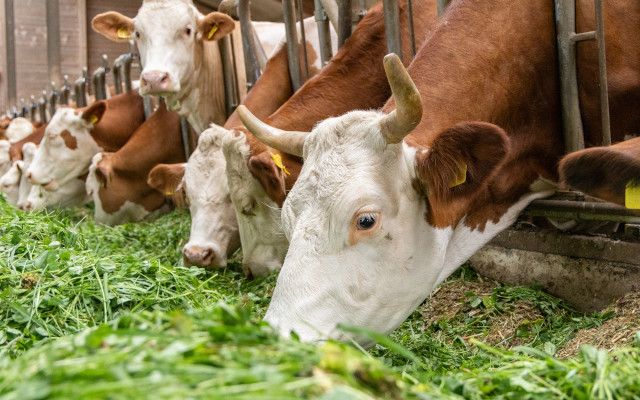
Livestock farming plays a central role in the circular bioeconomy, thanks to its capacity to manage and process residues and co-products from agricultural activities, recycling resources that would otherwise be disposed of as waste. Livestock enables genuine upcycling of materials not edible by humans, transforming them into animal-source protein foods. Animal-source products account for approximately 34–40% of global dietary protein sources, which can also be obtained from inedible crop residues or crops unsuitable for human consumption. This reduces competition between food and feed and optimises the use of resources available for human nutrition.
Beyond food production, livestock generates useful resources such as:
- manure, usable as a soil fertiliser;
- wool and hides, usable in the textile and manufacturing sectors and also in construction, wool, as a fire-retardant insulator;
- gelatine, collagen, oils and fats, of high added value for the pharmaceutical, cosmetic, pet-food and bioenergy industries.
These opportunities contribute to integrating the food waste hierarchy and the value pyramid, valorising materials and by-products that would otherwise be considered waste.

Sources and valorisation of food co-products
The potential use of co-products depends on their nutritional value, which determines their destination, for example as feed or fertiliser. This value is assessed in relation to the source that the co-product is intended to replace, and takes into account the presence of anti-nutritional factors or other undesirable substances that may limit or prevent its use.
In food production, sources of co-products may be of plant or animal origin and may be used as such or subjected to varying degrees of processing or transformation, in order to increase their use efficiency and valorisation.
Co-products from fermentation processes
Foods obtained from fermentation processes generate varying quantities and types of co-products that can be used for similar or different purposes from a nutritional standpoint, particularly in food supplements. Some examples concern co-products from the wine and brewing industries, such as:
- spent brewers’ grains from the brewing industry, rich in fibre and protein residues from which hydrolysed proteins and beta-glucans can be obtained, as well as raw materials for feed;
- brewer’s yeast, a fermentation co-product, usable in human and animal nutrition as a protein and nutritional supplement, rich in B vitamins, minerals and bioactive compounds;
- grape pomace, for the production of functional ingredients for food and feed.
Crop residues
Straw and non-edible parts of maize, such as leaves, stalks and cobs, constitute an excellent source of fibre and are generally destined for ruminant diets. Alternatively, they can be left on the soil to contribute to the release of organic matter and improvement of soil fertility.
Maize residues display a higher nutritional quality than other crops, but their high water content makes long-term preservation difficult.
Co-products from the food industry
Protein meals are among the main co-products of the food industry. They are obtained as a solid residue from the processes of oil extraction from vegetable seeds (e.g. sunflower, soya, groundnuts) and contain the residual protein fraction, a small proportion of lipids and other nutrients, generally destined for animal feed.
Other significant co-products include olive pomace, which shares similar uses to protein meals but primarily contributes to improving the lipid profile of feed, providing monounsaturated fats and antioxidants such as vitamin E. Residues from the sugar industry, such as molasses and beet or sugarcane pulp, in turn provide fibre and sugars, increasing the palatability of feed.
In general terms, the food industry, across its various sectors, offers a variety of co-products destined for the production of feed and pet food. These include cereal residues (e.g. wheat, maize, rice), glucidic products (e.g. potatoes) and sugar-based products (e.g. fruits).
Co-products of animal origin
Co-products of animal origin – parts of animals or products derived from them not intended for human consumption – can be processed for various uses with a view to the production of feed, fertilisers, fuels or ingredients for the pharmaceutical and cosmetic sectors. Their regulation in the European Union is extremely rigorous, with the aim of preventing risks to public health and animal health. (2)
Such regulation may, however, limit the full valorisation of co-products in the circular bioeconomy. The drastic restrictions on the destinations of Animal By-Products – established a priori rather than on the basis of a concrete risk assessment – prevent their transformation into valuable products and unjustifiably limit their contribution to circularity and resource optimisation.
Assessment methods and indicators
Assessing the environmental impact of a livestock production system in a circular bioeconomy requires the use of appropriate methods and indicators. Given the high variability between geographical contexts (national, regional, local), not all indicators are universally applicable; it is therefore necessary to select them carefully according to the specific conditions of analysis, to ensure reliable assessments.
The main indicators are respectively based on:
- objectives: these indicators focus on the existence of a plan to adopt one or more interventions. These include, for example, the objectives established by the European Commission in the Circular Economy Action Plan and those linked to the Sustainable Development Goals (SDGs);
- product: these indicators are directed at one or more aspects of circularity at different operational levels. They should reflect the consequences or impacts of certain interventions or practices on expected outcomes (e.g. reduction of food-feed competition, prevalence of food generation over non-edible biomass);
- practice: these indicators measure the degree of implementation of an intervention and are widely used in certification schemes such as organic farming. It is important that the practice be efficient in ensuring the expected outcome based on the relevant socio-economic contexts (increasing the share of crop residue administration, for example, does not always guarantee a reduction in food-feed competition);
- outcome: these assess interventions based on their capacity to achieve the set objectives, but are difficult to evaluate. A given practice is required to be effectively capable of contributing to supply chain circularity.
Nutrient assessment can be carried out through a mass balance-based approach, which evaluates the nutrients entering and leaving the system by calculating their use effectiveness (nutrient use efficiency, NUE). It is thus possible to calculate recycling and reuse efficiency or any nutrient losses. Alternatively, reference can be made to Life Cycle Assessment (LCA) with standard references such as the land used for the cultivation of a crop or the rearing of animals, to be combined with appropriate units of measurement for a coherent sustainability assessment.
Role of policies and regulations
Sector policies are mainly divided into bioeconomy policies and circular economy policies:
- bioeconomy policies are concerned with assessing, based on the territory, all biomasses available locally, or choose to focus on specific biomasses (e.g. terrestrial, marine). In general, they aim to improve knowledge relating to the potential use of different biomasses. The production of biomasses from animal sources is, moreover, rarely defined as such, while greater focus is placed on agriculture and forestry;
- circular economy policies focus on the efficient use of resources to reduce waste and increase the recycling of residual substances. However, these objectives are hampered by certain regulations that restrict or prevent the use of some sources, such as animal by-products. Food safety requirements affect the implementation of fully circular models in production chains, sometimes even regardless of the actual existence of risks.
The circular bioeconomy still has limited dedicated policies, also due to possible conflicts between the principles of bioeconomy and those of circular economy. An example is the allocation of biomass to biofuel production, which may divert materials away from their use in higher-value circular cycles.
The EU has recently adopted the plan ‘A Strategic Framework for a Competitive and Sustainable EU Bioeconomy’, which includes, among its objectives for 2027, the promotion of the exchange of circular good practices including in the use of animal by-products. (3)
Provisional conclusions
Agricultural systems generate a plurality of products and co-products whose value depends on their actual possibility of use within production chains. Alongside the main animal-source foods, such as meat, milk and eggs, there are co-products such as wool, oils and fats that have significant economic and applicative value.
In this context, livestock plays a key role in valorising plant biomasses not edible by humans, including dedicated crops and food production residues, transforming them into food and other useful materials, in line with the principles of the circular bioeconomy.
The development of supply chains consistent with these principles requires, however, rigorous assessments through appropriate indicators and methods (e.g. LCA), capable of measuring the degree of sustainability of production systems and identifying scope for improvement in resource valorisation.
Dario Dongo and Andrea Adelmo Della Penna
Credit cover: Being Organic in EU
Notes
(1) FAO (2025) The role of livestock in circular bioeconomy systems. Rome. https://doi.org/10.4060/cd6765en
(2) Dongo D., Della Penna A.A. Animal by-products, the state of the art. Food Times. 21.3.25
(3) Communication from the Commission to the European Parliament, the Council, the European Economic and Social Committee and the Committee of the Regions. A strategic framework for a competitive and sustainable EU bioeconomy (COM/2025/960 final).

Dario Dongo, lawyer and journalist, PhD in international food law, founder of WIISE (FARE - GIFT - Food Times) and Égalité.

Graduated in Food Technologies and Biotechnologies, qualified food technologist, he follows the research and development area. With particular regard to European research projects (in Horizon 2020, PRIMA) where the FARE division of WIISE Srl, a benefit company, participates.