

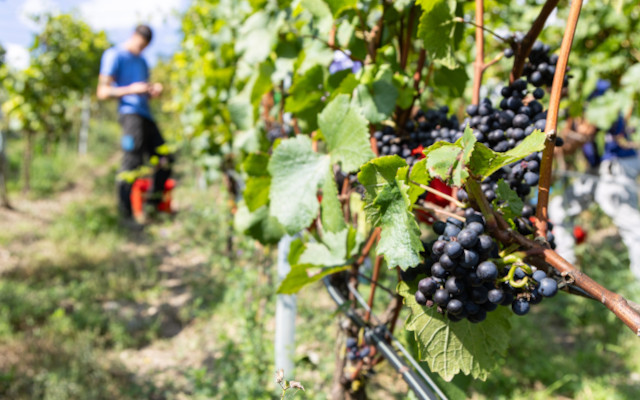
A landmark long-term study published in Agronomy for Sustainable Development (Döring et al., 2026) provides the most comprehensive comparative assessment to date of organic, biodynamic, and integrated viticulture management on Vitis vinifera cv. Riesling. Conducted at the INBIODYN experimental site in Geisenheim, Germany — a temperate oceanic climate — the trial ran from 2006 to 2023, offering an 18-year window into how agroecological systems adapt and perform over extended periods and across varying climatic conditions. Its significance lies not only in its duration but in the fact that it represents the only long-term study on perennial crops to systematically compare these three management systems on agronomic, nutritional, and quality parameters simultaneously.
Organic farming is widely recognised as a more sustainable alternative to conventional agriculture, providing greater ecosystem services, reducing biodiversity loss, and limiting nutrient leaching and greenhouse gas emissions (Reganold & Wachter, 2016; Seufert & Ramankutty, 2017). Yet it is frequently criticised for lower crop yields, a concern that has fuelled debate over whether such systems can contribute meaningfully to global food security (Muller et al., 2017).
In viticulture specifically, a prior meta-analysis found yield reductions of approximately 18% in organic and biodynamic systems relative to conventional or integrated management (Döring et al., 2019). The Geisenheim trial was designed, in part, to investigate whether such gaps persist or narrow over time, and to explore the role of climate in mediating these outcomes.
Materials and methods
The experimental design employed a complete block design with four field replicates for each management system:
- organi plots followed Regulation (EU) 2018/848 and ECOVIN standards;
- biodynamic plots additionally adhered to Demeter specifications, incorporating preparations such as horn manure and horn silica, as well as biodynamic compost preparations (502–507);
- integrated plots followed Good Agricultural Practice guidelines.
All three systems received equivalent nitrogen inputs, either through mineral fertilisation (integrated) or legume-rich cover crop incorporation (organic and biodynamic), and periodic compost applications were made across all treatments in 2006, 2007, 2016, and 2021. Mildew management differed fundamentally: synthetic fungicides were used in integrated plots, while organic and biodynamic plots relied on copper, sulphur, and plant-strengthening agents.
Parameters assessed and statistical approach
Key agronomic parameters assessed included crop yield, pruning weight, Ravaz index (a measure of vine balance), predawn leaf water potential, and leaf macro- and micronutrient concentrations at veraison. Grape quality was evaluated through total soluble solids, pH, total acidity, alpha-amino nitrogen (NOPA), Botrytis cinerea incidence, and single berry weight. Statistical analysis drew on linear mixed-effects models (LMM) and gamma generalised linear mixed models (GLMM), with change point analysis applied to identify temporal shifts in relative yield performance. A principal component analysis (PCA) combined with K-means clustering was used to classify growing seasons into three distinct vintage groups — warm/dry, intermediate, and cool/wet — enabling systematic assessment of climatic interactions with management system.
Overall yield and quality outcomes
Across the full 18-year period, yield gaps were confirmed: organic yields averaged 16.7% lower and biodynamic yields 14.3% lower than integrated management, in line with published meta-analyses (de Ponti et al., 2012; Seufert et al., 2012).
Pruning weights followed a parallel pattern, with organic and biodynamic plots registering approximately 16–19% lower values. However, the Ravaz index — an indicator of vine balance between vegetative growth and fruit yield — did not differ significantly among treatments, as both yield and growth declined in tandem in the agroecological systems. Importantly, no significant differences were observed in total soluble solids, total acidity, or Botrytis cinerea incidence between management systems, suggesting that grape quality was broadly maintained under organic and biodynamic practices.
Temporal evolution: narrowing the gap
The most striking finding of the study concerns the temporal trajectory of yield performance. Change point analysis identified significant improvements in relative yield effect sizes for both organic (2014, 90% confidence level) and biodynamic (2015, 95% confidence level) systems, corresponding to 8–9 years after the initial conversion. Prior to these change points, organic and biodynamic plots showed mean yield deficits of approximately −28% and −27%, respectively, relative to integrated management; thereafter, these deficits narrowed substantially to −11% and −7%. A comparable improvement was detected in the Ravaz index of both systems.
These findings are consistent with broader evidence that organic systems may require several years of adaptation before reaching a more stable productive equilibrium (Merot et al., 2020; Seufert et al., 2012). Pruning weight, however, remained persistently lower in organic and biodynamic systems throughout the trial, irrespective of vintage conditions.
Climate as a key performance driver
A particularly important contribution of this study lies in its analysis of climate-dependent performance. Vintages classified as warm and dry (vintage group 1) yielded a remarkable reversal: organic and biodynamic systems showed positive yield effect sizes of +2.3% and +9.0%, respectively, relative to integrated management, alongside improved Ravaz index values. In contrast, cooler and wetter vintages (vintage groups 2 and 3) were associated with persistently negative yield effect sizes for the agroecological systems, a pattern plausibly linked to elevated fungal disease pressure under conditions less favourable to the copper-sulphur-based protection strategies employed in organic and biodynamic management. Alpha-amino nitrogen (NOPA), a measure of yeast-available nitrogen in juice at harvest, was significantly higher under organic and — particularly — biodynamic management in warm, dry years. This was interpreted as reflecting improved nitrogen mineralisation and uptake efficiency under drought conditions, possibly mediated by differences in cover crop management, root architecture, and soil microbial community composition (Hartmann et al., 2015; Mäder et al., 2002).
Nutrient status and copper accumulation
Leaf nutrient analysis at veraison further supported the conclusion that nutrient deficiency was not the primary driver of the initial yield reductions observed in organic and biodynamic plots. Organic and biodynamic leaves showed higher concentrations of nitrogen (N) and potassium (K) than integrated plots, while magnesium (Mg) values were comparable across systems. Notably, leaf copper concentrations in organic and biodynamic plots (approximately 295 mg kg⁻¹) vastly exceeded those in integrated plots (approximately 19 mg kg⁻¹), a pattern consistent with cumulative residues from repeated applications of copper-based fungicides. Although statistically significant, the minor differences observed in juice pH between biodynamic and integrated treatments were considered of limited practical relevance given the narrow absolute range across all three systems.
Provisional conclusions
The authors acknowledge that the apparent improvement associated with time after conversion is partially confounded by the climatic trend observed during the study period: regression analysis revealed a significant positive correlation between years after conversion and cumulative growing degree days from budbreak to harvest (p = 0.029, R² = 0.219), suggesting that the trial’s later phase coincided with an increasing frequency of warm, dry seasons. Disentangling the independent contributions of system maturation and climatic change therefore remains methodologically challenging, and the authors call for continued long-term monitoring to clarify these interrelationships. The overall conclusions are nonetheless robust: agroecological viticulture systems can overcome initial yield deficits over the long term, and may offer enhanced resilience under increasingly warm and dry growing conditions anticipated under climate change scenarios.
Dario Dongo
Credit cover: Being Organic in EU
References
- De Ponti, T., Rijk, B., & van Ittersum, M. K. (2012). The crop yield gap between organic and conventional agriculture. Agricultural Systems, 108, 1–9. https://doi.org/10.1016/j.agsy.2011.12.004
- Döring, J., Collins, C., Frisch, M., & Kauer, R. (2019). Organic and biodynamic viticulture affect biodiversity, vine and wine properties: a systematic quantitative review. American Journal of Enology and Viticulture, 70(3), 221–242. https://doi.org/10.5344/ajev.2019.18047
- Döring, J., Steng, K., Wohlfahrt, Y., Meißner, G., Friedel, M., Scheidweiler, M., Stoll, M., Hofmann, M., & Kauer, R. (2026). Overcoming yield gaps in organic and biodynamic viticulture: insights from an 18-year field trial. Agronomy for Sustainable Development, 46, 13. https://doi.org/10.1007/s13593-025-01079-2
- Hartmann, M., Frey, B., Mayer, J., Mäder, P., & Widmer, F. (2015). Distinct soil microbial diversity under long-term organic and conventional farming. ISME Journal, 9(5), 1177–1194. https://doi.org/10.1038/ismej.2014.210
- Mäder, P., Fliessbach, A., Dubois, D., Gunst, L., Fried, P., & Niggli, U. (2002). Soil fertility and biodiversity in organic farming. Science, 296(5573), 1694–1697. https://doi.org/10.1126/science.1071148
- Merot, A., Fermaid, M., Gosme, M., & Smits, N. (2020). Effect of conversion to organic farming on pest and disease control in French vineyards. Agronomy, 10(7), 1047. https://doi.org/10.3390/agronomy10071047
- Muller, A., Schader, C., El-Hage Scialabba, N., Brüggemann, J., Isensee, A., Erb, K.-H., Smith, P., Klocke, P., Leiber, F., Stolze, M., & Niggli, U. (2017). Strategies for feeding the world more sustainably with organic agriculture. Nature Communications, 8, 1290. https://doi.org/10.1038/s41467-017-01410-w
- Reganold, J., & Wachter, J. (2016). Organic agriculture in the twenty-first century. Nature Plants, 2, 15221. https://doi.org/10.1038/nplants.2015.221
- Seufert, V., & Ramankutty, N. (2017). Many shades of gray — the context-dependent performance of organic agriculture. Science Advances, 3(6), e1602638. https://doi.org/10.1126/sciadv.1602638
- Seufert, V., Ramankutty, N., & Foley, J. A. (2012). Comparing the yields of organic and conventional agriculture. Nature, 485(7397), 229–232. https://doi.org/10.1038/nature11069

Dario Dongo, lawyer and journalist, PhD in international food law, founder of WIISE (FARE - GIFT - Food Times) and Égalité.