

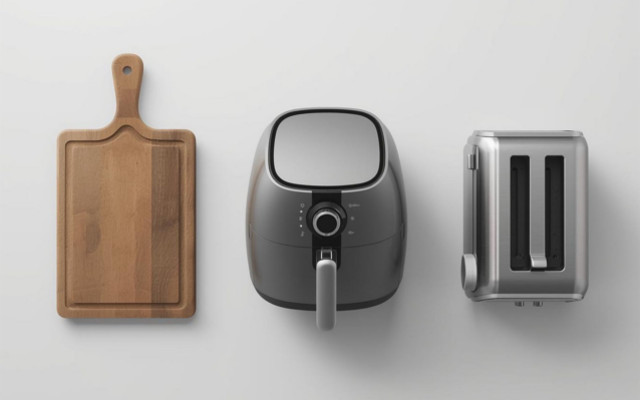
Coeliac disease represents a significant public health concern, affecting genetically susceptible individuals who develop a T-cell-mediated autoimmune response to gluten ingestion. The condition manifests through intestinal mucosal damage and a spectrum of symptoms including abdominal pain, diarrhoea, weight loss, and various extra-intestinal manifestations (Burger et al., 2025; Green & Cellier, 2007). While a strict gluten-free diet remains the cornerstone of treatment, maintaining dietary adherence poses substantial challenges, particularly regarding cross-contamination in domestic settings. A recent study by Burger et al. (2025) addresses this critical gap by providing evidence-based guidance on household gluten safety through systematic evaluation of common kitchen appliances and cleaning protocols.
The research team conducted a comprehensive two-phase analysis examining 417 samples across three categories of kitchen appliances: 275 chopping boards (wooden, plastic, and glass), 34 toasters and sandwich makers, and 108 deep-fat fryers and air fryers (Burger et al., 2025). The study employed the RIDASCREEN® Gliadin ELISA kit, capable of detecting gluten concentrations between 5 and 80 parts per million (ppm), with Bayesian statistical modelling applied to estimate contamination probabilities. This methodological approach allowed researchers to quantify risks associated with different materials and cleaning methods, including cold water rinsing, warm water washing, soap application, and dishwasher cleaning.
Key findings: chopping boards
Plastic chopping boards demonstrated the highest contamination risk, with gluten presence probabilities reaching 0.868 when cleaned with cold water alone, compared to 0.147 following dishwasher cleaning (Burger et al., 2025). The material composition and surface porosity of plastic boards appear to facilitate gluten adhesion, necessitating more thorough decontamination procedures.
Glass and wooden boards exhibited substantially lower contamination rates when subjected to rigorous cleaning protocols, with dishwasher-cleaned specimens showing probabilities of 0.0102 and 0.0194 respectively. These findings align with previous research demonstrating that intensive cleaning methods significantly reduce cross-contamination risk (Damasceno et al., 2024).
Toasters and sandwich makers performance
The investigation of toasting appliances revealed reassuringly low contamination rates, with only three of 34 samples testing positive for gluten (Burger et al., 2025). Statistical analysis indicated that at the clinically relevant threshold of 20 ppm, the probability of contamination approached 0.00001 for both consecutive and simultaneous toasting scenarios. These results corroborate findings from American studies where shared toaster use did not result in detectable gluten levels exceeding safe thresholds (McDonald & Kupfer, 2020). However, the design variability amongst household toasters suggests that dedicated appliances for gluten-free products remain the safest option for highly sensitive individuals.
Deep-fat fryers and air fryers analysis
Frying appliances demonstrated manageable contamination risks when appropriate cleaning protocols were implemented. Deep-fat fryers showed a contamination probability of 0.125 at the 5 ppm threshold, decreasing to 0.0405 at 20 ppm, whilst air fryers exhibited probabilities of 0.070 and 0.0326 respectively (Burger et al., 2025). The study’s ‘worst-case scenario’ testing, involving maximum capacity frying with immediate consecutive use, did not result in clinically significant gluten transfer. Oil replacement in deep-fat fryers and thorough basket cleaning in air fryers proved effective in minimising contamination risk.
Discussion and clinical implications
The research highlights the critical importance of appliance-specific cleaning protocols in maintaining gluten-free dietary safety. The observed contamination patterns suggest that while complete gluten elimination proves challenging in mixed households, targeted interventions can substantially reduce exposure to clinically relevant levels (Burger et al., 2025). The 20 ppm threshold, established through prospective trials as a safe level for coeliac patients (Catassi et al., 2007), was seldom exceeded across all appliances tested. However, individual sensitivity variations necessitate personalised approaches, with highly reactive patients potentially requiring dedicated equipment or enhanced cleaning regimens.
The study acknowledges several limitations, including its focus on specific cleaning procedures that may not encompass all real-world variations, and the challenge of accounting for individual patient sensitivity thresholds. Future research directions include investigating gluten adhesion across broader material types, examining professional kitchen environments where simultaneous meal preparation increases contamination risk, and conducting longitudinal studies to assess cumulative exposure effects (Burger et al., 2025). The limited awareness amongst food service professionals regarding coeliac disease requirements (Schultz et al., 2017) underscores the need for evidence-based educational interventions.
Practical recommendations
Based on the empirical evidence, the study offers clear guidance for household gluten management. Dishwasher cleaning emerges as the most effective method for chopping boards, particularly for glass and wooden varieties, while plastic boards require dedicated use or replacement. Toasters and sandwich makers pose minimal risk when crumbs are regularly removed and surfaces wiped with damp cloths, though separate appliances for gluten-free products provide additional security. For frying equipment, regular oil changes in deep-fat fryers and thorough basket washing in air fryers maintain safety standards.
Conclusions
The comprehensive investigation by Burger and colleagues (2025) provides robust evidence that rigorous cleaning protocols significantly mitigate gluten cross-contamination risks in household settings. While the research demonstrates that complete gluten trace elimination may not be feasible, the implementation of evidence-based practices can reduce exposure below clinically significant thresholds (Burger et al., 2025). The findings empower individuals with coeliac disease to make informed decisions regarding kitchen management strategies, whether through dedicated appliances, enhanced cleaning regimens, or combinations thereof. By translating scientific evidence into practical recommendations, this study contributes to improving quality of life and dietary safety for the coeliac population, addressing a persistent challenge that affects daily living and social participation.
Dario Dongo
References
- Burger, J. P. W., de Brouwer, B., IntHout, J., Wahab, P. J., Tummers, M., & Drenth, J. P. H. (2017). Systematic review with meta-analysis: Dietary adherence influences normalization of health-related quality of life in coeliac disease. Clinical Nutrition, 36(2), 399–406. https://doi.org/10.1016/j.clnu.2016.04.021
- Burger, J. P. W., Pijls, C., van Overveld, F. W. P. C., Jacobs, M., Wessels, M. M. S., & Wahab, P. J. (2025). Gluten contamination in household kitchen appliances: Risks and cleaning solutions. Dietetics, 4(3), 41. https://doi.org/10.3390/dietetics4030041
- Catassi, C., Fabiani, E., Iacono, G., D’Agate, C., Francavilla, R., Biagi, F., Volta, U., Accomando, S., Picarelli, A., De Vitis, I., Pianelli, G., Gesuita, R., Carle, F., Mandolesi, A., Bearzi, I., & Fasano, A. (2007). A prospective, double-blind, placebo-controlled trial to establish a safe gluten threshold for patients with celiac disease. The American Journal of Clinical Nutrition, 85(1), 160–166. https://doi.org/10.1093/ajcn/85.1.160
- Damasceno, R. P. B., Zandonadi, R. P., Mendes, M., Cunha Junior, L. C., Raposo, A., Teixeira-Lemos, E., Chaves, C., & Farage, P. (2024). Risk of gluten cross-contamination due to food handling practices: A mini-review. Nutrients, 16(8), 1198. https://doi.org/10.3390/nu16081198
- Green, P. H., & Cellier, C. (2007). Celiac disease. New England Journal of Medicine, 357(17), 1731–1743. https://doi.org/10.1056/NEJMra071600
- McDonald, B. D., & Kupfer, S. S. (2020). Can We Cross Off Common Kitchen Practices as Causes of Gluten Cross-Contact?. Gastroenterology, 158(1), 51–53. https://doi.org/10.1053/j.gastro.2019.11.011
- Schultz, M., Shin, S., & Coppell, K. J. (2017). Awareness of coeliac disease among chefs and cooks depends on the level and place of training. Asia Pacific journal of clinical nutrition, 26(4), 719–724. https://doi.org/10.6133/apjcn.072016.03

Dario Dongo, lawyer and journalist, PhD in international food law, founder of WIISE (FARE - GIFT - Food Times) and Égalité.


