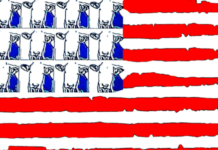


CETA. Not only GMOs and cloning, synthetic hormones and veterinary drugs banned in Europe. Thanks to the trade agreement with Canada, beef from cattle fed on animal meal will also land in the EU. A puzzling news offered by the French newspaper Le Monde, which has ‘curiously’ escaped the Italian regime press.
CETA, a blind policy
CETA, which is already in force on a provisional basis, will be finally operational when EU member states have ratified it. France’s ‘Lower House’ gave the green light on 7/23/19, following a lively debate over the prospect that the implementation of the treaty could pose a threat to the health of European consumers. (1) The conditions of entry into the EU of food coming from Canada-i.e., from other countries, through companies based in Canada-seemed to be clear, given that the agreement has been in place for a full 18 months. However, the French debate has revealed some aspects that have so far gone ‘under the radar’.
The precautionary principle-on which European food law is rooted-is not invoked anywhere in the EU-Canada Treaty. According to this principle, if ‘following an assessment of available information, the possibility of adverse health effects is identified but scientific uncertainty remains,’ appropriate risk management measures must be taken ‘to ensure the high level of health protection.’ (2)
Across the Atlantic indeed, a criterion conceptually antithetical to precaution, known by the acronym GRAS(Generally Recognized As Safe), is applied. That is to say, regardless of cursory risk analyses, the marketing and use of various types of substances is accepted on the assumption of their safety ‘unless proven otherwise.’ Hence a legal environment that is certainly favorable to supply chain operators, who can chase productivity literally ‘at any cost’. As the abuses of herbicides (e.g., glyphosate) and desiccants on cereals and legumes (e.g., lentils) in the post-harvest stage in the vegetable supply chain demonstrate. And the deliberate release into the environment of GMOs, old and new, neither traced nor labeled.
Canada, nightmare animal husbandry and BSE risk
Overseas animal husbandry, in turn, chases productivity by making extensive use of growth hormones, antibiotics and other veterinary drugs (e.g., anabolic agents such as cortisone drugs and ‘β-agonists’ such as ractopamine) that have been banned in Europe for many years.
Animal meals in feed are also allowed on Canadian farms as feed ingredients for livestock. Although banned for two decades, in Europe, following their identification as vectors of spongiform encephalopathy (BSE), known in jargon as ‘mad cow’ disease. A reality concealed by pro-CETA politicians until the eve of the vote. But finally emerged and confirmed by Canadian authorities themselves. (3)
‘It is true that ‘meat-and-bone meal’ made from carcasses of cattle unfit for consumption is actually banned for import into France because of the risk of transmission of mad cow disease. But there is another kind of flour, made from non-noble pieces of healthy cattle, such as hair, blood or fat, treated at high temperatures. These ‘processed animal proteins’ pose no health risk, but are still banned in the EU in the name of the principle of ‘non-cannibalism’ (an ox should not eat beef residues). However, they are widely used by Canadian farmers, and the two European regulations setting rules for beef imports make no reference to them‘. (Le Monde. See footnote 4)
Antibioticresistance (Anti-Microbial Resistance, AMR) is a global emergency, as highlighted by WHO in its report 29.4.19 ‘No Time to Lose’. Europe has reformed the regulation of veterinary treatment with the specific aim of effectively addressing this serious problem, which is, however, being ignored by Canadian authorities and farmers. Who have been systematically using antibiotics banned in Europe for 20 years to artificially stimulate the growth of farm animals.
CETA’s threats to European law
It is precisely the precautionary principle that is the target of a complaint filed with the World Trade Organization (WTO) by Canada and 15 other states against Europe, which is accused of decreeing restrictions on substances used in their agri-food supply chains without providing scientific evidence of their dangerousness. (5) And that is just a taste of the showdowns that will force the community legislature, sooner or later, to let down its guard.
The EU Court of Justice, on 4/30/19, recognized the power of the trilateral clause(Investment Court System, a.k.a. Investor-State Dispute Settlement, ISDS) provided by CETA, through which private parties can challenge existing EU rules and claim damages for hindering their businesses. And Canadian lobbies have already shown their teeth against Italy as well, for providing for the indication of origin of wheat (6)-which Italians prefer Made in Italy-and resisting glyphosate.
Marta Strinati and Dario Dongo
Notes
(1) Ratification of CETA passed the lower house in France with 265 votes in favor, 211 against and 77 abstentions. Opposed were the center-left and the radical left, but also part of the deputies of En Marche, the party of President Emmanuel Macron (9 against, 52 abstaining)
(2) See reg. EC 178/02, so-called General Food Law, Articles 6(Risk Analysis) and 7(Precautionary Principle)
(3) See Agri 72,‘Ceta: le Canada autorise certaines protéines de ruminants pour nourrir les ruminants‘ at https://www.agri72.fr/ceta-le-canada-autorise-certaines-proteines-de-ruminants-pour-nourrir-les-ruminants-actualite-numero-6700.php
(4) See‘CETA: farines animales, antibiotiques… la confusion du gouvernement sur les conséquences en France‘, Le Monde, 15.7.19 https://www.lemonde.fr/les-decodeurs/article/2019/07/15/farines-animales-antibiotiques-la-grande-confusion-de-la-majorite-sur-le-ceta_5489659_4355770.html
(5) The signatories to the communication sent to the WTO on 4.7.19 are Australia, Brazil, Canada, Colombia, Costa Rica, Dominican Republic, Ecuador, Guatemala, Honduras, Malaysia, Nicaragua, Panama, Paraguay, Peru, the United States and Uruguay. V. ANNEX
(6) Moreover, the inter-ministerial decree on the origin of wheat and semolina on pasta labels is illegitimate and unenforceable, although it is applied on a voluntary basis by almost all operators. See the article https://www.greatitalianfoodtrade.it/etichette/sede-dello-stabilimento-in-etichetta-controlli-a-rischio

Professional journalist since January 1995, he has worked for newspapers (Il Messaggero, Paese Sera, La Stampa) and periodicals (NumeroUno, Il Salvagente). She is the author of journalistic surveys on food, she has published the book "Reading labels to know what we eat".

Dario Dongo, lawyer and journalist, PhD in international food law, founder of WIISE (FARE - GIFT - Food Times) and Égalité.