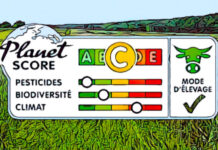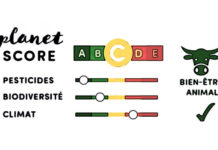


Planet-Score is emerging as an innovative system of food sustainability labelling, designed to meet the growing demand for transparency in production processes and the environmental impact of food. In recent years, European consumers have shown increasing interest in clear and reliable information: a 2020 European Commission study already revealed that more than half of citizens wanted a sustainability label to help guide their purchasing choices.
In this context, France has played a pioneering role by developing Planet-Score, a model grounded in robust science and comprehensive indicators — including pesticide use, biodiversity loss, and animal welfare — to provide a comprehensive and transparent view of food’s environmental footprint.
When combined with Nutri-Score, it also integrates environmental and nutritional dimensions, providing consumers with effective guidance towards decisions that benefit both health and the planet.
The evolution of food sustainability label in France: from Eco-Score to Planet-Score
Legislative framework
The development of environmental labelling in France has been driven by two landmark pieces of legislation. The Anti-Waste Circular Economy (AGEC) law of February 2020 introduced measures to reduce waste and promote sustainable consumption, while the Climate and Resilience law of August 2021 mandated the creation of environmental information systems for food products.
To meet these requirements, the French government launched an 18-month national experiment, designed to test different methodologies and define a harmonised environmental labelling scheme for consumers by the end of 2021 (Sayari, 2025).
The Eco-Score experiment
In this context, the Eco-Score label was introduced in 2021 by ADEME (the French agency for ecological transition), Eco2 Initiative, Yuca, and Open Food Facts. Its objective was to provide consumers with simple and visible information about the environmental footprint of food products, based primarily on Life Cycle Assessment (LCA).
Although Eco-Score raised awareness of the environmental dimension of food consumption, it soon faced criticism:
- the reliance on LCA data alone risked undervaluing organic and agroecological farming, while unintentionally favouring intensive production systems;
- the prefix ‘eco’ was problematic in several EU countries, where it is commonly understood as organic, generating confusion among consumers.
Legal challenges and withdrawal
In January 2023, IFOAM Organics Europe and its French members launched legal proceedings against ADEME, Eco2 Initiative and their partners, arguing that Eco-Score was misleading and unfair towards organic products.
The dispute was settled in June 2024, when the parties reached an agreement to end the use of Eco-Score:
- ADEME committed to withdrawing the ‘Eco-Score’ trademark for food and agri-food products;
- Yuca and Eco2 Initiative agreed to cease using Eco-Score logos and designs at the European level by 31 December 2024.
This settlement marked the end of the Eco-Score experiment and opened the way for alternative approaches (IFOAM Europe, 2024).
Planet-Score as a solution
In parallel, since 2021 three key French organisations – the Institute of Organic Agriculture and Food (ITAB), Sayari (a research organisation specialising in environmental metrics), and Very Good Future (a consumer-focused research organisation) – were developing Planet-Score, a system designed to overcome Eco-Score’s shortcomings.
Thanks to its scientific robustness and transparent methodology, Planet-Score has emerged as the most credible response to the French government’s call for voluntary labelling schemes.
Planet-Score: a scientific approach to food sustainability label
Planet-Score integrates traditional LCA data with complementary indicators such as pesticide use, biodiversity loss, and animal welfare. This multidimensional approach captures the broader ecological impacts of food production, offering consumers a more reliable and comprehensive assessment.
Scope and objectives
Planet-Score aims to address multiple dimensions of food sustainability through a comprehensive evaluation framework. Planet-score® is a label designed to be displayed on food products, on packaging as well as on e-commerce websites or mobile applications. It informs consumers about the environmental impact of food (Planet-Score.org, 2025). The system’s primary objective is to differentiate environmental impacts both:
- between different food categories (such as meat versus vegetables) and
- within categories (different production methods for the same product).
Planet-score corresponds to a credible scenario of ecological transition of our eating habits, calibrated by experts in agronomy and environment. It is in line with the prospective scenarios on a European scale which show that the perspective of a sustainable food supply is not only desirable, but also realistic (Planet-Score.org, 2025). The label serves as both an educational tool for consumers and a catalyst for industry transformation towards more sustainable practices.
Evaluation criteria
Planet-Score’s methodology represents a significant advancement over traditional Life Cycle Assessment (LCA) approaches. Whilst utilising France’s Agribalyse database as its foundation, Planet-Score addresses critical sustainability dimensions that standard LCA methodologies often overlook or inadequately represent.
Core assessment framework
Planet-score® is an environmental rating system based on ADEME’s Agribalyse database and other complementary key elements, such as biodiversity, pesticides, IPCC updates of climatic elements, etc.
ADEME’s Agribalyse database is a comprehensive life cycle assessment (LCA) database developed by the French Agency for Ecological Transition (ADEME). It provides environmental impact data for thousands of agricultural and food products consumed in France.
The Planet-Score system assesses food sustainability by integrating 25 indicators across the entire value chain, from farm to fork, including ingredients, their origin, methods of cultivation or rearing, packaging and transport (Planet-Score.org, 2025).
Four key dimensions
The Planet-Score system evaluates products across four critical environmental dimensions:
- Pesticides. The system accounts for pesticide use and its impacts on human health and ecosystems, addressing a significant gap in traditional LCA methodologies;
- Biodiversity. Biodiversity is also accounted for, addressing impacts associated with agricultural practices, as well as the size of agricultural plots, and the presence of hedges etc.;
- Climate. The assessment includes greenhouse gas emissions and soil carbon storage potential, incorporating the latest IPCC data on climate impacts;
- Animal welfare. For products containing at least 5% animal ingredients, the system evaluates rearing methods and their environmental implications.
Recent expansions
In 2023, Planet-Score broadened its scope to integrate additional sustainability indicators:
- it now considers a product’s degree of processing, its geographical origin, and whether fair remuneration has been provided to producers;
- this expansion reflects growing consumer concerns about ultra-processed foods, supply chain transparency, and fair trade practices, further strengthening Planet-Score’s role as a comprehensive sustainability label.
It should be underlined that the degree of processing primarily relates to the nutritional and health dimensions of food. From a methodological standpoint, this indicator may be more appropriately integrated into an updated Nutri-Score 2.0 framework (Srour et al., 2023), thereby preventing conceptual overlap and ensuring a clearer delineation between nutrition-oriented and sustainability-oriented labelling schemes.
Endorsement by IFOAM and organic sector support
Planet-Score has garnered significant support from the organic food movement and environmental organisations. IFOAM Organics Europe published its new position paper on ‘Sustainability labelling & the Planet-score‘ (IFOAM Organics Europe, 2022), demonstrating institutional backing from the leading organic agriculture organisation in Europe.
The system has received endorsement from at least 16 NGOs and organic sector organisations, including:
- IFOAM Organics Europe
- WWF France
- Générations Futures
- Compassion in World Farming (CIWF) France
- National Federation of Organic Agriculture
- Synabio
- UFC-Que Choisir (France’s main consumer association).
Advantages: scientific rigour and transparency
Comprehensive environmental assessment
Planet-Score’s primary advantage lies in its holistic approach to sustainability assessment. Unlike simpler scoring systems, it provides transparent information about multiple environmental dimensions simultaneously.
Planet-score is a demanding and transparent label: it guarantees not only the absence of greenwashing but a real commitment by the food industry players who are displaying the label on their products (Planet-Score.org, 2025).
Biodiversity protection focus
The system’s explicit incorporation of biodiversity indicators represents a crucial advancement in food sustainability labelling.
Traditional LCA methodologies often fail to capture the complex relationships between agricultural practices and biodiversity loss.
Planet-Score addresses this gap by evaluating factors such as agricultural plot sizes, presence of ecological infrastructure (hedges, buffer zones), and impacts on pollinators and other wildlife.
Correction of LCA limitations
When applied to food, the Product Environmental Footprint (PEF) methodology can produce misleading results, as it tends to penalise extensive agricultural systems by favouring yield per hectare over ecological practices. For example, eggs from hens in cages score better than free-range eggs, which in turn score better than organic eggs (IFOAM Organics Europe, 2022).
To address these inconsistencies, Planet-Score® introduces corrective indicators that capture the impacts of pesticide use, biodiversity loss, and food processing intensity, ensuring that ecological and animal welfare benefits are properly recognised in sustainability assessments.
Planet-Score® also integrates the latest IPCC emission factors and climate models to refine calculations of greenhouse gas (GHG) emissions across the entire food supply chain. By applying updated global warming potential (GWP) values to both agricultural production (e.g., methane from livestock, nitrous oxide from soils) and post-farm stages (processing, packaging, transport), the system enhances the accuracy and scientific robustness of environmental impact assessments, while remaining consistent with ADEME’s Agribalyse® database.
Consumer acceptance in France
Planet-Score had already demonstrated considerable consumer acceptance since its introduction in France. Evidence from a comprehensive consumer survey conducted in June 2021 confirmed strong support for the labelling scheme:
- 81% of consumers would be influenced by the Planet-score;
- 84% would take into account the Pesticides indicator;
- 83% would be influenced by the Animal Welfare indicator;
- 80% would be interested in the Biodiversity indicator;
- 77% would be interested in the Climate indicator (Interreg Europe, 2021).
Market implementation
The system launched its trial phase in 2021 with significant industry participation. The effectiveness of Planet-Score was tested in dress rehearsals involving 40 brands from 35 operators, including eight in large-scale distribution (Biocoop, Lidl, Naturalia, Franprix, La Vie Claire, Monoprix, Naturéo, and Greenweez), who applied this environmental label to 1,000 food products (Dongo et al., 2022).
The UFC-Que Choisir consumer association integrated Planet-Score into its ‘QuelProduit’ mobile application in 2023, providing environmental scores for over 135,000 food products to French consumers (UFC-Que Choisir, 2023).
By 31 August 2025, the adoption of the system had grown significantly, with 230 companies implementing it. These included major retailers such as Carrefour, Auchan, Système U, Lidl France and Germany, Intermarché, Monoprix, Eroski, Franprix, Lagardère, and Alnatura, as well as brands belonging to leading food corporations such as Danone and Nestlé (Planet-Score.org, 2025).
Combining Planet-Score with Nutri-Score: a dual approach to health and sustainability
The combination of Planet-Score with France’s established Nutri-Score nutritional labelling system offers consumers comprehensive guidance on both health and environmental dimensions of food choices. Research has explored the effectiveness of this dual labelling approach.
Synergistic benefits
This study provides some initial evidence and support for the use of dual Nutri-Score – sustainability label to induce transitions towards healthier and more sustainable diets (De Bauw et al., 2021).
When both labels are displayed together, consumers receive aligned information about products that are both nutritionally balanced and environmentally sustainable.
Addressing potential conflicts
Research has identified that conflicts can arise when the two scoring systems provide opposing signals. The co-presence of Nutri-Score reduced correct identification slightly (by 5%), but only when the two scores showed opposite directions (PubMed, 2025).
However, the overall positive effect of environmental labelling remains strong, with consumers benefiting from the additional sustainability information.
Consumer decision-making
The dual labelling approach aligns with the growing recognition that dietary choices must address both human health and planetary health simultaneously. Diets including relatively more plant-based food, like fruits and vegetables, and less red and processed meat, are simultaneously related to lower environmental impacts and improved nutritional qualities (De Bauw et al., 2021).
Practical guidance on calculating Planet-Score
Methodology overview
Planet-Score calculation involves a multi-step process that combines standardised LCA data with additional sustainability indicators:
The Planet-score is calculated using numerous indicators, in particular it takes into account:
- state databases, such as Agribalyse of ADEME;
- the impact of agricultural practices on biodiversity;
- data from the IPCC (Intergovernmental Panel on Climate Change);
- the origin of the ingredients, growing/farming method, packaging used, transportation, etc.;
- the LCA method (Life Cycle Analysis) and improvement of this method because it is incomplete for the food industry (Dametis, 2023).
Implementation process
For companies aiming to implement Planet-Score, ADEME recommends the following approach:
- Sensitisation. Raise awareness among key stakeholders about the objectives and benefits of Planet-Score®. Conduct workshops or training sessions to explain the environmental indicators and the commitment required from all relevant departments;
- Engagement. Identify and involve cross-functional teams (e.g., R&D, sourcing, sustainability, marketing) and define the scope of the project: product lines, regions, and stages of the supply chain to be assessed;
- Data gathering. Collect all relevant product and supply chain information. Companies should use standardized templates or Planet-Score® tools to ensure consistency and accuracy in their environmental assessment;
- Environmental assessment. Analysing collected data to calculate environmental impact scores.
When a product is composed of several ingredients: each element is noted, and a pro rata is applied according to the quantity of each ingredient, which makes it possible to obtain an overall score.
Technical requirements
Companies must compile comprehensive data about their products, including:
- complete ingredient lists with origins;
- production and processing methods;
- packaging materials and recyclability;
- transportation distances and methods;
- certifications (organic, fair trade, animal welfare standards).
Licensing and implementation conditions
As of 2025, Planet-Score® remains voluntary, although increasing adoption across the food sector demonstrates growing industry and retail recognition of its value. Companies wishing to implement Planet-Score® must:
- ensure accuracy and verifiability of all environmental claims associated with their products;
- commit to full transparency regarding production methods, ingredient sourcing, and supply chain practices;
- follow the structured implementation process outlined by ADEME and Planet-Score®, including data collection, environmental assessment, and ongoing updates as new scientific insights emerge;
- obtain any required licensing or approval from Planet-Score authorities to use the label in marketing and on-pack communication.
Benefits for early adopters
Adopting Planet-Score® offers a clear strategic advantage for manufacturers and retailers. Early implementation signals leadership in sustainability, strengthens brand credibility, and differentiates products in a market increasingly driven by environmentally conscious consumers.
The system provides actionable insights into environmental impacts, guiding sourcing, formulation, and packaging decisions.
By enabling transparent, comparable assessments across similar food categories, Planet-Score® supports market differentiation and positions early adopters to influence industry best practices and shape emerging sustainability standards.
Future developments and research
The Planet-Score system continues to evolve in line with scientific advances and stakeholder feedback. Findings from ongoing studies will be disseminated through peer-reviewed publications and are actively discussed within the European Product Environmental Footprint (PEF) framework (Sayari, 2025), reflecting ongoing academic validation and refinement of the methodology.
Current development priorities include:
- harmonisation with European sustainability labelling frameworks (Joint Research Centre, 2024);
- integration of additional sustainability metrics;
- expansion to other European markets;
- development of digital tools for easier implementation.
Interim conclusions
Planet-Score represents a significant advancement in food sustainability labelling, offering a scientifically robust, transparent, and consumer-friendly approach to communicating environmental impacts. Its comprehensive methodology, strong endorsement from environmental and organic organisations, and demonstrated consumer acceptance position it as a leading model for food sustainability labelling.
The system’s ability to address critical sustainability dimensions often overlooked by traditional assessment methods — particularly biodiversity, pesticides, and animal welfare — makes it especially valuable for driving genuine ecological transition in food systems. When combined with nutritional labelling such as Nutri-Score, it provides consumers with the comprehensive information needed to make choices that benefit both personal and planetary health.
As Europe moves towards harmonised sustainability labelling frameworks, Planet-Score’s methodology and widespread acceptance offer valuable insights for developing effective, science-based labelling systems that can accelerate the transition to sustainable food systems whilst empowering consumers to make informed choices.
Dario Dongo
Cover art copyright © 2025 Dario Dongo (AI-assisted creation)
References
- ADEME. (2022). AGRIBALYSE®: The French agricultural and food LCA database, version 3.1.1 [Database]. Agence de la Transition Écologique. https://agribalyse.ademe.fr
- BNN e.V. (2022). Planet-score: Real sustainability labelling for food. Retrieved from https://n-bnn.de/en/planet-score-real-sustainability-labeling-for-food
- Bolhuis, D. P., Adema, H., van Bergen, G., & Onwezen, M. C. (2025). The impact of the eco-score and the co-presence of Nutri-Score on sustainable food identification by consumers. Appetite, 215, 108245. Advance online publication. https://doi.org/10.1016/j.appet.2025.108245
- Colomb, V., Ait Amar, S., Basset Mens, C., Gac, A., Gaillard, G., Koch, P., Mousset, J., Salou, T., Tailleur, A., & van der Werf, H. M. G. (2015). AGRIBALYSE®, the French LCI database for agricultural products: High quality data for producers and environmental labelling. OCL – Oilseeds and Fats, Crops and Lipids, 22(1), D104. https://doi.org/10.1051/ocl/20140047
- Dametis. (2023). The Planet-score: Is it mandatory for food manufacturers?https://www.dametis.com/en/le-planet-score-est-il-obligatoire-pour-les-industriels-de-lagroalimentaire/
- De Bauw, M., Matthys, C., Poppe, V., Franssens, S., & Vranken, L. (2021). A combined Nutri-Score and ‘Eco-Score’ approach for more nutritious and more environmentally friendly food choices? Evidence from a consumer experiment in Belgium. Food Quality and Preference, 93, 104276. https://doi.org/10.1016/j.foodqual.2021.104276
- IFOAM Organics Europe. (2022, November 10). New position paper on sustainability labelling & the Planet-score. https://www.organicseurope.bio/news/new-position-paper-on-sustainability-labelling-the-planet-score/
- Joint Research Centre, European Commission, Mengual, E. S., Boschiero, M., Leite, J., Casonato, C., Fiorese, G., Mancini, L., Sinkko, T., Wollgast, J., Listorti, G., & Sala, S. (2024). Sustainability labeling in the EU food sector: Current status and coverage of sustainability aspects (JRC134427). Publications Office of the European Union. https://data.europa.eu/doi/10.2760/90191
- Interreg Europe. (2021). Planet Score. https://projects2014-2020.interregeurope.eu/lca4regions/news/news-article/12803/planet-score/
- IFOAM Europe. (2024, 4 June). ECOSCORE: organic farming organisations reach an agreement ending legal procedures with ADEME, YUKA and its partners. Organicseurope.bio. https://www.organicseurope.bio/news/ecoscore-organic-farming-organisations-reach-an-agreement-ending-legal-procedures-with-ademe-yuka-and-its-partners/
- Planet-Score.org. (2025, March 23). Planet-score: Take care of the planet while shopping. https://www.planet-score.org/en/
- Sayari. (2025, April 3). Planet-score: Consumer information on environmental impact of food products. https://sayari.co/en/planet-score-consumer-information-on-environmental-impact-of-food-products
- Srour, B., Hercberg, S., Galan, P., Monteiro, C. A., Szabo de Edelenyi, F., Bourhis, L., Fialon, M., Sarda, B., Druesne-Pecollo, N., Esseddik, Y., Deschasaux-Tanguy, M., Julia, C., & Touvier, M. (2023). Effect of a new graphically modified Nutri-Score on the objective understanding of foods’ nutrient profile and ultraprocessing: A randomised controlled trial. BMJ Nutrition, Prevention & Health, 6(1), e000599. https://doi.org/10.1136/bmjnph-2022-000599
- UFC-Que Choisir. (2023, June 12). Application QuelProduit: Un score environnemental fiable et compréhensible pour plus de 135 000 aliments grâce au Planet-Score. https://www.quechoisir.org/action-ufc-que-choisir-application-quelproduit-un-score-environnemental-fiable-et-comprehensible-pour-plus-de-135-000-aliments-grace-au-planet-score-n108230/
Note on peer-reviewed studies
Whilst Planet-Score’s methodology has been developed using rigorous scientific approaches and incorporates peer-reviewed research on environmental impacts, specific peer-reviewed publications focusing exclusively on the Planet-Score system are currently in preparation. According to Sayari (2025), peer-reviewed publications documenting the methodology and its validation are forthcoming. The system’s scientific foundation draws extensively from established research in LCA methodology, biodiversity assessment, climate science (IPCC), and pesticide impact studies, all of which have substantial peer-reviewed literature supporting their inclusion in comprehensive sustainability assessment frameworks.

Dario Dongo, lawyer and journalist, PhD in international food law, founder of WIISE (FARE - GIFT - Food Times) and Égalité.