


Ready-to-Use Therapeutic Food (RUTF) has transformed the treatment of severe acute malnutrition (SAM) in children under five, marking a global public health breakthrough. This article reviews UNICEF’s product specifications for RUTF, focusing on nutritional composition, clinical effectiveness, and supply chain dynamics.
As UNICEF secures around 80% of the global RUTF supply, recent innovations — driven by Codex guidelines and alternative formulations — are improving accessibility, cost-effectiveness, and sustainability.
By comparing standard peanut-based RUTF with new protein sources, this analysis highlights emerging solutions that could further revolutionise malnutrition treatment in resource-limited settings.
Introduction
Severe acute malnutrition (SAM) remains a critical global health challenge, directly impacting approximately 19 million children under five through severe wasting in 2024 (World Health Organization, 2023) and affecting nearly 4 million children in Eastern and Southern Africa in 2025 (UNICEF, 2025a). These figures highlight persistently high levels of SAM and underscore the urgency of intensified intervention.
Ready-to-Use Therapeutic Food (RUTF), invented over 25 years ago by André Briend and Michel Lescanne, became commercially available in the early 2000s (Manary, 2006). Proven effective in treating severe wasting, a life-threatening condition defined as low weight-for-height (World Health Organization, 2007), RUTF revolutionised care by shifting treatment from hospital settings to community programmes that enable home-based rehabilitation (Schoonees et al., 2019).
UNICEF has established itself as the global leader in RUTF procurement, sourcing almost 80% of the world’s supply and treating millions of children threatened by severe wasting annually (Kakietek et al., 2018). The organisation’s comprehensive approach encompasses product specifications, supplier diversification, and innovative formulation research aimed at enhancing accessibility and affordability whilst maintaining therapeutic efficacy (UNICEF, 2024).
UNICEF product specifications and nutritional framework
Standard formulation requirements
The WHO-recommended nutritional composition for standard RUTF specifies energy content of 520-550 kcal/100g, with moisture content not exceeding 2.5% (World Health Organization, 2021). The formulation has traditionally consisted of four primary food ingredients — milk powder, peanut paste, vegetable oil, and sugar — supplemented with multiple micronutrients (Bahwere et al., 2016).
Each 92g sachet delivers approximately 500 kcal and essential micronutrients, incorporating peanut paste, milk powder, vegetable oil, sugar, potassium, magnesium, vitamins, and minerals (Manary, 2006). This energy-dense formulation enables rapid weight gain in malnourished children whilst addressing micronutrient deficiencies that commonly accompany severe wasting (Schoonees et al., 2019).
Micronutrient specifications
The comprehensive micronutrient profile mandated by UNICEF (2023) specifications includes precise ranges for essential minerals and vitamins (World Health Organization, 2021):
- calcium: 300-600 mg/100g;
- iron: 10-14 mg/100g;
- zinc: 11-14 mg/100g;
- vitamin A: 0.8-1.1 mg/100g;
- vitamin D: 15-20 μg/100g;
- B-complex vitamins with specific minimum requirements.
This formulation mirrors the nutritional profile of F-100 therapeutic milk traditionally used in inpatient settings, enabling effective outpatient treatment without compromising therapeutic outcomes (Chase et al., 2020).
Shelf stability and safety parameters
RUTF maintains a two-year shelf life without refrigeration, making it convenient for pre-positioning in warehouses and distribution in resource-limited settings (Linneman et al., 2007).
The low water activity discourages microbial growth, whilst the paste texture enables consumption by children as young as six months (Van den Briel et al., 2016).
Clinical effectiveness and global impact
Treatment outcomes and recovery rates
RUTF demonstrates a remarkable 90% success rate in treating children with severe acute malnutrition, transforming a condition that typically requires 4-8 weeks of treatment (Maust et al., 2015; Kangas et al., 2019). In South Sudan, UNICEF-supported programmes achieve treatment recovery rates of 95%, treating approximately 250,000 children annually and significantly reducing potential mortality (Rogers et al., 2018).
The combination of community-based management of acute malnutrition (CMAM) with RUTF has dramatically reduced emergency mortality rates from typical ranges of 20-30% to just 4.5% (Das et al., 2020). This substantial improvement in clinical outcomes has validated the shift from facility-based to home-based treatment protocols (Schoonees et al., 2019).
Treatment protocol and dosage
Standard treatment requires 10-15 kilograms of RUTF over a 6-8 week period, equivalent to approximately one carton containing 150 sachets (World Health Organization, 2007). Dosage is adjusted according to the child’s weight, with consumption occurring at home under minimal supervision until adequate weight gain is achieved (Wagh & Deore, 2023).
The simplicity of administration has enabled significant scaling of treatment programmes, with global treatment coverage increasing from limited facility-based care to 7.3 million children receiving treatment for severe acute malnutrition in 2022, though coverage gaps remain substantial in the most affected countries (World Health Organization, 2023).
Innovation framework and alternative formulations
Recent Codex guidelines and regulatory advances
The adoption of Codex guidelines for RUTF in November 2022 established an internationally accepted standard, categorising RUTF as a food for special medical purposes (FSMP). These guidelines provide freedom for innovation whilst maintaining quality and safety standards, limiting sugar content and ensuring appropriate fat composition for neurological development.
A significant advancement permits protein quality scoring rather than mandating specific protein sources, enabling researchers and manufacturers to explore alternative high-quality proteins that may be more affordable and locally available (World Health Organization, 2021).
Standards and specifications for Ready-to-Use Therapeutic Foods: Codex Alimentarius Guidelines (2022)
The Codex Alimentarius Guidelines for Ready-to-Use Therapeutic Foods (RUTF), designated as CXG 95-2022, were adopted in December 2022 and published in 2023. These guidelines provide comprehensive technical and nutritional standards for the production of RUTF intended for children aged 6 to 59 months with severe acute malnutrition (SAM) without medical complications.
They serve as a reference for national governments in developing policies for the nutritional treatment of childhood wasting. The guidelines outline specifications for the formulation, composition, and quality control of RUTF, emphasizing the importance of energy density, micronutrient content, and the use of safe and bioavailable nutrient forms. They also address the sourcing and processing of raw materials, including milk powders, legumes, fats, cereals, and vitamins and minerals, to ensure product safety and efficacy.
Alternative protein sources and cost reduction
Milk powder represents the most expensive ingredient in standard RUTF formulations, with costs exceeding half the final product price in some regions (Kakietek et al., 2018). In Malawi, milk powder costs constitute over half the final RUTF cost, whilst peanut contamination with aflatoxin complicates quality control in small-scale production (Bahwere et al., 2016).
UNICEF categorises alternative formulations into three groups:
- renovation (partial peanut replacement whilst maintaining 50% dairy protein)
- innovation (combining cereals, legumes, and alternative animal proteins), and
- adaptation (complete reformulation using locally available ingredients) (World Health Organization, 2021).
Research initiatives have demonstrated that eliminating milk powder and peanuts whilst utilising local grains could significantly reduce production costs compared to the current $3,500 USD per metric tonne for standard formulations (Rachmadewi et al., 2023; Akomo et al., 2019).
Global supply chain and market dynamics
UNICEF procurement strategy
UNICEF’s procurement strategy has expanded the supplier base to 21 manufacturers, with 18 based in countries where RUTF is used locally (UNICEF, 2024). Suppliers in Burkina Faso, Haiti, Kenya, Madagascar, Niger, Pakistan, and Sudan provide RUTF for both local use and international procurement (Kakietek et al., 2018).
Between 2017 and 2021, UNICEF procured approximately 75-80% of the world’s RUTF supply, equivalent to 49,000 metric tonnes annually (UNICEF, 2024). In 2024, UNICEF delivered 5.2 million cartons of RUTF across 66 countries, with 66% sourced from suppliers based in programme countries (UNICEF, 2025b).
This substantial procurement volume enables significant economies of scale whilst supporting local production capabilities (Rogers et al., 2015).
Local production initiatives
Several countries have demonstrated the potential of locally produced RUTF to improve accessibility, reduce costs, and adapt to cultural preferences:
- Niger exemplifies successful local production scaling, beginning RUTF manufacturing in 2005 under a franchise agreement with French suppliers and becoming self-sufficient within five years, subsequently supplying neighbouring countries (Linneman et al., 2007);
- Malawi has achieved cost reductions of approximately 50% compared to imported versions while maintaining nutritional equivalence (Rimbawan et al., 2022);
- in Cambodia, a fish-based RUTF called Nutrix was developed to address local dietary preferences and reduce costs. Nutrix is produced using locally sourced ingredients, making it 20% cheaper than imported alternatives (Lend for Good, 2025);
- In Haiti, Meds & Food for Kids (MFK) produces a peanut-based RUTF called Medika Mamba. Manufactured in Cap Haitien with locally sourced ingredients, it provides an affordable, culturally appropriate solution to combat severe acute malnutrition (UNICEF, 2025c);
- Sudan has established regional RUTF production units, enabling local supply chains that reduce dependency on imports while serving children in remote areas affected by food insecurity (UNICEF, 2022).
These examples highlight how local production initiatives can enhance sustainability, lower costs, and improve treatment coverage for children with severe acute malnutrition across diverse settings.
Market access and distribution challenges
Distribution to communities requires complex logistics, with South Sudan annually receiving 2,600 metric tonnes (190,000 cartons) equivalent to 185 truckloads of RUTF (UNICEF, 2024).
Despite logistical challenges, over 70 countries currently implement some form of Severe Acute Malnutrition (SAM) treatment.
However, only approximately one-third of the estimated 45 million children under five affected by acute malnutrition globally receive appropriate treatment (UNICEF, n.d.; WHO, 2023).
Future directions and research priorities
Emerging nutritional innovations
UNICEF, nutrition partners, and industry stakeholders are exploring alternative protein sources – including soy, chickpea, oats, microalgae, mycoproteins, and insects – to develop new formulations that meet established nutritional value, taste, and quality parameters (Rachmadewi et al., 2023).
Insects, including black soldier fly larvae and crickets, are being considered for Ready-to-Use Therapeutic Foods (RUTF) due to their high protein content, essential amino acids, and micronutrients, offering a cost-effective and sustainable alternative to conventional animal proteins (Van Huis et al., 2013; Adegboye, 2022).
Synbiotic-enhanced RUTF incorporating probiotics and prebiotics shows promise not only for malnutrition treatment but also for addressing HIV/AIDS progression and other conditions associated with wasting (Van den Briel et al., 2016).
Addressing implementation barriers
Despite proven effectiveness, RUTF accessibility remains limited by cost constraints, with global conflicts further increasing prices (Kakietek et al., 2018).
Many countries have not yet included RUTF in their essential medicines lists, and treatment integration into routine health services remains inadequate (Das et al., 2020).
Global approaches to malnutrition: WHO quality and safety standards
WHO’s comprehensive 2023 guideline on the prevention and management of wasting and nutritional oedema introduces 21 evidence-based recommendations and 12 good practice statements that fundamentally redefine quality assurance frameworks for acute malnutrition interventions (World Health Organization, 2023). This landmark guidance, which supersedes the 2013 WHO guideline, establishes rigorous safety controls and standardised protocols developed through GRADE methodology, facilitating enhanced government oversight and regulatory compliance as local producers and healthcare systems scale operations whilst ensuring optimal nutritional composition and therapeutic outcomes (World Health Organization, 2023).
Integrated quality frameworks now encompass community-based management, continuity of care protocols, and comprehensive caregiver support, reflecting a paradigm shift towards prevention-focused approaches alongside traditional treatment modalities. Continued research into alternative formulations must maintain the therapeutic efficacy and safety standards established by these updated guidelines, which represent the most comprehensive quality assurance framework for malnutrition treatment ever developed, addressing the complex needs of 45 million children affected by wasting globally, including those with moderate wasting and severe wasting (Wagh & Deore, 2023; World Health Organization, 2023).
Conclusion
UNICEF’s specifications for Ready-to-Use Therapeutic Food represent a critical framework for addressing global childhood malnutrition (UNICEF, 2024). The organisation’s leadership in procurement, coupled with recent regulatory advances through Codex guidelines, has created opportunities for innovation whilst maintaining therapeutic effectiveness (Guesdon et al., 2021). The demonstrated clinical success, with recovery rates exceeding 90% in many programmes, validates RUTF as an essential intervention for severe acute malnutrition (Schoonees et al., 2019).
However, significant challenges remain in achieving universal access (Das et al., 2020). The high cost of standard formulations, limited supplier diversity, and inadequate integration into health systems continue to restrict treatment coverage (Kakietek et al., 2018). Future innovations in alternative protein sources, local production scaling, and cost-reduction strategies will be crucial for reaching the millions of children who currently lack access to this life-saving intervention (Rachmadewi et al., 2023).
The evolution of RUTF from a single standardised formulation to a diverse range of locally adapted alternatives represents a promising pathway toward sustainable, accessible malnutrition treatment (Akomo et al., 2019). Continued collaboration between UNICEF, manufacturers, and research institutions will be essential for realising the full potential of therapeutic feeding in eliminating childhood malnutrition globally (World Health Organization, 2021).
As the global community works toward achieving Sustainable Development Goals related to food security, nutrition and health, RUTF specifications must continue evolving to balance therapeutic effectiveness, cost-efficiency, and cultural acceptability (Rogers et al., 2018). The success of programmes in countries like Niger and Malawi demonstrates that local production and adaptation are not only feasible but essential for long-term sustainability and impact (Rimbawan et al., 2022).
Dario Dongo
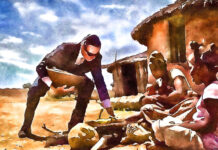
Cover image: Child receiving RUTF in a UNICEF-supported programme. Photo: UNICEF/UN0811174/Wilander
References
- Adegboye, A. R. A. (2022). Potential use of edible insects in complementary foods for children: A literature review. International Journal of Environmental Research and Public Health, 19(8), 4756. https://doi.org/10.3390/ijerph19084756
- Akomo, P., Bahwere, P., Murakami, H., Banda, C., Maganga, E., Kathumba, S., Sadler, K., Nyirenda, G., Carpenter, L., Collins, S., & Kerac, M. (2019). Soy, maize, and sorghum-based ready-to-use therapeutic food with amino acid is as efficacious as the standard milk and peanut paste-based formulation for the treatment of severe acute malnutrition in children: A noninferiority individually randomized controlled efficacy clinical trial in Malawi. The American Journal of Clinical Nutrition, 109(4), 1185-1195. https://doi.org/10.1093/ajcn/nqy344
- Bahwere, P., Balaluka, B., Wells, J. C., Mbiribindi, C. N., Sadler, K., Akomo, P., Dramaix-Wilmet, M., & Collins, S. (2016). Cereals and pulse-based ready-to-use therapeutic food as an alternative to the standard milk- and peanut paste-based formulation for treating severe acute malnutrition: A noninferiority, individually randomized controlled efficacy clinical trial. The American Journal of Clinical Nutrition, 103(4), 1145-1161. https://doi.org/10.3945/ajcn.115.119537
- Chase, R. P., Kerac, M., Grant, A., Adda-Antoniou, E., Parmar, S., Opondo, C., Musyimi, C., Iuel-Brockdorff, A. S., Oudshoorn, A., Irena, A. H., Seal, A., Marshman, E., Bahwere, P., & Berkley, J. A. (2020). Acute malnutrition recovery energy requirements based on mid-upper arm circumference: Implications for food prescription. PLoS One, 15(6), e0230452. https://doi.org/10.1371/journal.pone.0230452
- Codex Alimentarius Commission. (2023). Guidelines for ready-to-use therapeutic foods (CXG 95-2022). Food and Agriculture Organization of the United Nations. https://doi.org/10.4060/cc4593en
- Das, J. K., Salam, R. A., Saeed, M., Kazmi, F. A., & Bhutta, Z. A. (2020). Effectiveness of interventions to manage acute malnutrition in children under 5 years of age in low- and middle-income countries: A systematic review. Campbell Systematic Reviews, 16(2), e1082. https://doi.org/10.1002/cl2.1082
- Kakietek, J., Bundy, D. A., Biörk, S., Walters, D., & Alderman, H. (2018). Determinants of the global prices of ready-to-use therapeutic foods. Food and Nutrition Bulletin, 39(2), 255-267. https://doi.org/10.1177/0379572118767149
- Kangas, S. T., Salpéteur, C., Nikièma, V., Talley, L., Ritz, C., Friis, H., Briend, A., & Kaestel, P. (2019). Impact of reduced dose of ready-to-use therapeutic foods in children with uncomplicated severe acute malnutrition: A randomised non-inferiority trial in Burkina Faso. PLoS Medicine, 16(8), e1002887. https://doi.org/10.1371/journal.pmed.1002887
- Lend for Good. (2025). Scaling innovative nutrient-rich wafer snacks to tackle childhood malnutrition in Cambodia. Retrieved from https://lendforgood.io/danish-care-foods-2025/
- Linneman, Z., Matilsky, D., Ndekha, M., Manary, M. J., Maleta, K., & Manary, M. J. (2007). A large-scale operational study of home-based therapy with ready-to-use therapeutic food in childhood malnutrition in Malawi. Maternal & Child Nutrition, 3(3), 206-215. https://doi.org/10.1111/j.1740-8709.2007.00095.x
- Manary, M. J. (2006). Local production and provision of ready-to-use therapeutic food (RUTF) spread for the treatment of severe childhood malnutrition. Food and Nutrition Bulletin, 27(3 Suppl.), S83-89. https://doi.org/10.1177/15648265060273S305
- Maust, A., Koroma, A. S., Abla, C., Molokwu, N., Ryan, K. N., Singh, L., Manary, M. J., Sandige, H., Maleta, K., & Manary, M. J. (2015). Severe and moderate acute malnutrition can be successfully managed with an integrated protocol in Sierra Leone. The Journal of Nutrition, 145(11), 2604-2609. https://doi.org/10.3945/jn.115.214957
- Rachmadewi, A., Soekarjo, D. D., Bait, B. R., Suryantan, J., Noor, R., Rah, J. H., & Wieringa, F. T. (2023). Ready-to-use therapeutic foods (RUTFs) based on local recipes are as efficacious and have a higher acceptability than a standard peanut-based RUTF: A randomized controlled trial in Indonesia. Nutrients, 15(14), 3166. https://doi.org/10.3390/nu15143166
- Rimbawan, R., Riyadi, H., Marliyati, S. A., Effendi, Y. H., & Khomsan, A. (2022). Effect of locally produced ready-to-use therapeutic food on children under five years with severe acute malnutrition: A systematic review. Jurnal Gizi dan Pangan, 17(2), 123-138. https://doi.org/10.25182/jgp.2022.17.2.123-138
- Rogers, E., Myatt, M., Woodhead, S., Guerrero, S., & Álvarez, J. L. (2015). Coverage of community-based management of severe acute malnutrition programmes in twenty-one countries, 2012-2013. PLoS One, 10(6), e0128666. https://doi.org/10.1371/journal.pone.0128666
- Schoonees, A., Lombard, M. J., Musekiwa, A., Nel, E., & Volmink, J. (2019). Ready‐to‐use therapeutic food (RUTF) for home‐based nutritional rehabilitation of severe acute malnutrition in children from six months to five years of age. Cochrane Database of Systematic Reviews, 2019(5), CD009000. https://doi.org/10.1002/14651858.CD009000.pub3
- The Borgen Project. (2024, July 27). Ready to use therapeutic food and childhood malnutrition. https://borgenproject.org/ready-to-use-therapeutic-food/
- UNICEF. (2022). Ready-to-use therapeutic food in Sudan: A closer look at local production. UNICEF. https://www.unicef.org/sudan/stories/ready-use-therapeutic-food-rutf-sudan-closer-look
- UNICEF. (2023, July 21). U239975 RUTF innovation specification. UNICEF Supply Division. https://www.unicef.org/supply/media/16466/file/U239975-RUTF-Innovation-Specification.pdf
- UNICEF. (2024). A healthy market framework for ready-to-use therapeutic food (RUTF). UNICEF Supply Division. https://www.unicef.org/supply/documents/healthy-market-framework-ready-use-therapeutic-food-rutf
- UNICEF. (2025, April 23). 13 million children malnourished in Eastern and Southern Africa in 2025 [Press release]. UNICEF. https://www.unicef.org/esa/press-releases/13-million-children-malnourished-eastern-and-southern-africa-2025
- UNICEF Supply Division. (2025, June). UNICEF Supply Annual Report 2024. UNICEF. https://www.unicef.org/supply/reports/unicef-supply-annual-report-2024
- UNICEF. (2025). Haiti’s Medika Mamba: Locally produced ready-to-use therapeutic food combats malnutrition. UNICEF. https://www.unicef.org/haiti/en/stories/haitis-greatest-defense-against-malnutrition-crafted-within-its-own-borders
- UNICEF. (n.d.). Nutrition and care for children with wasting. UNICEF. Retrieved August 29, 2025, from https://www.unicef.org/nutrition/child-wasting
- UNICEF, WHO, & World Bank Group. (2025). Joint child malnutrition estimates 2025 edition: Levels and trends in child malnutrition [Brochure]. World Health Organization. https://www.who.int/publications/i/item/9789240112308
- Van den Briel, N., Phe, T., ACF Myanmar, Ko, K., ACF Myanmar, Feeley, A., ACF Emergency, Ketchiemen, K., & Collins, S. (2016). Low‐dose RUTF protocol and improved service delivery lead to good programme outcomes in the treatment of uncomplicated SAM: A programme report from Myanmar. Maternal & Child Nutrition, 12(4), 808-824. https://doi.org/10.1111/mcn.12192
- Van Huis, A., et al. (2013). Edible insects: Future prospects for food and feed security. FAO Forestry Paper No. 171. Food and Agriculture Organization of the United Nations. https://www.fao.org/3/i3253e/i3253e.pdf
- Wagh, D., & Deore, B. (2023). A systematic review on the optimal dose and duration of ready-to-use therapeutic food (RUTF) for 6–59-month-old children with severe wasting or oedema. Nutrients, 15(7), 1750. https://doi.org/10.3390/nu15071750
- World Health Organization. (2007). Community-based management of severe acute malnutrition: A joint statement by the World Health Organization, the World Food Programme, the United Nations System Standing Committee on Nutrition and the United Nations Children’s Fund. World Health Organization. ISBN: 978-92-80-64147-9. https://www.who.int/publications/i/item/9789280641479
- World Health Organization. (2021). WHO guideline on the dairy protein content in ready-to-use therapeutic foods for treatment of uncomplicated severe acute malnutrition. World Health Organization. ISBN: 978-92-40-02227-0. https://www.who.int/publications/i/item/9789240022270
- World Health Organization. (2021). Nutritional composition of RUTF – WHO guideline on the dairy protein content in ready-to-use therapeutic foods for treatment of uncomplicated severe acute malnutrition. In WHO guideline on the dairy protein content in ready-to-use therapeutic foods for treatment of uncomplicated severe acute malnutrition [Internet]. World Health Organization. https://www.ncbi.nlm.nih.gov/books/NBK569764/
- World Health Organization. (2023, August 9). Identification of severe acute malnutrition in children 6–59 months of age. World Health Organization. https://www.who.int/tools/elena/interventions/sam-identification
- World Health Organization (WHO). (2023). WHO issues new guideline to tackle acute malnutrition in children under five. https://www.who.int/news/item/20-11-2023-who-issues-new-guideline-to-tackle-acute-malnutrition-in-children-under-five

Dario Dongo, lawyer and journalist, PhD in international food law, founder of WIISE (FARE - GIFT - Food Times) and Égalité.



 has transformed the treatment of severe acute malnutrition (SAM) in children under five. This article reviews UNICEF’s product specifications for RUTF, focusing on nutritional composition, clinical effectiveness, and supply chain dynamics.)