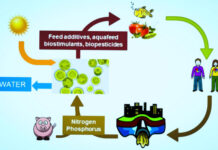


Tetraselmis chuii is a microalga distinguished by its high protein content and elevated levels of essential Omega-3 fatty acids. The Future-proof Microalgae-based Foods (FAF) research project, of which WIISE is a partner under Horizon Europe, is exploring its potential application in a variety of widely consumed food matrices. The brief review below outlines the principal current and prospective uses of T. chuii, both in foods and in other applications, including animal feed, cosmetics, medicinal products, and energy production.
Tetraselmis chuii
Tetraselmis chuii Butcher is a eukaryotic (i.e. it possesses a cell nucleus) green microalga first described in 1959 by Robert William Butcher (Guiry M.D. & Guiry G.M., 2015). It belongs to the plant kingdom (Plantae) and has a long history of use as feed in aquaculture for crustaceans, molluscs and certain fish reared at the larval stage. In 2013, the first application was submitted in Spain by Fitoplancton Marino S.L. for its use as a novel food ingredient in food products and, subsequently in 2017, in food supplements, including TetraSOD® (AESAN, 2013; AESAN, 2017).
The microalgae has been granted QPS (Qualified Presumption of Safety) status by the European Food Safety Authority (EFSA), the aim of which is to optimise risk assessment of microorganisms used in the agri-food and feed sectors. The qualified presumption of safety, which remains in force, applies solely to production, in the absence of data on direct exposure to humans and animals, hence the necessary absence of viable cells in the finished product (Dongo & Torre, 2022).
Authorised food uses
T. chuii is a novel food authorised only in freeze-dried form, which may be freely marketed in all EU Member States by any food business operator, following the entry into force of the new Novel Food Regulation (Reg. (EU) 2015/2283). The food categories and maximum permitted doses are defined by the Union List of Novel Foods (ULNF) in Reg. (EU) 2017/2470, which specifically provides (Dongo & Della Penna, 2022):

The whole form of the microalgae as it is, without being dried, is, however, classified as an unauthorised novel food, according to the EU Novel Food Status Catalogue. According to the information available to Member States, there was no significant consumption prior to 15 May 1997. As no application was submitted in conjunction with the freeze-dried form, one or more FBOs are required to submit a new application for authorisation to place the product on the market.
In 2019, the company Green Sea Bio System One s.l. submitted a request to amend the maximum permitted values in the specifications in order to improve the nutritional profile of the novel food (European Commission, 2019). On 23 October 2023, the company withdrew its request for amendment, following an alleged business failure, and the specifications therefore remained unchanged.

Innovative formulations
The FAF (Future-proof microalgae-based foods) research project will develop at least seven innovative prototypes of food products enriched with freeze-dried T. chuii biomass, taking into account nutritional balance, the optimisation of technological aspects and sensory quality to ensure consumer acceptance. The main product categories include:
- chocolate-based products;
- pastries and cakes fortified with omega-3 extracts;
- fish and caviar substitutes made from seaweed, with a gel-like texture derived from omega-3s;
- functional drinks enriched with bioactive compounds from T. chuii.
FAF builds on the legacy left by ProFuture, in Horizon 2020, which in turn carried out various formulation trials in a range of food products such as pasta, baked goods (breadsticks, crostini, crackers, muffins, brioches), vegetable soups and purées, meat analogues (sausages), and protein bars. Consumer attitudes towards microalgae-based foods appear to be highly dependent on dietary habits across the various Member States, ranging from enthusiastic views to a lack of interest. Market price and the degree of processing of the foods influence willingness to pay and accept them (Dongo, 2023).
WIISE benefit will provide legal support in the formulation process, through a ‘regulatory by-design’ approach, which will guide the generation of scientific evidence in line with EFSA requirements for the risk assessment of new food categories in which T. chuii is used, whilst ensuring compliance with the legal and ethical requirements for conducting consumer trials prior to market authorisation, alongside the procedures for providing information on food products (labelling, nutrition and health claims). Cooperation with stakeholders will be promoted by engaging industry representatives, researchers and academics, public authorities and trade associations, whilst also involving the European Commission’s EU4Algae platform.
Health benefits for consumers
The history of the use and consumption of T. chuii is recent; consequently, there is no dedicated literature (e.g. a review) describing the health benefits derived from consuming the microalgae or some of its components. A number of studies describing specific functionalities have become available over the last three years, marking the beginning of evidence demonstrating the value derived from consuming foods based on T. chuii.
Effect on the gut microbiota and microorganisms
The consumption of T. chuii has been compared with various foods possessing probiotic and prebiotic properties (e.g. inulin), to assess the impact on the state of intestinal dysbiosis and eubiosis. A microalgae extract contributed to a significant reduction in Clostridium, Staphylococcus and Enterobacteriaceae. Furthermore, an increase in the relative abundance of Akkermansia and Butyricimonas – genera considered highly beneficial – was observed (Majchrzak et al., 2025a).
Improved gut health was also demonstrated by an increase in key indicators such as short-chain fatty acids (SCFAs), including acetic, propionic, isovaleric, isobutyric and, above all, butyric acid, following 72 hours of fermentation in the colon. The tests were carried out in vitro using the INFOGEST procedure; therefore, the results need to be validated in vivo in humans to confirm the findings.
The generation of bioactive peptides with antioxidant and anti-inflammatory activity against the effects of Helicobacter pylori was observed via in silico digestion. Although direct antibacterial activity against H. pylori has not been demonstrated, the mitigation of oxidative stress and/or inflammation associated with infection by the bacterium is a mechanism of interest for the formulation of nutraceutical products targeting this condition (Majchrzak et al., 2025b).
Cellular health
The promotion of cellular health is another beneficial aspect to which T. chuii may contribute, thanks to its high content of the enzyme superoxide dismutase (SOD), as demonstrated by various in vitro and in vivo studies. In particular, the ingredient appears to act as an indirect antioxidant through the following mechanisms (Cocksedge et al., 2025a):
- enhancement of intracellular antioxidant systems;
- positive modulation of the inflammatory state by increasing the expression of anti-inflammatory cytokines and factors and decreasing that of pro-inflammatory cytokines and factors;
- promotion of cellular health by protecting against DNA damage, enhancing immune function, strengthening cellular structure and integrity, and positively modulating cellular signalling pathways;
- improvement of certain aspects of mitochondrial function through the upregulation of genes linked to mitochondrial biogenesis and ATP synthesis.
Clinical studies conducted to assess the potential health benefits of SOD-rich T. chuii have been carried out in two specific and rather different physiological contexts, namely sports nutrition and male infertility. Consequently, further studies are required in this case too to confirm its potential use in the production of a natural blue food supplement with the potential to improve various aspects of cellular health.
SOD from T. chuii may help improve recovery from exercise-induced muscle damage. To investigate this, a randomised, double-blind, crossover clinical trial involved the administration of 25 mg/day of T. chuii for 14 days alongside a placebo group, preceded and followed by a high-intensity cycling test to assess time to exhaustion and peak oxygen consumption (VO2 peak), which increased only following the administration of T. chuii, with changes in numerous antioxidant enzymes capable of protecting skeletal muscle from cellular stress (Cocksedge et al., 2025b)

Antioxidant action
Peptides obtained from the hydrolysis of T. chuii proteins during in vitro digestion have been shown to increase antioxidant activity and improve digestion itself, through the influence of digestive enzymes (e.g. pancreatin) (Su-Yheon & Cho, 2023).
The extracellular vesicles of T. chuii (nanoalgosomes) are effectively absorbed by cells and possess anti-inflammatory bioactivity. The reduction in ROS levels and the prevention of oxidative stress in tumour and normal cell lines, as well as in the invertebrate Caenorhabditis elegans – where they counteract ageing – have suggested that nanoalgosomes are enriched with antioxidant compounds, combined with a pronounced bone tropism (i.e. the affinity of certain cells, drugs or pathologies to be directed towards, accumulate in or target specific skeletal tissues) that is pronounced and biocompatible even following a single administration (intravenously) (Adamo et al., 2024).
Neuroprotective properties
The carotenoids present in T. chuii, including fucoxanthinol, crocoxanthin, diatoxanthin, neoxanthin, violaxanthin and prasinoxanthin, have the potential to protect neuronal cells from neurotoxic damage caused by substances such as L-glutamate and hydrogen peroxide (H2O2), and reactive oxygen species (ROS) derived from the action of the latter. Fucoxanthinol is the carotenoid with the highest permeability through the intestinal and blood-brain barriers, enabling it to reach the target site more readily (Cokdinleyen et al., 2025).
Here too, the results were obtained in vitro using tumour cell lines (Caco-2) and blood-brain barrier cell lines (HBMEC). In any case, this is a useful initial demonstration pointing to T. chuii as a promising natural source of bioactive compounds for the development of functional foods to combat neurodegenerative diseases.
Effect on healthy men
A clinical trial was conducted on forty-six healthy men, divided into a placebo group receiving 200 mg/day of lactose, a group treated with 25 mg/day of T. chuii, and another group receiving 200 mg/day of T. chuii, via the commercial formulation TetraSOD®. The groups underwent four assessments (baseline, month 1, month 2 and readaptation), each separated by a thirty-day interval (García et al., 2022).
The treated groups showed significant increases in the percentage of muscle mass, erythropoietin, insulin-like growth factor 1, free testosterone, white blood cells, neutrophils and lymphocytes. These groups also experienced decreases in the percentage of body fat, platelet count, haematocrit and mean corpuscular haemoglobin. Supplementation with T. chuii induced favourable changes in anthropometric, haematological and hormonal parameters, with the 25 mg/day dose proving most effective.
Non-food uses of T. chuii
Feed materials and feed additives
Microalgae offer a nutritionally viable alternative to fish meal and fish oil, helping to reduce pressure on wild fish stocks and support more sustainable aquaculture feed production. Replacing fish oil with T. chuii biomass in the diet of young rainbow trout (Oncorhynchus mykiss) at inclusion levels of 33%, 66% and 100%, preserved the growth and health parameters of the experimental fish, supporting its applicability and demonstrating maximum efficacy at an inclusion rate of 66% (Iheanacho et al., 2026).
The inclusion of T. chuii in the diet of chicks reared for broiler production was intended to assess its ability to inhibit the proliferation of Salmonella enterica subsp. enterica serotype Infantis in the caecum of these animals. This serotype is very commonly found in poultry products and may be present in meat products intended for human consumption, causing foodborne infections.The treatment showed no effect in reducing the microbial load, but this is strongly linked to the short duration of the experiment (6 days) (Corrales-Martinez et al., 2022).
The effect of T. chuii was tested on larvae of Litopenaeus vannamei (Pacific white shrimp) to assess its impact on survival, growth and biomarkers of oxidative stress. Administration at 50% in the diet significantly increased survival and tolerance to saline conditions, and reduced oxidative stress measured as H₂O₂, demonstrating its potential for use as a feed additive for these crustaceans (Rahman et al., 2017).
Cosmetic ingredient
T. chuii extract can also be used as an ingredient of cosmetic products. The name authorised in Decision (EU) 2025/1175 is ‘Tetraselmis Chui extract’, and the function indicated in the European Commission’s CosIng glossary is ‘Skin conditioning – emollient’.
The Cosmile database of the Cosmetics Europe association describes the extract as the product obtained using a solvent, such as water, alcohol or carbon dioxide (CO₂). In addition to the functions listed in CosIng, it is said to help maintain the skin in good condition, and to soften and smooth the skin (Cosmile Europe, a).
The reasons cited for the functionalities of seaweed extracts are their hygroscopicity and the fact that they partly correspond to the skin’s various moisturising components. They promote cell renewal, have a revitalising and remineralising effect, and can also stimulate blood circulation. In combination with other microalgae (Dunaliella salina / Isochrysis galbana / Nannochloropsis gaditana / Phaeodactylum tricornutum), it also exhibits antioxidant activity (Cosmile Europe, b).
Biofuel production
The potential of T. chuii for biodiesel production has been explored for some time now, owing to its high lipid content and fatty acid composition (~50.07% SFA, ~31.60% MUFA, ~17.51% PUFA), although this also depends on the strain used. The parameters of the biodiesel obtainable from T. chuii comply with the European standard EN 14214 and the American standard ASTM D6751 and, although it is not yet capable of replacing conventional sources, it has significant environmental impacts thanks to its CO₂ metabolism, which can prevent CO₂ from being released into the atmosphere as a result of production activities (Palanisamy et al., 2014).
The lipid synthesis capacity of microalgae, including T. chuii, is linked to the nutrients available during the cultivation phase. Stress conditions associated with a lack of phosphorus can increase lipid accumulation capacity, although there may be an impact on exponential growth and biomass production in the event of a prolonged deficiency. A major challenge is the extraction of lipids from the biomass, due to the rigid cell walls, which must be addressed using appropriate techniques (e.g. extraction with pressurised solvents) or cultivation methods (Doan et al., 2026).
The production costs of biomass and lipid substrate can be reduced by utilising by-products from various food sectors. These include the brewing industry, which generates large quantities of wastewater that can be used for the cultivation of T. chuii. The treatment of wastewater using filtration and centrifugation improved cell growth by up to 75 per cent and lipid accumulation by 35 per cent (with a predominance of stearic and oleic acids), whilst reducing the concentration of various heavy metals that can bioaccumulate in microalgae (Hussain et al., 2024).
Preliminary conclusions
Tetraselmis chuii is a microalga with promising potential in the food sector, thanks in part to its functional biological properties capable of promoting better health. Currently, as with all microalgae-based products, full commercial exploitation depends on acceptance by specific consumer groups – linked primarily to the relevant geographical context – and on its status as a novel food, which requires specific authorisations for uses other than those currently permitted.
The FAF project will seek to lay the groundwork for securing authorisation for new forms of T. chuii consumption and to achieve the highest level of satisfaction amongst European consumers. WIISE will support the consortium with the legal and market aspects of the project, guiding the partners in complying with EFSA’s scientific requirements, as well as identifying the most suitable uses for food and non-food products, with a view to utilising co-products within a circular economy framework.
Dario Dongo and Andrea Adelmo Della Penna
Credit cover Socilink
References
Adamo, G., Santonicola, P., Picciotto, S., Gargano, P., Nicosia, A., Longo, V., Aloi, N., Romancino, D.P., Paterna, A., Rao, E., Raccosta, S., Noto, R., Salamone, M., Deidda, I., Costa, S., Di Sano, C., Zampi, G., Morsbach, S., Landfester, K., Colombo, P., Wei, M., Bergese, P., Touzet, N., Manno, M., Di Schiavi, E., & Bongiovanni, A. (2024) Extracellular vesicles from the microalga Tetraselmis chuii are biocompatible and exhibit unique bone tropism along with antioxidant and anti-inflammatory properties. Communications Biology, 7, 941. https://doi.org/10.1038/s42003-024-06612-9
AESAN (24 September 2013) Report of the Scientific Committee of the Spanish Agency for Food Safety and Nutrition on a request for an initial assessment for the marketing of the marine microalgae Tetraselmis chuii under Regulation (EC) No 258/97 on novel foods and novel food ingredients. https://www.aesan.gob.es/AECOSAN/docs/documentos/seguridad_alimentaria/evaluacion_riesgos/informes_cc_ingles/MICROALGAE.pdf
AESAN (24 May 2017) Report of the Scientific Committee of the Spanish Agency for Consumer Affairs, Food Safety and Nutrition (AECOSAN) on a request for an initial assessment regarding the marketing of the dried marine microalgae Tetraselmis chuii in food supplements under Regulation (EC) No 258/97 on novel foods and novel food ingredients. https://www.aesan.gob.es/AECOSAN/docs/documentos/seguridad_alimentaria/evaluacion_riesgos/informes_cc_ingles/TETRASEMILS_CHUII_SUPPLEMENTS.pdf
Cocksedge, S.P., Mantecón, L., Castaño, E., Infante, C., & Bailey, S.J. (2025a) The Potential of Superoxide Dismutase-Rich Tetraselmis chuii as a Promoter of Cellular Health. Int. J. Mol. Sci., 26(4), 1693. https://doi.org/10.3390/ijms26041693
Cocksedge, S.P., Infante, C., Torres, S., Lama, C., Mantecón, L., Manchado, M., Acton, J.P., Alsharif, N.S., Clifford, T., Wadley, A.J., Ferguson, R.A., Bishop, N.C., Martin, N.R.W., & Bailey, S.J. (2025b) Tetraselmis chuii supplementation increases skeletal muscle Nuclear Factor Erythroid 2-Related Factor 2 and antioxidant enzyme gene expression, and peak oxygen uptake in healthy adults: A randomised crossover trial. Antioxidants, 14(4), 435. https://doi.org/10.3390/antiox14040435
Cokdinleyen, M., Valdés, A., Kara, H., Ibáñez, E., & Cifuentes, A. (2025) Neuroprotective Potential of Tetraselmis chuii Compounds: Insights into Blood–Brain Barrier Permeability and Intestinal Transport. Pharmaceuticals, 18(5), 629. https://doi.org/10.3390/ph18050629
Corrales-Martinez, J., Ortega-Paredes, D., Šefcová, M.A., Larrea-Álvarez, C.M., de Janon, S., Medina-Santana, J., Molina-Cuasapaz, G., Vinueza-Burgos, C., Revajová, V., Larrea-Álvarez, M., & Calero-Cáceres, W. (2022) A PMAxx™qPCR assay reveals that dietary administration of the microalgae Tetraselmis chuii does not affect Salmonella infantis caecal content in early-treated broiler chickens. Veterinary Sciences, 9(9), 487. https://doi.org/10.3390/vetsci9090487
Cosmile Europe, a. TETRASELMIS CHUI EXTRACT. https://cosmileeurope.eu/inci/detail/22950/tetraselmis-chui-extract/
Cosmile Europe, b. DUNALIELLA SALINA/ISOCHRYSIS GALBANA/NANNOCHLOROPSIS GADITANA/PHAEODACTYLUM TRICORNUTUM/TETRASELMIS CHUII EXTRACT. https://cosmileeurope.eu/it/inci/ingrediente/21862/dunaliella-salina-isochrysis-galbana-nannochloropsis-gaditana-phaeodactylum-tricornutum-tetraselmis-chuii-extract/
Commission Implementing Decision (EU) 2025/1175 of 16 June 2025 laying down detailed rules for the application of Regulation (EC) No 1223/2009 of the European Parliament and of the Council as regards the glossary of common names of ingredients to be used in the labelling of cosmetic products and repealing Commission Implementing Decision (EU) 2022/677. http://data.europa.eu/eli/dec_impl/2025/1175/oj
Doan, L., Tran, A.Q.V., Ong, Q.K.L., Huynh, K.G., Tran, K., & Phung T.K. (2026) Enhancing lipid accumulation in marine microalgae for sustainable biofuel applications: A review of Nannochloropsis and Tetraselmis. Biomass and Bioenergy, 211, 109210. https://doi.org/10.1016/j.biombioe.2026.109210
Dongo, D., & Torre, G. (2022, 4 May) Microalgae, novel foods and qualified presumption of safety for microorganisms. FT (Food Times). https://www.foodtimes.eu/research/microalgae-novel-food-and-qualified-presumption-of-safety-of-microorganisms/
Dongo, D. & Della Penna, A.A. (2022, 14 November) Algae and microalgae for food use in Europe, the ABCs. FT (Food Times). https://www.foodtimes.eu/research/algae-and-microalgae-for-food-use-in-europe-the-abcs/
Dongo, D. (2023, 15 September) The role of microalgae in food and feed, the state of the art. #ProFutureEU. FT (Food Times). https://www.foodtimes.eu/research/the-role-of-microalgae-in-food-and-feed-the-state-of-the-art-profutureeu-2/
European Commission (2019) Summary of the dossier: Dried Tetraselmis chuii microalgae (modification of specifications). https://food.ec.europa.eu/document/download/fb47cdeb-2409-4aac-a141-8a04aa6a159b_en?filename=novel-food_sum_ongoing-app_2019-1062.pdf
García, Á., Toro-Romá, V., Siquier-Coll, J., Bartolomé, I., Muñoz, D., & Maynar-Mariño, M. (2022) Effects of Tetraselmis chuii microalgae supplementation on anthropometric, hormonal and haematological parameters in healthy young men: a double-blind study. Int. J. Environ. Res. Public Health, 19(10), 6060. https://doi.org/10.3390/ijerph19106060
Guiry, M.D., & Guiry, G.M. (1 October 2015) AlgaeBase. Worldwide electronic publication, National University of Ireland, Galway. https://www.algaebase.org/search/species/detail/?species_id=52009
Hussain, S.B., Shah, S.M.U., Nosheen, A., & Mumtaz, S. (2024) Sustainable Biodiesel Production via Chlorella vulgaris and Tetraselmis chuii in Food-based Brewery Industrial Wastewater. Waste and Biomass Valorisation, 15, 4445–4455. https://doi.org/10.1007/s12649-024-02482-8
Iheanacho, S., Simon, A., Mueller, J., Lippemer, S., Rebl, A., Hasler, M., & Carsten, S. (2026) Replacing fish oil with Tetraselmis chui microalgae biomass does not compromise rainbow trout health: Biochemical, histological, antioxidant and immune gene expression. Scientific Reports, 16, 18375. https://doi.org/10.1038/s41598-026-54873-7
Majchrzak, M., Paterson, S., Gutiérrez-Corral, J., Gómez-Garre, D., Ortega-Hernández, A., Ángel de la Fuente, M., Hernández-Ledesma, B., & Gómez-Cortés, P. (2025a) Modulatory Effects of Tetraselmis chuii Gastrointestinal Digests on Human Colonic Microbiota. Foods, 14(12), 2106. https://doi.org/10.3390/foods14122106
Majchrzak, M., Paterson, S., Gómez-Cortés, P., Silvan, J.M., Martinez-Rodriguez, A.J., Hernández-Ledesma, B. (2025b) Tetraselmis chuii as a source of bioactive compounds against Helicobacter pylori: an integrated proteomic and bioactivity approach. Molecules, 30(24), 4669. https://doi.org/10.3390/molecules30244669
Palanisamy, K., Saifuddin, N.M., & Supramaniam, J. (2014) Potential of the microalga Tetraselmis chuii as a feedstock for biodiesel production. International Review of Mechanical Engineering, 8, 1.
Rahman, N.A., Khatoon, H., Yusuf, N., Banerjee, S., Haris, N.A., Lananan, F., & Tomoyo, K. (2017) Tetraselmis chuii biomass as a potential feed additive to improve survival and oxidative stress status of Pacific white-leg shrimp Litopenaeus vannamei postlarvae. International Aquatic Research, 9, 235–247. https://doi.org/10.1007/s40071-017-0173-2
Su-Yheon, L., & Cho, S.-J. (2023) Evaluation of the antioxidant activity of Tetraselmis chuii following in vitro gastrointestinal digestion and investigation of its antioxidant peptides. Algal Research, 76, 103328. https://doi.org/10.1016/j.algal.2023.103328

Dario Dongo, lawyer and journalist, PhD in international food law, founder of WIISE (FARE - GIFT - Food Times) and Égalité.

Graduated in Food Technologies and Biotechnologies, qualified food technologist, he follows the research and development area. With particular regard to European research projects (in Horizon 2020, PRIMA) where the FARE division of WIISE Srl, a benefit company, participates.