

Alternative proteins to those of animal origin can contribute to food security but are not enough to ensure the sustainability of food systems.
IPES Food, in its report ‘The Politics on Protein,’ stresses the need for a broader vision and strategy. (1) A ray of sunshine does not make a spring.
1) Background. Alternative proteins, a part of the whole
#SDG2 – Zero Hunger, the second among the Sustainable Development Goals(SDGs) in UN Agenda 2030 – can only be achieved through radical reform of current food systems and social policies. The production of alternative proteins to meat (and other foods of animal origin) alone is not enough.
The IPES Food Expert Committee highlights the risk of dismissing a far-reaching problem-the poverty and food security crisis-in the shortage of one nutrient alone, protein precisely. Indeed, it is necessary to consider a number of aspects that include many variables, in the food and social systems of different areas of the planet.
2) Animal husbandry
2.1) Intensive breeding and Lab Meat, curious coincidences (of interests)
Industrial farming-which is blamed for 30 percent of greenhouse gas emissions-represents about 50 percent of global agricultural GDP. And it is a concentrated industry in the hands of a few corporations.
The same corporations in recent years have also invested on innovation related to alternative proteins, the value of which has grown from US$6 million in 2016 to US$366 million in 2020. (2)
2.2) Peasant farms
Small-scale, family and peasant animal farms are rooted in traditions and have nothing to do with industrial ones.
Animals provide food, wool and leather, physical labor (transportation), natural fertilizers. As well as serving as a financial guarantee and enabling the development of marginal land.
Farm animal husbandry is in fact a means of livelihood, income and food security. All the more so in arid regions with few alternatives. (3)
3) Sustainable development
3.1) 1% vs. 99%
The political debate about where to lead the planet’s food systems today is based on aspects that coincide with the interests of the financialelite (1%) but neglect the need of the people (99%).
The challenge of food security is indeed not just about sustainable protein production, but about the equitable distribution of resources to produce food and the fight against poverty.
Changing food systems therefore requires focusing efforts on shared and participatory sustainability goals, without neglecting peasant traditions and agroecology. (4)
3.2) Dynamics
Some proposals to produce alternative proteins are based on technological solutions with million-dollar costs, sometimes even on ingredients with high environmental impact. A dynamic that reinforces existing power relations and hinders peoples’ food sovereignty, including in Low and Middle Income Countries, by entrusting global food security to a small group of Corporations.
‘Arguing that we need to replace meat, fish and milk with alternative proteins leads to an industrialization of the food system that could jeopardize the livelihoods of millions of people, ecosystems such as in the case of aquaculture that, in order to meet production, require inputs that can adversely affect the environment.’
3.2) Sustainable Development Goals (SDGs)
#SDG1 – End Poverty, the first among the Sustainable Development Goals, is the condition for achieving the goals of food security (SDG2) and health and well-being of individuals (#SDG3, Ensure Health and Well-being). Greenhouse gas emissions associated with production processes are often presented as the sole measure of sustainability of food systems. In a short-sighted and uninterested view that overlooks some crucial elements. Not only the rights of farmers and rural communities in vain proclaimed by the UN (2018) but also, among other things:
– Deforestation and biodiversity loss associated with agricultural commodity monocultures, (5)
– pollution of soils, (6) water (7) and air with pesticides and other agrotoxics.
4) Interim Conclusions
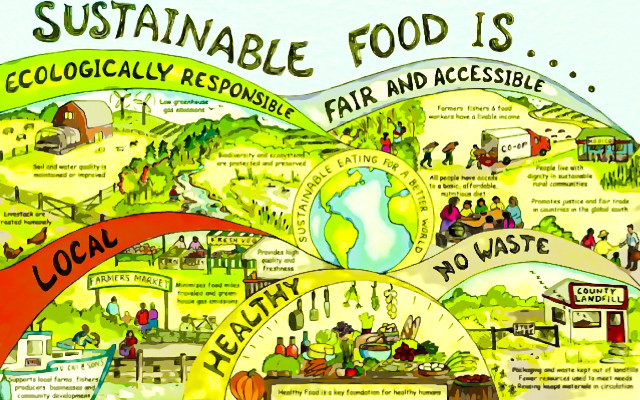
The sustainability of food systems must be developed in the three dimensions of economic, social and environmental. With the primary goal of ensuring access to efficient production methods and thus to healthy and sustainable food, respecting the cultures and natural resources of places.
Public funding for research and development should be directed toward so-called open innovation. That is, projects on alternative proteins or other types of innovation-when they also involve private operators-must be able to be replicated without patent constraints, for the common good.
Dario Dongo and Isis Consuelo Sanlucar Chirinos
Notes
(1) Phill Howard, The politics of protein. iPES Food. 01.04.222. http://www.ipes-food.org/pages/politicsofprotein
(2) Dario Dongo. ‘Vegan meat’, meat sounding. Big show at the European Parliament. FT (Food Times). 10/23/20, https://www.greatitalianfoodtrade.it/idee/carne-vegana-meat-sounding-grande-spettacolo-al-parlamento-europeo
(3) Dario Dongo. Camelid milk, Mediterranean perspective. GIFT(Great Italian Food Trade). 8.9.21, https://www.greatitalianfoodtrade.it/latte-di-camelidi-prospettiva-mediterranea
(4) Dario Dongo, Giulia Orsi. The state of nature in the EU. Organic revolution. Égalité. 4.1.21, https://www.egalite.org/lo-stato-della-natura-in-ue-rivoluzione-bio/
(5) Dario Dongo. Biodiversity and climate emergency. Égalité. 13.2.20, https://www.egalite.org/biodiversita-ed-emergenza-climatica-il-filo-comune/
(6) Dario Dongo. Soil protection, EU 2030 strategy. GIFT(Great Italian Food Trade). 6.12.21, https://www.greatitalianfoodtrade.it/en/protezione-del-suolo-strategia-2030-labc
(7) Dario Dongo. ISPRA, 2020 report on pesticides in water. FT (Food Times). 12/24/20, https://www.greatitalianfoodtrade.it/de/ispra-rapporto-2020-sui-pesticidi-nelle-acque

Dario Dongo, lawyer and journalist, PhD in international food law, founder of WIISE (FARE - GIFT - Food Times) and Égalité.

Graduated in food engineering at the National Autonomous University of Mexico, she is attending the master's degree in 'Food Safety Lawyer and Consultant' at Alma Mater, University of Bologna.
Related post
 World Legumes Day, allies of nutrition and environmental sustainability
 Food sovereignty and sustainable development in agriculture, open letter to the minister
 Camel’s milk. Health, animal welfare and resilience
 AgriCorporateFinance, yet another Coldiretti fiasco at the expense of farmers. #CleanSpades

