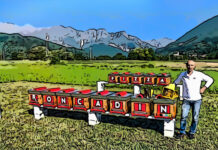


Bees and apoids are vital for the reproduction of wild plants and agricultural production. Their protection is crucial for the health of the environment, food security and the global economy, as we are reminded every 20 May on World Bee Day and other pollinating insects such as wasps, bumblebees, butterflies, moths and beetles. (1,2) As with humans, the gut microbiome plays a decisive role in bees.
1) The ecological role of bees
Bees are often associated with Apis mellifera, the species commonly bred for honey production. However, the Apoidea family, to which bees belong, counts at least 20,000 species worldwide, with about 2,000 species present in Europe and over 1,000 in Italy, such as bees of the genus Bombus.
This vast biodiversity reflects the ecological importance of apoids, which evolved in parallel with angiosperm plants around 100-120 million years ago. (3)
1.1) Symbiosis and evolution
The symbiotic relationship between plants, microorganisms and apoids has led to the co-evolution of flowers and pollinators:
– plants develop flowers that are attractive in colour, containing many volatile chemicals and scents, as a highly sophisticated form of activity and dialogue with the animal world,
– apoids, in turn, have adapted to collect nectar and pollen from flowers (Khalifa et al., 2021, Schöner et al., 2015). (4)
This interaction ensures plant reproduction through pollination and also contributes to the genetic diversity of plants, which is essential for ecosystem resilience.
1.2) Characteristics of apoids and pollination
Apoids, due to their unique anatomical structure, are among the most efficient pollinators.
The hind legs of the worker bee (and only the worker bee) are equipped with a ‘brush’ that collects pollen and a ‘basket’ for collecting and transporting pollen.
Their feathery down is easily charged with static electricity, attracting pollen as they approach the flowers.
The digestive tract is divided into several parts: the ingluvium or bursa melaria (continuation of the oesophagus) is a thin-walled, finely pleated sac that serves to transport and store food. It can stretch to occupy a large part of the abdomen. These characteristics make apoids indispensable for the fertilisation of many plant species, on which the production of fruit, vegetables and seeds depends.
2) Biodiversity crisis and beekeeping
The decline in bee populations has a direct impact on biodiversity, food production and ecosystem health. The global decline in biodiversity is mainly caused by intensive agriculture, which depends on synthetic pesticides and heavy mechanisation, which we have already discussed extensively. (5,6,7) The result is a simplification of habitats with a direct impact on various animal groups.
Climate change, characterised by milder winters and altered seasons causes additional stress, creating a discrepancy between insect activity and plant flowering, threatening their survival.
Beekeeping contributes to the preservation of bees. In addition to providing products such as honey, wax and propolis, it enables the conservation of local bee species and biodiversity.
3) Ecosystem and microbiota
In the bee ecosystem, the gut microbiota modulates the digestion of food and the synthesis of essential nutrients and affects the efficiency of immune defences against pathogens.
The bee microbiota can be significantly influenced by the soil microbiota through direct and indirect interactions with plants and organic materials that bees collect during their search for food.
Phytochemicals in plants, for example, can modulate the composition of the bees’ gut microbiota, improving their health and resistance to disease.
Through microbiome-host interactions, we can understand how bees adapt to a wide range of environments, optimising their health through a continuous dialogue with the microbes and chemicals in their habitat.
4) Microbial synergies in the bee gut, the study
Research on the microbiome and its intergut connections is a topic of both ecological and biomedical relevance.
A recent study (Quinn et al., 2024) published in Nature microbiology analyses the symbiotic interaction between the honey bee and its gut microbiota, with a particular focus on Snodgrassella alvi, a Betaproteobacteria that feeds on organic acids.
The authors of the study highlight how S. alvi adapts and thrives in the gut of Apis mellifera, utilising specific nutrients and actively modifying tryptophan metabolism. An advanced symbiosis is demonstrated, enriching our understanding of how host nutrients influence microbial colonisation. (8)
4.1) Host-microbiota interactions
S. alvi is distinguished in the bee gut microbiome by its adaptation to a diet that excludes saccharides, in favour of host-derived organic acids. In particular, we focus on how host-secreted metabolites, such as organic acids, are crucial for the colonisation and survival of S. alvi in the honey bee gut.
Mutualistic interactions between gut bacteria and their animal hosts, where metabolite exchange affects nutrition, gut health and immune function. An adaptation that illustrates the specificity of its nutritional requirements and its role within the gut microbial community.
The digestive system of the honey bee, with its relatively simple and stable gut microbiota, offers an ideal model to examine these interactions in detail. The analysis reveals that S. alvi exploits organic acids such as citrate, glycerate and 3-hydroxy-3-methylglutarate, which are essential for its growth and survival, demonstrating a refined symbiotic interaction.
4.2) Materials and methods
The research uses a controlled approach, colonising bees with a single strain of S. alvi and restricting the bees’ diet to substrates that cannot be digested by the bacterium, to demonstrate that S. alvi assimilates organic acids synthesised by bees from dietary sugars.
The study emphasises that S. alvi does not depend on diet or cross-feeding with other microbes, but rather on the catabolism of simple carbohydrates by the host.
Initially, strains were grown on specific agar and identified by sequencing the 16S ribosomal RNA gene. For colonisation, honey bees were reared under controlled conditions and inoculated with the bacteria. Strict measures were taken to validate bee sterility and quantify pollen consumption.
Advanced instrumentation and techniques such as isotopic tracing, qPCR (real time PCR or quantitative PCR) to quantify bacterial loads and analyse metabolic interactions were used to study the gut microbiome of bees, the extraction and analysis of metabolites by GC-MS (gas chromatography-mass spectrometry), specific preparations for transmission electron microscopy (TEM) and NanoSIMS mass spectrometry for ultrastructural analysis and metabolite transfer to observe interactions at the cellular level.
Isotopic tracing experiments assessed substrate uptake by bacteria. Finally, the methods included a phylogenetic analysis of the kinureninase gene family and statistical methodologies for data analysis, emphasising the detailed and systematic methodology employed to explore host-microbiota interactions. (8)
4.3) Results
The results of the study demonstrate that Snodgrassella alvi is able to colonise the gut of honey bees even in the absence of other nutrients, using organic acids derived from the host, regardless of the presence of pollen or interaction with other microbes.
The research also shows that S. alvi can influence tryptophan metabolism by converting Quinurenine to Anthranilate, suggesting a specific metabolic niche and symbiotic interaction in the broader metabolic context of the gut, evolutionarily adapted between the honey bee and S. alvi. (8)
Gabriele Sapienza
Footnotes
(1) Dario Dongo, Andrea Adelmo della Penna. World Bee Day. No suitable policy. Food Times. 20.5.23
(2) WWF. World Bee Day. https://www.wwf.it/pandanews/animali/giornata-mondiale-delle-api/
(3) Khalifa, Shaden A. M., Esraa H. Elshafiey, Aya A. Shetaia, Aida A. Abd El-Wahed, Ahmed F. Algethami, Syed G. Musharraf, Mohamed F. AlAjmi, Chao Zhao, Saad H. D. Masry, Mohamed M. Abdel-Daim, and et al. 2021. ‘Overview of Bee Pollination and Its Economic Value for Crop Production’ Insects 12, no. 8: 688 https://doi.org/10.3390/insects12080688
(4) Schöner, Michael & Schöner, Caroline & Simon, Ralph & Grafe, Ulmar & Puechmaille, Sebastien & Ji, Liaw & Kerth, G.. (2015). Bats Are Acoustically Attracted to Mutualistic Carnivorous Plants. Current Biology. 25. 1-6. DOI:10.1016/j.cub.2015.05.054
(5) Dario Dongo. Impact of pesticide adjuvants on bees’ sense of smell. Food Times. 7.1.24
(6) Dario Dongo. The drift effect of pesticides on bees, trees and plants away from cultivated land. FT (Food Times). 21.12.20
(7) Dario Dongo, Gioele Luchese. Pesticides, green light from EU Court of Justice to national bans. Let’s save the bees. FT (Food Times). 7.11.20
(8) Quinn, A., El Chazli, Y., Escrig, S. et al. Host-derived organic acids enable gut colonisation of the honey bee symbiont Snodgrassella alvi. Nat Microbiol (2024). https://doi.org/10.1038/s41564-023-01572-.

Graduated in Agronomy, with experience in sustainable agriculture and permaculture, laboratory and ecological monitoring.