


Calanus oil (Calanus finmarchicus), a novel food already authorised in the EU, is gaining attention for its exceptional composition and environmental benefits. This article explores what makes this ingredient a standout ‘superfood’, focusing on its unique wax ester profile, high concentration of Omega-3 and astaxanthin esters, and strong performance in sustainability assessments. It also outlines the recent revision of its authorisation in the European Union.
Calanus finmarchicus
The calanus (Calanus finmarchicus) is a herbivorous copepod, a small crustacean that belongs to zooplankton (thus characterised by living suspended in the water column, transported by currents). Its distribution is concentrated in the northern part of the Atlantic Ocean, in the North Sea and the Norwegian Sea. It represents an essential trophic resource for numerous fish species, including Atlantic cod, herring, mackerel, and other pelagic fish.
Beyond its crucial role in the marine food web, C. finmarchicus is studied for its vertical migration – the daily movement between surface and depth to feed and reduce predation risk – and for its essential contribution to the oceanic carbon cycle, as it transfers organic matter from surface layers to deep ones. It is also a model organism in the study of natural marine ecosystem dynamics (Chamorro et al., 2025).
Fatty acid profiles and astaxanthin
Calanus oil, authorised in the EU as a novel food, presents a peculiar fatty acid profile, predominantly polyunsaturated (PUFA, including Omega-3, approximately 20-30%) and monounsaturated (MUFA), but also saturated (SFA). The lipid reserve is functional for coping with food scarcity in ocean depths, as well as assisting reproductive function and tolerance to environmental stresses, including seasonal ones.
The lipid fraction of Calanus oil consists predominantly (80–90%) of wax esters, which are monoesters formed by the esterification of fatty acids with long-chain fatty alcohols (marine policosanols). Unlike conventional fish oils, which are mainly composed of triglycerides, Calanus oil’s wax ester structure affects its digestion, absorption, and metabolic profile.
A further peculiarity of calanus oil is the significant concentration of astaxanthin, the carotenoid with antioxidant action contained in many algae, yeasts, and bacteria. And it is precisely astaxanthin at the centre of the request to modify the authorisation specifications of the novel food related to Calanus oil, as an ingredient in food supplements, since it is indeed present in the form of esters.
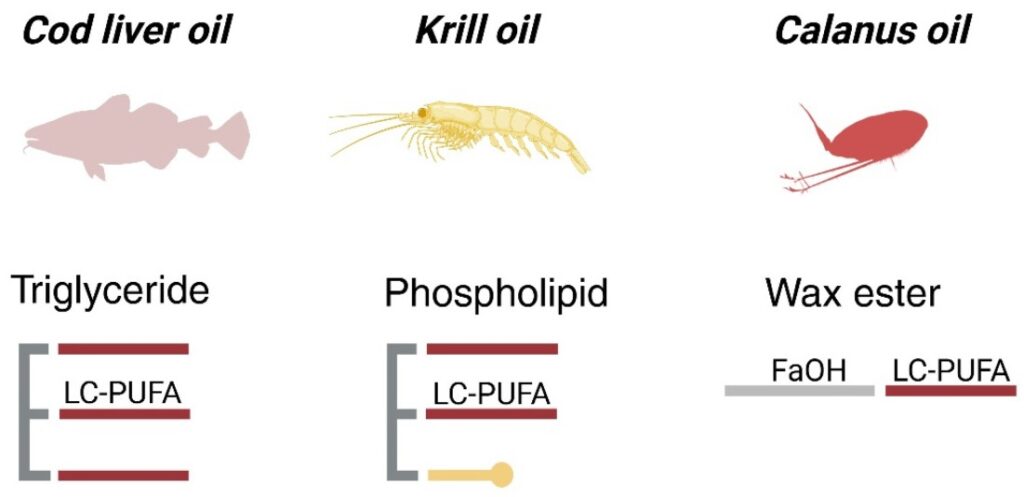
Fig. 1 – Difference in lipid composition between cod liver oil, krill oil, and calanus oil (source: Aasum et al., 2025)
Calanus as a novel food: modification of usage conditions
The Norwegian company Calanus A/S – which was the first applicant for the authorization of calanus oil as a novel food under Regulation (EC) No. 258/97 and had already submitted a first request for specification modification authorized by Regulation (EU) 2022/966 – submitted on 16 December 2024 a request for modification of the maximum daily levels of the supplement following the increase in astaxanthin esters, while maintaining the exclusion for infants and young children.
The European Commission deemed it not necessary to request a scientific opinion from the European Food Safety Authority (EFSA), as the requested update is presumed to have no effect on human health. The increase in esters, even in combination with astaxanthin intake from other food sources, should not exceed in different population groups the acceptable daily intake (ADI) of 0.2 mg astaxanthin/kg body weight, as identified by EFSA.
Calanus finmarchicus, the Life-Cycle Analysis
The Norwegian University of Science and Technology in Trondheim (Cantillo et al., 2025) conducted a life cycle analysis (LCA) of the calanus supply chain managed by Calanus A/S, with a ‘cradle-to-gate‘ approach that considers both fishing activity and the production of oil and other products such as calanus powder and hydrolysate, used as a lipid and protein source especially in aquaculture.
The analysis took into account the influence of this supply chain on climate change (CC), ozone depletion (OD), acidification (A), and eutrophication (E). The evaluation results were then compared with some traditional ingredients such as protein meal and soybean oil, fishmeal and fish oil, other feeds or ingredients of aquatic origin (e.g., krill oil). The emerging data, although subject to an important uncertainty factor due to limited data availability in the sector, appear interesting in various aspects:
- calanus oil achieved better results in some impact categories compared to soybean oil (climate change and eutrophication, CC and E) and krill oil (climate change and CC and acidification, A);
- calanus hydrolysate, based on the type of economic or mass allocation, showed better environmental performance in some impact categories, such as climate change (CC), compared to fishmeal, soy protein concentrate (SPC), and krill meal;
- calanus powder, in turn, showed better results compared to SPC and krill meal in some impact categories;
- for other parameters, the other matrices showed some performance with greater performance.
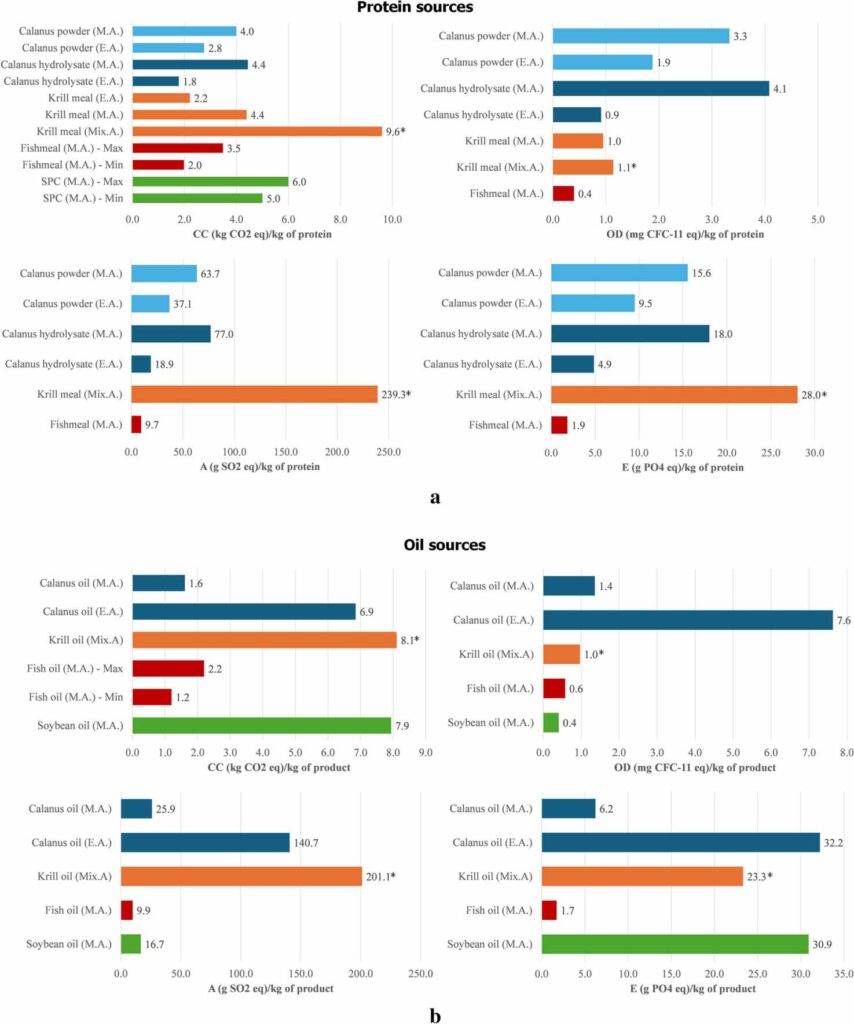
Fig. 2 – LCA evaluation of Calanus finmarchicus products (source: Cantillo et al., 2025)
Provisional conclusions
Calanus represents a potential promise for sustainable aquaculture and nutrition, at least in Norway, where its presence is abundant and contributes fundamentally to the preservation of the marine ecosystem. The products compare very well with other traditional sources of Omega-3 currently present on the market.
Calanus finmarchicus oil is, at least in the EU, marketed as a food supplement and can contribute to providing supplementation of Omega-3 fatty acids (EPA, DHA) and natural astaxanthin, which, with its powerful antioxidant capacity, plays an important role in preserving human and animal health.
Dario Dongo e Andrea Adelmo Della Penna
References
- Aasum et al. (2025). A Novel Marine Oil from the Copepod Calanus finmarchicus: Source, Harvesting, Chemistry and Potential Application in Human Health. Lipidology 2(2):11, https://doi.org/10.3390/lipidology2020011
- Cantillo J. et al. (2025). Life cycle assessment of Calanus finmarchicus products. The International Journal of Life Cycle Assessment 30:511-524, https://doi.org/10.1007/s11367-024-02424-5
- Chamorro E. et al. (2025). Meta-analysis of stage-specific Calanus finmarchicus vertical distribution in relation to hydrography and chlorophyll in the North Atlantic. Journal of Plankton Research 47(4): fbaf019, https://doi.org/10.1093/plankt/fbaf019
- Commission Implementing Regulation (EU) 2025/1513 of 28 July 2025 amending Implementing Regulation (EU) 2017/2470 as regards the conditions of use and the additional labelling requirements of the novel food Calanus finmarchicus oil. http://data.europa.eu/eli/reg_impl/2025/1513/oj

Dario Dongo, lawyer and journalist, PhD in international food law, founder of WIISE (FARE - GIFT - Food Times) and Égalité.

Graduated in Food Technologies and Biotechnologies, qualified food technologist, he follows the research and development area. With particular regard to European research projects (in Horizon 2020, PRIMA) where the FARE division of WIISE Srl, a benefit company, participates.
Related post
 Seafood Alg-ternative and Alt-Fish, microalgae in plant-based seafood products
 Atomized powder of crickets. Protein digestibility and antioxidant action. Italian study
 Jatropha, protein and plant fats from a resilient plant
 Microalgae, novel food, and qualified presumption of safety of microorganisms

