


Increased consumption of ultra-processed foods poses a risk to public health. (1) Previous studies have shown its impact in terms of increased occurrence of premature mortality andNon-Communicable Diseases (NCDs), weakened immune system, obesity and overweight.
Recent studies have shown how ultraprocessed foods are also capable of causing genetic mutations associated with aging. On the opposite front, however, stands the Mediterranean diet, the probable elixir of youth. Brief scientific review.
Fresh foods vs. ultra-processed foods
Consumption of fresh foods is in steady decline, planet-wide. Indeed, the food supply in recent decades has turned toward ultra-processed foods. That is, long-life products, generally ready-to-eat, at affordable prices that can be explained by the low value of the raw materials used. And ‘irresistible’ to the palate, thanks to the deadly mix of fat and sugar and/or salt that has been shown to cause a real ‘junk food addiction’.
Ultraprocessed foods are characterized by a high degree of processing that is often associated with high levels of energy (calories) contributed mostly by fat, saturated fat and sugar. In addition to excessive salt/sodium contents. And that is why junk food is generally classified as HFSS(High in Fats, Sugar and Sodium). Starches, fiber, protein isolates, additives often appear in their formulation (recipe).
Ultraprocessed foods, which ones?
The most dangerous ultra-processed foods are those generally targeted at children and adolescents (68 percent of the on-shelf supply in Europe, according to a 2019 European Commission study ).
These are salty snacks (e.g., potato chips), snacks and sweets with copious rations of sugar and palm (or coconut) oil, sugary and/or sweetened soft drinks.
The most devious products-junk food in disguise-are then instant preparations (e.g., risottos and stock cubes with palm oil), ‘rubber meats,’ and in general many ready-to-eat foods, even in vegetarian and vegan versions. (2)
Ultraprocessed foods and health
TheFood and Agriculture Organization (FAO ), in its 2019 report on ‘Ultraprocessed Foods, Diet Quality and Human Health,’ recognized the desirability of classifying foods and beverages based on their level of industrial processing. According to the approach taken in the NOVA system, from the University of São Paulo (Brazil). In line with those developed by theInternational Food Information Council (IFIC) and the University of North Carolina (UNC), USA (3,4).
Several analytical studies have employed the NOVA system to assess the incidence of ultra-processed foods in the diets of observed cohorts. And identify its correlations with the occurrence of some specific diseases. Among the most relevant:
– influence of high dietary sugar content on blood glucose levels and anthropometric parameters (body mass index), (5)
– Increased risk of mortality (+62%) in case of frequent consumption of ultra-processed foods (> 4 servings per day),(6)
– Increased risk of cardiovascular, cerebrovascular, and coronary heart disease correlated with a steady increase in ultraprocessed food consumption, (7)
– Increased risk of chronic-degenerative diseases associated with energy intakes predominantly from ultra-processed foods, (8)
– Direct relationship between consumption of ultra-processed foods, cardiovascular disease, and increased premature mortality. (9)
Telomeres, protectors of DNA
Telomeres (from Greek telos, end, and meros, part) are noncoding sequences located at the end of chromosomes. In association with specialized proteins, they protect DNA by preserving chromosome integrity and stability. Telomeres range in length from 4 to 25 kb (kilobases, i.e., the number of nucleotides in the gene sequence). Because they tend to shorten with advancing age, they are also assessed as markers of the biological age of individuals. (10)
Epigenetics shows how telomeres are modified throughout life by lifestyle and genetic factors. Their shortening is accelerated, in particular, by high oxidative stress and excessive inflammation. This is associated with an increased likelihood of developing various diseases such as hypertension, hyperglycemia, and obesity. Conversely, a healthy diet can help reduce telomere shortening and thus maintain better health (11, 12).
Telomeres, health and nutrition
A very recent study from the University of Navarre, conducted on 886 individuals aged 57 to 91 years, showed a positive association between high consumption of ultra-processed foods (> 3 meals a day) and risk of having shorter telomeres, up to twice as much as the group that consumed less of these foods. (13)
The nutrients and micronutrients that have shown a greater ability to preserve telomere length are dietary fiber, Omega 3, vitamins (B9, B12, C, D, E and multivitamins) and minerals (copper and phosphorus). Omega-6, alcohol and in some cases short- and medium-chain fatty acids, on the other hand, showed a negative influence on telomere length.
Oxidative stress, inflammation and diet
The heterogeneity of the studies mentioned in the previous paragraph suggests that further research in this area is appropriate. And yet they note how their results are in line with other studies where the relationship between onset of oxidative stress, inflammatory states and diet has been evaluated. (14)
Various epidemiological studies and clinical trials have indeed investigated the relationships between different food groups and telomere length. One of the most relevant indicates how:
– vegetables, fruits, legumes and nuts are sources of polyphenols and unsaturated fatty acids. Inputs of which, along with fiber, are associated with reduced oxidative stress and inflammation, and increased telomere length,
– Processed and ultra-processed foods high in sugar and saturated fat, as well as alcohol, on the other hand, are associated with increased oxidative stress, inflammation, and shorter telomeres. (15)
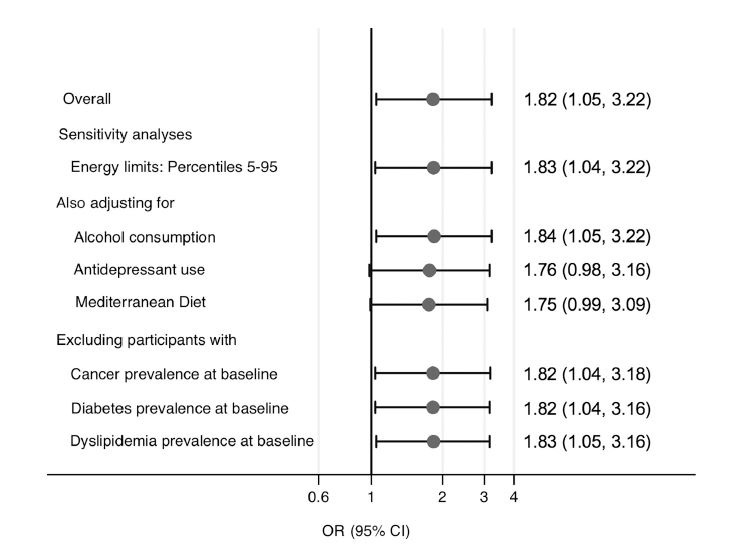
Fig. 1. Forest-plot on the positive effect of ultra-processed foods in the risk of telomere shortening, with appropriate adjustments. (Alonso-Pedrero et al., 2020)
Role of the Mediterranean diet in telomere protection
The Mediterranean diet is recognized as one of the best eating habits available, thanks to a variety of valuable health foods such as vegetables, grains, legumes, fruits, extra virgin olive oil, nuts, fish and dairy products.
These foods are rich in antioxidants and anti-inflammatories, which are involved in several protective mechanisms, including telomeres. An important role of the Mediterranean diet has also been observed in the maintenance of telomerase activity, the enzyme responsible for the re-elongation of shortened telomeres (16) And more generally in the prevention of various diseases, from cardiovascular disease to depression, cognitive dysfunction and metabolic syndrome, type 2 diabetes, weight gain and nephrolithiasis. (17)
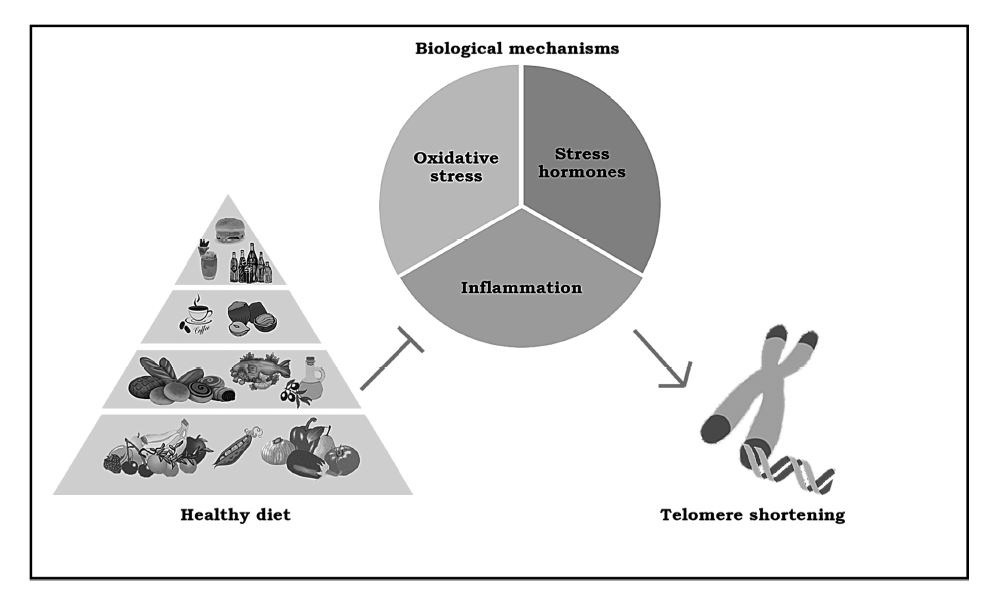
Fig. 2. Outline of biological mechanisms involved in telomere length and influenced by diet (Galiè et al., 2019)
Mediterranean diet, elixir of youth?
A previous cohort study of 4676 nurses aged 30-55 had already shown the effectiveness of the Mediterranean diet in preventing telomere shortening, with favorable impact on health and longevity. (18) Exposure to the many nutrients, micronutrients and phytocompounds that characterize the Mediterranean diet positively influences telomere length, thanks in part to their remarkable ability to reduce inflammation and oxidative stress.
It remains unclear whether the protective effect on telomeres is due to a specific constituent in the diet, or whether it results from a combination of several elements. (19) The various studies considered in the present analysis, however, converge on the positive correlations between the Mediterranean diet – purged of ultra-processed foods that are completely foreign to it – and telomere protection, the integrity of which is an indicator of biological youth and good health.
Dario Dongo and Andrea Adelmo Della Penna
Notes
(1) Marti (2019). Ultra-processed foods are not “real food” but really affect your health. Nutrients 11:1902, doi:10.3390/nu11081902
(2) Monteiro et al. (2019). Ultra-processed foods: what they are and how to identify them. Public Health Nutr. 22:936-941, doi:10.1017/S1368980018003762
(3) Bleiweiss-Sande et al. (2019). Robustness of food processing classification sysytem. Nutrients 11:1344, doi:10.3390/nu11061344
(4) Fardet et al. (2018). Characterization of the degree of food processing in relation with its health potential and effects. Adv. Food Nutr. 85:79129, doi:10.1016/bs.afnr.2018.02.002
(5) Costa et al. (2019). Ultra-processed food consumption and its effects on anthropometric and glucose profile: a longitudinal study during childhood. Nutr. Metab. Cardiovasc. Dis. 29:177-184, doi:10.1016/j.numecd.2018.11.003
(6) Rico-Campa et al. (2019). Association between consumption of ultra-processed foods and all cause mortality: SUN prospective cohort study. BMJ 365:I1949, https://doi.org/10.1136/bmj.l1949
(7) Srour et al. (2019). Ultra-processed food intake and risk of cardiovascular disease: Prospective cohort study (NutriNet-Santé). BMJ 365:I1451, https://doi.org/10.1136/bmj.l1451
(8) Rauber et al. (2018). Ultra-processed food consumption and chronic non-communicable diseases-related dietary nutrient profile in the UK (2008-2014). Nutrients 10:587, doi:10.3390/nu10050587
(9) Lawrence et al. (2019). Ultra-processed food and adverse health outcomes. BMJ 365:I2289, https://doi.org/10.1136/bmj.l2289
(10) Odeja-Rodriguez et al. (2018). Aging, telomere integrity, and antioxidant food. In Obesity: oxidative stress and dietary antioxidants.. 1st edition Cambridge, MA: Elsevier pp. 241-61, https://doi.org/10.1016/B978-0-12-812504-5.00012-X
(11) O’Donovan et al. (2011). Cumulative inflammatory load is associated with short leukocyte telomere length in the health, aging and body composition study. PLoS One 6(5):e19687, doi:10.1371/journal.pone.0019687
(12) Zgheib et al. (2018). Short telomere length is associated with aging, central obesity, poor sleep and hypertension in Lebanese individuals. Aging Dis. 9:77, doi:10.14336/AD.2017.0310
(13) Alonso-Pedrero et al. (2020). Ultra-processed food consumption and the risk of short telomeres in an elderly population of the Seguimiento Universidad de Navarra (SUN) Project. AM. J. Clin. Nutr. 00:1-8, doi:10.1093/ajcn/nqaa075
(14) Galiè et al. (2019). Impact of nutrition on telomere health: Systematic review of observational cohort studies and randomized clinical trials. Adv. Nutr. 00:1-26, https://doi.org/10.1093/advances/nmz107
(15) Galilee-Zabalza et al. (2018). Mediterranean diet and quality of life: baseline cross-sectional analysis of the PREDIMED-PLUS trial. PLoS One 13(6):e0198974, doi:10.1371/journal.pone.0198974
(16) Boccardi et al. (2013). Mediterranean diet, telomere maintenance and health status among elderly. PLoS One 8(4):e62781, doi:10.1371/journal.pone.0062781
(17) Carlos et al. (2018). Mediterranean Diet and health outcomes in the SUN cohort. Nutrients 10:439, doi:10.3390/nu10040439
(18) Crous-Bou et al. (2014). Mediterranean diet and telomere length in Nurses’ Health Study: population based cohort study. BMJ 349:g6674, doi:10.1136/bmj.g6674
(19) Davinelli et al. (2019). The potential nutrigeroprotective role of Mediterranean diet and its functional components on telomere length dynamics. Ageing Res. Rev. 49:1-10, doi:10.1016/j.arr.2018.11.001

Dario Dongo, lawyer and journalist, PhD in international food law, founder of WIISE (FARE - GIFT - Food Times) and Égalité.

Graduated in Food Technologies and Biotechnologies, qualified food technologist, he follows the research and development area. With particular regard to European research projects (in Horizon 2020, PRIMA) where the FARE division of WIISE Srl, a benefit company, participates.