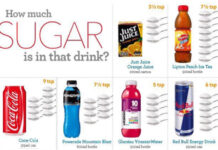


Obesity and overweight represent a global health crisis, as symptoms of widespread malnutrition that causes at least one in five deaths. It affects adults and children, especially in the most defenseless groups. The poorest, who cannot afford fresh, healthy foods. And the less educated, unable to filter out the aggressive and unregulated marketing of junk food (junk food). Italy is itself a sick country, as the data to follow show.
Obesity and overweight in Italy, the data
The ‘
Italian Obesity Barometer Report
‘, produced in collaboration with Istat, was presented in its first edition in early April by the ‘Italian Barometer Diabetes Observatory‘ (IBDO) foundation. (1) Overweight in Italy affects 46 percent of adults, 23 million people, and 24.2 percent of children and adolescents (1.7 million, ages 6-17). 10.5% of the adult population, more than 5 million individuals, are affected by obesity. In both population groups, adults and minors, the prevalence of obesity is higher in male individuals (11.8%), compared to the female gender. Obese men are 11.8%, women 9.4%. Among children and adolescents, the difference is even more pronounced, with 27.3 percent of boys and 20.8 percent of girls overweight. (2)
One out of every two adults, one out of every four children and adolescents in Italy today are affected by a problem destined to generate other and far worse ones, affecting not appearance but physical and psychological health, quality of life and social inclusion. The first victims are children and adolescents in the South, with a prevalence of 31.9%. That drops to 26.1 percent in the Islands, 22.1 percent in the Northeast, 22 percent in the Center and 18.9 percent in the Northwest. In the South, the peak is reached among minors in Campania (35.2 percent). This was followed by Molise (32 percent), Calabria (30.4 percent) and Apulia (29.5 percent). Among adults, spatial inequalities are less pronounced.
Sedentary lifestyle, another serious public health concern in Italy, affects 40.6 percent of adults and 24.7 percent of children and adolescents. Again, with substantial inequalities between the North and South of the country. Sedentariness is most pronounced in Sicily (42 percent), Campania (41.3 percent) and Calabria (40.1 percent). And more than a third of young people in southern regions and islands, with the exception of Sardinia, do not participate in sports or physical activity.
Planetary level, according to the latest WHO data, obesity has more than doubled, compared to 1980. 13% of the planet’s adults are now obese, 39% overweight. Imbalanced diets, sedentariness, and social inequalities also plague public health in Europe, with 15.9 percent obese and 35.7 percent ‘
overweight
‘.
Social inequality, a risk factor
Social inequalities are another major theme that emerges when discussing obesity. In Italy, as well as in Europe, obesity and overweight are more prevalent in the most socioeconomically and culturally deprived population. And that is why we discuss, among other things, nutrition education starting from primary education. Without even having shared a useful educational project for the purpose.
‘
People who belong
to less affluent classes seem to be twice as likely to become obese (…). A high educational qualification is a protective factor for obesity, playing an important role in prevention at various levels and even more so for primary prevention‘ (‘Italian Obesity Barometer Report’, 2019).
A college degree halves the risk of obesity. Obese people in Italy are only 6.6 percent of college graduates, less than half as many as those with a middle or elementary school license (among whom obese people are 14.2 percent. 2017 data). ‘The largest gap is among younger generations, those between 25 and 44 years old, where the prevalence of obesity quadruples for women with low educational qualifications (9.4% vs. 2.1% with high qualifications) and triples for men (10.5% vs. 3.7% with high qualifications).’ And adult education also affects the health of younger children. In the sense that more educated parents tend to feed their children better, on whom there is a lower rate of obesity.
‘
Analyzing the phenomenon
of excess weight in relation to some information that relates to family background, higher prevalences are observed among children and young people living in families where the parents’ level of education is lower, ranging from 18.5 percent of those with parents who have high educational attainment, to 29.5 percent of those whose parents have low educational attainment‘ (Roberta Crialesi, ISTAT, director of the Integrated Health, Welfare, Security and Justice System Service).
The
status
social and cultural
of the family does indeed affect the consumption of junk food, such as
snacks
salty and carbonated drinks. ‘Looking at daily consumption of salty snacks, it is observed that this is 8.5 percent among children and youth aged 6-17 years living in households of higher sociocultural status and increases by 10 percentage points among children living in households where at least one parent has completed at most compulsory schooling (18.5 percent). Similar inequalities are observed in daily consumption of carbonated beverages among adolescents (18.6 percent if at least one parent has a bachelor’s degree or higher; 30.6 percent if at least one parent has completed at most compulsory schooling)‘.
People eat too much and too badly.
Excess sodium, low intake of whole grains and fruits are identified as major dietary risk factors. ‘
In Italy in 2016-2017, more than 70 percent of children and adolescents consumed fruits and/or vegetables every day, but only 12.6 percent got to consume 4 or more servings. High proportion of those who consume sweets (28.3%), carbonated beverages (24.9%) and salty snacks (13.8%) on a daily basis […] The most common living conditions among children during the growing age are often characterized by a so-called ‘obesogenic’ environment, in which there is continuous availability of fatty and sugar-rich foods and carbonated and/or sugary beverages; this is frequently associated with reduced energy expenditure due to low levels of physical activity, creating a dangerous vicious circle‘.
The emergency and the stigma
Obesity is a health emergency. ‘
Globally, WHO estimates that about 58% of diabetes mellitus
, 21 percent of coronary heart disease
and shares of between 8 and 42 percent of certain cancers are attributable to obesity. To these should be added, sleep apnea syndrome (which increases the risk of sudden death from arrhythmia), arthritis, gallstones, infertility, and depression. For these reasons, obesity contributes very significantly to the development of noncommunicable diseases (NCDs), which cause 92 percent of deaths and more than 85 percent of years lost to disability in our country. Keep in mind that a severely obese person reduces his or her life expectancy by about 10 years but spends as many as 20 years in a disabled condition‘.
‘Low self-esteem, bullying at school, poor school performance, eating disorders and depression‘ are added to accompany the excess pounds, starting as early as childhood. Social stigma and psychological problems in turn induce the general worsening of health conditions. And if 20 percent of deaths from noncommunicable diseases are linked to poor nutrition-as the latest update of the largest scientific study conducted on the subject reiterates (3)-it is time for policy to intervene with drastic measures.
Eat less, feed better, feed all. (4)
#Égalité!
Sabrina Bergamini and Dario Dongo
Notes
1) The first ‘Italian Obesity summit – Changing Obesity meeting‘ was organized by the foundation ‘Italian Barometer Diabetes Observatory‘ (IBDO) under the patronage of the Ministry of Health, ANCI (National Association of Italian Municipalities), Parliamentary Intergroup on Quality of Life in Cities, Sports, Health and Wellness, ADI (Italian Association of Dietetics and Clinical Nutrition), Obese Friends, IO- NET (‘Italian Obesity Network‘), SIE (Italian Society of Endocrinology), SIEDP (Italian Society of Pediatric Endocrinology and Diabetology), SIMG (Italian Society of General Medicine and Primary Care), SICOB (Italian Society of Surgery of Obesity and Metabolic Diseases), SIO (Italian Society of Obesity). V. http://www.hcc-milano.com/stampa/NOVONORDISK_2019_ObesityBarometerReport/06_Programma.pdf
2) See ‘Italian Obesity Barometer Report‘ (2019),
4) See the previous article ‘
Hunger and malnutrition, the world upside down
‘

Journalist. Consumption, rights, nutrition, social, environment. Head of Consumers Help. She collaborated with ResetDOC, Il Riformista, La Nuova Ecologia, IMGPress.

Dario Dongo, lawyer and journalist, PhD in international food law, founder of WIISE (FARE - GIFT - Food Times) and Égalité.