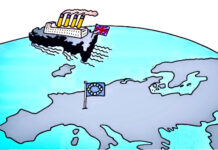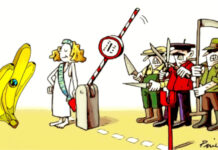


The Brexit Deal pre-Christmas was predictably not enough to resolve some issues on the operational management of import – export of food, feed, plants and animals between the UK and EU. The issues raised by supply chain operators are still awaiting reassurance from the UK government and clarification from its representatives in the working group ‘SPS Market Access‘. Details to follow.
Brexit Deal, free trade and non-tariff barriers
The UK’s exit from the single market and customs union on 1.1.21 ended the free movement of people, goods, services and capital between the UK and EU. With inevitable barriers to trade in goods and services that the Brexit Deal has mitigated only slightly (1,2).
Sanitary certificates, sanitary and phytosanitary controls, pre-notification of imports, customs procedures and duties are the first inevitable obstacles to progressive implementation, as noted (3,4). Non-tariff barriers loom in many forms, from new marketing standards to the requirement to designate on-site importers, as well as more generally in the divergence of rules on safety and labeling of various product categories.
Brexit Deal and import – export of food and feed, the priority issues
The questions and requests from European stakeholders were forwarded by the European Commission to theDepartment for Environment, Food and Rural Affairs (DEFRA) on 5.2.21 in a ten-page document. Next, the major issues.
The first instance is the provision of Sanitaryand Phytosanitary Measures (SPS) to be applied to import products on a user-friendly web portal. Britain should follow the example of the European Union, which provides access to the rules applicable to individual product categories, including by typing in their HS(Harmonized Commodity Description and Coding System) reference code, on the
Access to Market database.
.
General problems, delivery reliability
More than 20% of deliveries so far have been delayed due to Brexit-related issues. It is recommended to report to Incoterm DDP(Delivered Duty Paid), but some importers in UK still follow contracts with DAP, CPT, FCA. (5) However, import procedures in the UK with DDP are not up to speed due to bureaucratic and paperwork management complexities between supplier, customer, customs agent, and customs authorities. With substantial variations among the various entry points, which still distinguish between ‘For unaccompanied freight‘ and ‘For accompanied shipments. Is this really necessary?
Customs practices
The lack of IRR(import release reference) numbers and clarity associated with generating the relevant codes in turn cause delays in UK customs clearance of goods that are often difficult to release and delivered in a timely manner. Therefore, the practicalities of customs clearance need to be clarified.
The document requirements specifically imposed by the UK on documentation are relatively extensive, as they include, for example, obligations to indicate exit point in EU and entry point in UK, as well as the license plate of the truck transporting the foodstuffs to Britain. Dependence on undigitized paper documents must be overcome, as has already been done in several EU member states, to mitigate inefficiencies.
Information technology infrastructure and systems
The infrastructure needs to be strengthened. UK and MS ports, as well as other points of entry, must come adapted to the needs of organic controls and those of sanitary/phytosanitary (SPS) significance in particular. Is the UK addressing these issues? Where can information be found on capacity related to plant inspections and any updates, particularly regarding the organization of trade flows after July?
There is also an urgent need to adapt British IT systems-such as IPAFFS(Import of Products, Animals, Food and Feed System) and PEACH(Procedure for Electronic Application for Certificates from the Horticultural Marketing Inspectorate)-compared to the Brexit Deal forecast. Of particular relevance in view of spring flows of fresh produce.
POAO, health certificates
POAO, Products of Animal Origin, what exact definition? Appropriate guidelines are essential to understand whether and which compound products, although not subject to the application of reg. EU 853/04, are subject to sanitary certification for the purpose ofexport to the UK as of 1.7.21. Do carotenoids and vitamin products with mixtures of animal ingredients, for example, fall under the definition of POAO and as such subject to veterinary certificates?
Will the special Export Health Certificates (EHC) templates now in use for all POAOs subject to safeguard measures also be used after 1.4.21? Will ordinary EHCO templates be used instead for commodities such as pork, meat products, meat preparations?
POAO, other questions
What requirements should apply to shipments of POAO for non-commercial purposes, i.e., what samples for commercial use? Will they serve EHC? Will weight limits apply to qualify shipments as noncommercial?
Are health certificates for swine fever and avian influenza also required when poultry meat and/or its derivatives come from countries free of these diseases?
Dairy products
A table of concordance between customs codes(Combined Nomenclature, CN) and category, product subcategory (HS) codes is required to identify applicable standards and certificates.
Transit or warehousing certificates should not be applied in assumptions of transport in England and Northern Ireland with a view to subsequent placing on the EU market, Northern Ireland included. Is this hypothesis confirmed?
The TRACES(Trade Control and Expert System) platform will be used foruploading British import certificates. But are the British authorities able to access them, or is it necessary for hard copies of the certificates to accompany the shipments?
Dairy products, simplifications
The import certificate forms prepared by the UK, in use since 1.4.21, trace the reg. EU 605/10. More flexibility and simplification is called for, given the possibility that the vehicle license plate and container number may vary for last minute needs on short transports (e.g., groupage).
The UK authorities are then asked to accept the transmission of the EHC health certificate electronically, without the need for a hard copy. And to be able to enter vehicle ID and/or seal number directly on the aforementioned IPAFFS system.
Eggs and egg products, aviculture
On 8.11.20, the UK published certificates for theimport of eggs and egg products(Model veterinary certificate for eggproducts, Regulation 798/2008 GBHC076E4). Egg yolk powder is not mentioned among the categories in Part II.1 of the certificate.
Should it therefore be inferred that there are no specific requirements for the importation of egg yolk powder beyond the location of the production plant in an area free of Newcastle Disease or HPAI(Highly Pathogenic Avian Flu)?
Finally, it should be clarified whether the UK requires animal health and quarantine measures for the importation of birds other than poultry, similar to reg. EU 139/13.
Fruit and vegetables, vegetables
Green lane
. Can priority lanes be reserved for customs checks on highly perishable products so as to ensure the continuity of the relevant trade flows?
The requirements forimporting products into the UK set out in the UK Plant Health Regulation (UKSI 2020/1527, Annex 7) do not match those described in recent correspondence between theInternational Plant Proyection Convention (IPCC) contact points and DEFRA. Which ones to refer to? It is possible to provide that the controls of products under reg. EU 2016/ 2031, Art. 73 (excluding high priority ones) can be carried out at designated checkpoints instead of at borders?
Phytosanitary certificates
The introduction ofPhytosanitary Certificates (PCs) on UKexports of fruit and vegetables, effective 1.4.21, has abominable implications. It is asked to:
– Postpone the application of PCs until it is possible to provide for electronic transmission through theephyto hub,
– exclude fruit and vegetable categories with low phytosanitary risk (e.g., apples, pears, grapes), in line with exemptions already granted to some commodities (e.g., citrus, kiwi).
Pesticides, MRL
Operators are asking for timely notification of reforms emerging in the database of MRLs(Maximum Residues Levels) of pesticides allowed in the UK. In the face of the real risk of unknowability of changes with potential impact on food safety assessment.
Animal nutrition
‘A person who, for the first time, places on the market a feed material not listed in the Catalogue shall immediately inform the representatives of the European feed sectors referred to in Article 26(1). European feed industry representatives shall publish a register of such notifications on the Internet and update it regularly.” (reg. EU 767/2009, Art. 24.6).
Is the above notification also provided in the UK? And where of the case, where is the register available and to which authority to refer?
Export of feed from EU to UK
EU regulations consider pet food processed in member states, including from animal by-products, to be safe. And it is therefore possible to bring such products into the single market without the need to attach export health certificates (EHC) or commercial documents (DOCOM). What requirements are set forexport to the UK on various feeds, effective 1.7.21? Can the need for EHC already be ruled out for feeds free of animal components?
The UK guidelines on theexport of animal feed to the UK indicate the designation of a UK representative as the only requirement. However, referring only to ‘some feed additives‘, ‘some new protein products‘, ‘some premixes‘. (6) Is it possible to clarify what specific types of products are being referred to and what procedure should be followed for representative registration in GB?
Animal by-products
When will the EHC form to be used forexporting animal by-products to the UK be published?Currently, exports ofprocessed animal proteins (PAPs) only require commercial documents (DOCOM). What will happen on 1.7.21? Will EHC certification be required?
Dario Dongo, Giulia Torre
Cover design, author Deligne
Notes
(1) Dario Dongo, Giulia Orsi. Brexit Deal. EU-UK imports and exports, rules in place and in the making. FT (Food Times). 21.02.2021. https://www.greatitalianfoodtrade.it/mercati/brexit-deal-import-ed-export-ue-uk-regole-in-essere-e-in-divenire
(2) Dario Dongo, Giulia Torre. Brexit, new rules for food imports and exports. GIFT(Great Italian Food Trade). 3.11.20, https://www.greatitalianfoodtrade.it/mercati/brexit-nuove-regole-per-import-e-export-di-alimenti
(3) Claudio Biglia, Dario Dongo. Brexit, operational instructions for export of plants, animals, food and drink, by-products from EU to UK. GIFT(Great Italian Food Trade). 9.11.20, https://www.greatitalianfoodtrade.it/mercati/brexit-istruzioni-operative-per-l-export-di-piante-animali-alimenti-e-bevande-sottoprodotti-da-ue-a-uk
(4) Dario Dongo. Brexit just around the corner, updates from the Ministry of Health. FT (Food Times). 12/23/20, https://www.greatitalianfoodtrade.it/mercati/brexit-alle-porte-aggiornamenti-dal-ministero-della-salute
(5) Dario Dongo, Selena Travaglio. Incoterms 2020 at the starting ribbon. FT (Food Times). 12.10.19, https://www.greatitalianfoodtrade.it/mercati/incoterms-2020-al-nastro-di-partenza
(6) https://www.food.gov.uk/business-guidance/third-country-representation-for-animal-feed-businesses

Dario Dongo, lawyer and journalist, PhD in international food law, founder of WIISE (FARE - GIFT - Food Times) and Égalité.

Graduated in law, master in European Food Law, she deals with agro-food, veterinary and agricultural legislation. She is a PhD in agrisystem.