
The global livestock sector faces mounting pressure to identify sustainable protein alternatives for animal feed, as conventional feeding practices contribute significantly to environmental degradation. A groundbreaking solution emerges from the circular economy: black soldier fly larvae (Hermetia illucens) are reared on agroindustrial by-products, effectively upcycling food loss and waste (FLW) streams into high-value protein feed for poultry.
This innovative approach yields ‘circular eggs’, which Cela and colleagues (2025) investigate through a comprehensive interdisciplinary analysis. Their groundbreaking research is the first to combine rigorous consumer attitude studies (including psychological barriers) with sensory evaluation that surprisingly shows the circular eggs match or exceed conventional quality.
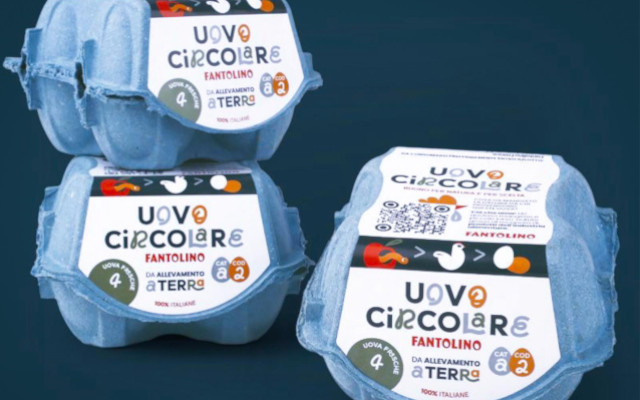
Crucially, the analysis is validated by the immediate real-world implementation of the ‘Uovo Circolare’ (‘Circular Egg’) commercial project, establishing a viable model for sustainable food system transformation.
Methodology
Questionnaire design and implementation
The research employed a dual methodological approach, combining consumer surveys with sensory analysis. An online questionnaire, distributed via the Qualtrics platform, assessed consumer attitudes towards circular eggs amongst 456 Italian participants (mean age: 40 years; 62% female). The survey instrument incorporated validated scales including the Food Neophobia Scale (Pliner & Hobden, 1992), the eight-item Food Disgust Scale (Hartmann & Siegrist, 2018), and domains from the Consumer Sustainability Consciousness questionnaire (De Carvalho et al., 2015). Participants evaluated their willingness to try, buy, consume regularly, and pay premium prices for circular eggs through seven-point Likert scales.
The questionnaire structure encompassed seven distinct sections: sociodemographic characteristics, egg consumption behaviour, knowledge of hens’ typical diet, sustainability consciousness, personality traits, attitudes towards insect-fed eggs, and behavioural intentions. Data quality checks excluded careless respondents, achieving a 68.8% completion rate with an average completion time of 11.8 minutes (Cela et al., 2025).
Sensory evaluation protocol
The sensory analysis recruited 143 participants (60% female; mean age: 27 years) to evaluate circular eggs versus conventional eggs prepared as hard-boiled and poached samples. Evaluations occurred in controlled laboratory conditions at 22±2°C under white lighting. Participants assessed liking scores for eleven sensory attributes using nine-point hedonic scales, followed by a check-all-that-apply (CATA) methodology incorporating twenty sensory descriptors. The experimental design employed randomised presentation orders to minimise bias effects (Cela et al., 2025).
Statistical analyses included hierarchical multiple linear regression models for attitude predictors, two-way ANOVA for sensory data, Cochran’s Q test for CATA attributes, and correspondence analysis for visualising sample-attribute relationships. The research maintained ethical compliance through institutional review board approval (Ethics Committee Proceedings n. 5/2024).
Results and discussion
Sociodemographic and psychological predictors
The hierarchical regression analysis revealed that gender, education level, and age significantly influenced attitudes towards circular eggs. Males demonstrated more positive attitudes (B = 0.296, p = 0.025) compared to females, whilst younger participants exhibited greater acceptance than older cohorts (B = -0.142, p = 0.030). Higher education correlated with increased acceptance, particularly when larvae were reared on agroindustrial by-products (B = 0.402, p = 0.027). These findings align with previous research suggesting that demographic factors substantially influence acceptance of novel sustainable foods (Laureati et al., 2016; Menozzi et al., 2021).
Psychological traits emerged as powerful predictors of consumer acceptance. Food neophobia presented the strongest negative influence (B = -0.467, p < 0.001), with highly neophobic individuals demonstrating significantly reduced willingness across all behavioural intention measures. Similarly, disgust sensitivity negatively impacted attitudes (B = -0.277, p = 0.006), suggesting that personality-related barriers require targeted communication strategies to overcome inherent aversions (Cela et al., 2025).
Sustainability consciousness and knowledge effects
The circular economy domain of sustainability consciousness demonstrated significant positive influence on attitudes (B = 0.153, p = 0.043), indicating that consumers with stronger environmental awareness showed greater acceptance of circular eggs. Notably, 73.7% of participants correctly identified hens as omnivorous animals, and this knowledge significantly enhanced acceptance scores across all dependent variables. Consumers understanding that insects form part of hens’ natural diet exhibited more favourable attitudes, suggesting that educational interventions emphasising biological authenticity could improve market acceptance (Cela et al., 2025).
Urban residents displayed significantly higher acceptance compared to rural populations, potentially reflecting greater exposure to innovative food technologies and sustainability messaging in metropolitan areas. This urban-rural divide highlights the importance of tailored marketing strategies addressing regional differences in food innovation receptivity (Siddiqui et al., 2022).
Sensory characteristics and consumer preferences
The sensory evaluation revealed surprising consumer preferences favouring circular eggs over conventional alternatives. Circular eggs achieved significantly higher liking scores for overall appearance (p < 0.05), yolk colour, albumen colour, yolk flavour, overall flavour, and yolk texture. The enhanced yolk colour, attributed to increased carotenoid content from insect-based feed, particularly influenced appearance ratings – a critical quality parameter for consumer acceptance (Rondoni et al., 2020; Sverguzova et al., 2021).
Correspondence analysis demonstrated that sensory differences between circular and conventional eggs were more pronounced in hard-boiled preparations compared to poached samples. The CATA methodology identified ‘intense yellow egg yolk‘ as predominantly associated with circular eggs, whilst texture attributes varied primarily by cooking method rather than feeding regime. Penalty-lift analysis revealed that umami taste, buttery notes, and smooth texture served as positive drivers of overall liking, increasing scores by 0.34 to 0.98 points (Cela et al., 2025).
Economic considerations and market barriers
Despite positive attitudes and sensory preferences, price sensitivity emerged as a substantial barrier to market adoption. Approximately 59% of participants expressed unwillingness to pay premium prices for circular eggs, whilst 38.4% indicated willingness to pay up to 50% more than conventional alternatives. This willingness-to-pay gap between attitude and purchase behaviour reflects common challenges in sustainable food marketing, where environmental benefits must compete with economic constraints (Tiboldo et al., 2024).
The discrepancy between high willingness to try (6.1 on a seven-point scale) and lower willingness to consume regularly (5.5) suggests that whilst consumers demonstrate exploratory interest in sustainable innovations, converting trial into habitual consumption requires addressing multiple barriers including price, availability, and trust in production processes (Vermeir & Verbeke, 2006).
Italian implementation: the pioneering ‘Uovo Circolare’ project
The research findings have already translated into practical application through Italy’s pioneering ‘Uovo Circolare’ (‘Circular Egg’) project, developed within the NODES (Nord Ovest Digitale e Sostenibile) programme funded by the National Recovery and Resilience Plan (UNISG, 2025). This collaborative initiative between the University of Gastronomic Sciences of Pollenzo, BEF Biosystems, and the Fantolino poultry company represents a groundbreaking implementation of circular economy principles in Italian agriculture. The project successfully brought to market an innovative egg product derived from hens fed with black soldier fly larvae reared on agroindustrial by-products, demonstrating the commercial viability of the research outcomes.
The initiative forms part of Pollenzo’s broader Circular Food HUB, which aims to valorise agricultural by-products whilst developing new protein-rich feed chains for poultry farming. The collaboration extends beyond product development to include certification frameworks through partnerships with RINA’s GO2 Food Saving scheme, ensuring transparency and traceability in the circular production process. This real-world implementation demonstrates that circular eggs can successfully transition from academic research to commercial reality, providing a model for other European countries seeking to enhance food system sustainability whilst maintaining product quality and consumer acceptance.
The value of upcycling agricultural by-products in poultry feed
The utilisation of agricultural by-products in hen diets represents a crucial strategy for sustainable intensification of poultry production systems. Research indicates that food system by-products, when optimally incorporated into livestock feeds, could increase global food supply by 13-15% in terms of calories and protein content (Sandström et al., 2022).
In poultry systems specifically, hens demonstrate remarkable efficiency in converting agricultural residues including cereal brans, oilseed meals, brewers’ grains, and fruit processing by-products into high-quality protein for human consumption. These materials, whilst unsuitable for direct human consumption due to their fibrous nature or anti-nutritional factors, undergo biological transformation through the hen’s digestive system, effectively upcycling food loss and waste (FLW) streams into valuable nutrients.
The environmental benefits of by-product utilisation extend beyond waste reduction. By replacing conventional feed ingredients like soybean meal and maize, which compete directly with human food systems, the incorporation of agroindustrial by-products reduces pressure on agricultural land and water resources. Studies demonstrate that poultry can efficiently utilise up to 50% of their feed intake from by-products without compromising productivity or product quality (Ramiah Shanmugam et al., 2025).
Furthermore, the bioconversion process through insects adds another dimension of circularity, as black soldier fly larvae can transform low-value by-products with high moisture and fat content – such as dissolved air flotation solids from poultry processing – into protein-rich biomass suitable for hen feed. This cascading utilisation of resources exemplifies the circular bioeconomy concept, where each processing stage generates value whilst minimising environmental impact, ultimately contributing to more resilient and sustainable food systems capable of feeding growing global populations whilst respecting planetary boundaries.
Major outcomes and implications
Key findings
This comprehensive investigation yielded several critical insights for sustainable poultry production. First, sensory quality of circular eggs matched or exceeded conventional alternatives, contradicting potential concerns about product degradation from alternative feeding practices. Second, psychological traits particularly food neophobia and disgust sensitivity, presented stronger barriers than demographic factors, emphasising the importance of addressing emotional rather than rational objections. Third, knowledge of hens’ natural omnivorous diet significantly improved acceptance, suggesting that educational interventions highlighting biological authenticity could facilitate market adoption.
The research identified a receptive market segment comprising younger, educated, environmentally-conscious consumers willing to pay premium prices for sustainable alternatives. However, broader market penetration requires addressing price barriers and developing trust through transparent communication about production methods and environmental benefits (Cela et al., 2025).
Practical applications
The findings suggest multiple strategies for promoting circular egg adoption. Marketing communications should emphasise the natural alignment between insect consumption and hens’ omnivorous biology, whilst sensory exposure through tasting opportunities could reduce neophobic responses. Positioning circular eggs as premium products targeting sustainability-conscious consumers initially, followed by gradual market expansion as production scales reduce costs, represents a viable commercialisation pathway.
Educational initiatives should focus on the circular economy benefits of utilising agroindustrial by-products, reframing waste streams as valuable resources rather than quality compromises. Certification schemes and transparent labelling could build consumer trust whilst differentiating circular eggs in competitive markets (Aschemann-Witzel et al., 2023).
Conclusions
This research demonstrates that circular eggs from hens fed black soldier fly larvae reared on agroindustrial by-products represent a viable sustainable alternative to conventional production systems. The combination of positive sensory characteristics, environmental benefits, and identified consumer segments willing to adopt these products suggests promising market potential. However, successful commercialisation requires addressing psychological barriers through education, reducing price premiums through scale efficiencies, and developing targeted marketing strategies emphasising both sustainability and quality attributes.
Future research should investigate optimal inclusion rates of insect-based feed to balance nutritional enhancement, production costs, and consumer acceptance. Longitudinal studies examining the conversion of trial behaviour into habitual consumption would provide valuable insights for market development strategies. Additionally, cross-cultural investigations could identify regional variations in acceptance patterns, informing global commercialisation of circular economy innovations in food systems (Cela et al., 2025).
Dario Dongo
References
- Aschemann-Witzel, J., Asioli, D., Banovic, M., Perito, M. A., & Peschel, A. O. (2023). Consumer understanding of upcycled foods – Exploring consumer-created associations and concept explanations across five countries. Food Quality and Preference, 112, 105033. https://doi.org/10.1016/j.foodqual.2023.105033
- Cela, N., Nervo, C., Meneguz, M., Mileto, C., Padula, C., & Torri, L. (2025). Exploring consumers’ attitude and sensory perception of circular eggs from hens fed with black soldier fly larvae (Hermetia illucens) reared on agroindustrial by-products. Future Foods, 12, 100773. https://doi.org/10.1016/j.fufo.2025.100773
- De Carvalho, B. L., Salgueiro, M. D. F., & Rita, P. (2015). Consumer sustainability consciousness: A five dimensional construct. Ecological Indicators, 58, 402-410. https://doi.org/10.1016/j.ecolind.2015.05.053
- Hartmann, C., & Siegrist, M. (2018). Development and validation of the Food Disgust Scale. Food Quality and Preference, 63, 38-50. https://doi.org/10.1016/j.foodqual.2017.07.013
- Laureati, M., Proserpio, C., Jucker, C., & Savoldelli, S. (2016). New sustainable protein sources: Consumers’ willingness to adopt insects as feed and food. Italian Journal of Food Science, 28(4), 652-668. https://doi.org/10.14674/1120-1770/ijfs.v476
- Menozzi, D., Sogari, G., Mora, C., Gariglio, M., Gasco, L., & Schiavone, A. (2021). Insects as feed for farmed poultry: Are Italian consumers ready to embrace this innovation? Insects, 12(5), 435. https://doi.org/10.3390/insects12050435
- Pliner, P., & Hobden, K. (1992). Development of a scale to measure the trait of food neophobia in humans. Appetite, 19(2), 105-120. https://doi.org/10.1016/0195-6663(92)90014-W
- Ramiah Shanmugam, S., Farahmanzdad, N., Drabold, E. T., Rudar, M., Bourassa, D., & Higgins, B. (2025). Upcycling nutrients from poultry slaughterhouse solid waste into value-added bioproducts using black soldier fly larvae cultivation. Journal of Environmental Management, 373, 123446. https://doi.org/10.1016/j.jenvman.2025.124856
- Rondoni, A., Asioli, D., & Millan, E. (2020). Consumer behaviour, perceptions, and preferences towards eggs: A review of the literature and discussion of industry implications. Trends in Food Science & Technology, 106, 391-401. https://doi.org/10.1016/j.tifs.2020.10.038
- Sandström, V., Chrysafi, A., Lamminen, M., Troell, M., Jalava, M., Piipponen, J., Siebert, S., van Hal, O., Virkki, V., & Kummu, M. (2022). Food system by-products upcycled in livestock and aquaculture feeds can increase global food supply. Nature Food, 3(9), 729-740. https://doi.org/10.1038/s43016-022-00589-6
- Siddiqui, S. A., Zannou, O., Karim, I., Kasmiati, Awad, N. M. H., Gołaszewski, J., Heinz, V., & Smetana, S. (2022). Avoiding food neophobia and increasing consumer acceptance of new food trends—A decade of research. Sustainability, 14(16), 10391. https://doi.org/10.3390/su141610391
- Sverguzova, S. V., Shaikhiev, I. H., Sapronova, Z. A., Fomina, E. V., & Makridina, Y. L. (2021). Use of fly larvae Hermetia illucens in poultry feeding: A review paper. Journal of Water and Land Development, 49, 95-103. https://doi.org/10.24425/jwld.2021.137101
- Tiboldo, G., Casolani, N., Reguzzi, M. C., Cominelli, F., Coderoni, S., Arata, L., & Mazzoni, E. (2024). Factors influencing Italian consumers’ willingness to buy and pay for insect-fed poultry products. Journal of Insects as Food and Feed, 10(9), 1661-1675. https://doi.org/10.1163/23524588-00001041
- UNISG. (2025, October 8). Uovo Circolare di Fantolino: un progetto pionieristico a cui ha partecipato l’Università di Pollenzo. https://www.unisg.it/comunicati/uovo-circolare-di-fantolino-un-progetto-pionieristico-a-cui-ha-partecipato-luniversita-di-pollenzo/
- Vermeir, I., & Verbeke, W. (2006). Sustainable food consumption: Exploring the consumer ‘attitude – behavioral intention’ gap. Journal of Agricultural and Environmental Ethics, 19(2), 169-194. https://doi.org/10.1007/s10806-005-5485-3

Dario Dongo, lawyer and journalist, PhD in international food law, founder of WIISE (FARE - GIFT - Food Times) and Égalité.