

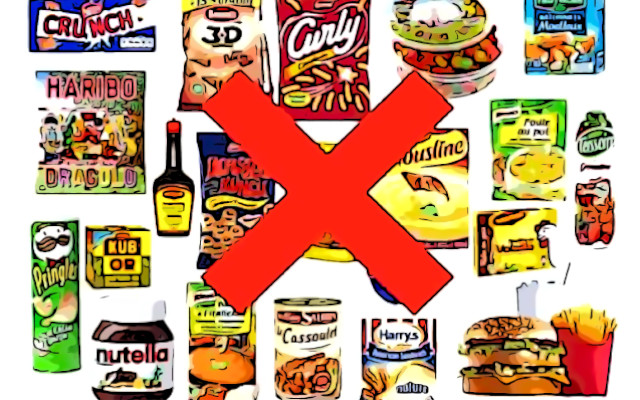
Consumption of ultra-processed foods also correlates with premature mortality and serious Non-Communicable Diseases (NCDs) in Italy.
The study published in The American Journal of Clinical Nutrition (Bonacci et al., 2021) also investigates the main causes of the damage. Sugars in the lead. (1)
Ultraprocessed foods, the Italian scientific study
The correlation between the consumption ofUltra-Processed Foods (UPF) and the risk of premature mortality was evaluated in a large sample of the Italian adult population. 22,475 male and female individuals, mean age 55 ± 12, recruited in Molise and followed for 8.2 years as part of the Moli-sani study (2005-2010).
Food consumption was assessed based on the Food Frequency Questionnaire (FFQ) EPIC(European Prospective Investigation into Cancer and Nutrition), adapted to the Italian population. Considering a total of 188 foods, classified into 74 groups with similar nutritional characteristics or uses in cooking.
Research Objectives.
Italian researchers wanted to:
(1) assess correlations between consumption of ultra-processed foods, premature all-cause mortality, and mortality related to some specific causes, (2)
2) explore the contribution of various nutrients (e.g., sugars, saturated fats) in ultraprocessed foods to the risk of premature mortality, and
3) To test whether any of the cardiovascular disease risk factors can link UPF consumption and mortality.
Ultraprocessed foods were identified using the NOVA classification, and the level of their consumption was measured as a percentage ratio (grams/day) to total food consumed.
Cardiovascular disease and stroke
The highest risks of mortality from cardiovascular disease and ischemic/cerebrovascular heart disease, as well as premature mortality from all causes, were found in the category of individuals with the highest UPF consumption (>14.6 percent of total food).
Excess sugars-in ultra-processed foods, which include sugary drinks-are found to explain 36.3% of the relationship between UPF consumption and ischemic/cerebrovascular mortality. Other nutritional factors (e.g., saturated fat) did not show as much influence.
Interim conclusions
High consumption of ultra-processed foods is associated with lower adherence to the Mediterranean diet in the study under review. We again find the highest intakes of energy (kcal), fat and saturated fat, sugar and sodium (salt), and the lowest amounts of dietary fiber.
Italy’s agribusiness, however. insists on claiming the ‘freedom not (to) know’ the nutritional profiles of foods, declaring war on the NutriScore system that was developed by Santé publique France and approved by IARC(International Agency for the Research of Cancer, WHO) precisely to help citizens eat more balanced.
Cui prodest?
Dario Dongo and Andrea Adelmo Della Penna
Notes
(1) Marialaura Bonaccio, Augusto Di Castelnuovo, Simona Costanzo, Amalia De Curtis, Mariarosaria Persichillo, Francesco Sofi, Chiara Cerletti, Maria Bendetta Donati, Giovanni de Gaetano, Licia Iacoviello (2021). Ultra-processed food consumption is associated with increased risk of all-cause and cardiovascular mortality in the Moli-sani Study. Am. J. Clin. Nutr. 113:446-445, https://doi.org/10.1093/ajcn/nqaa299
(2) Dario Dongo and Andrea Adelmo Della Penna. Ultraprocessed foods, the worst evil. Appeal of scientists in the British Medical Journal. FT (Food Times). 16.8.21, https://www.greatitalianfoodtrade.it/progresso/alimenti-ultraprocessati-il-peggior-male-appello-degli-scienziati-sul-british-medical-journal

Dario Dongo, lawyer and journalist, PhD in international food law, founder of WIISE (FARE - GIFT - Food Times) and Égalité.

Graduated in Food Technologies and Biotechnologies, qualified food technologist, he follows the research and development area. With particular regard to European research projects (in Horizon 2020, PRIMA) where the FARE division of WIISE Srl, a benefit company, participates.


 in Italy.)