
The search for natural food preservatives as alternatives to synthetic molecules has a new contender. It is prickly pear extract, which has emerged in several scientific studies as highly effective in preserving raw meat. It has the advantage of not imparting the characteristic flavours typical of other natural preservatives derived from spices and aromatic herbs, such as rosemary, oregano, cinnamon, sage, thyme, mint, ginger and cloves.
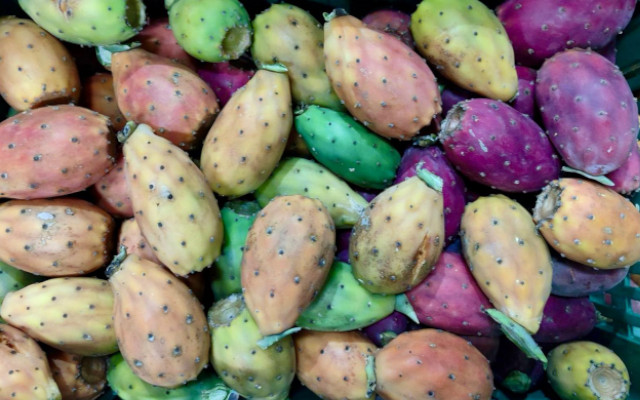
The prickly pear (Opuntia ficus indica), native to Central America, is very widespread in Sicily. The island accounts for 90 per cent of Italian production. It was here, at the University of Catania, that two studies were carried out on the use of its extract as a natural preservative for raw meat, where the addition of preservatives is prohibited and/or restricted.
Prickly pear, a powerful food-grade antibacterial
The antibacterial efficacy of prickly pear extract on fresh raw meat was tested in an initial study published in 2018 in ‘Food and Chemical Toxicology’. (1) Researchers at the University of Catania applied the extract to sliced raw beef, a foodstuff that spoils rapidly and to which the addition of synthetic preservatives is prohibited.
The study assessed the effect of prickly pear extract on the physical and chemical parameters, the preservation of the colour and texture of the meat, and microbial growth during storage under domestic refrigeration conditions (4 °C).
The results showed that prickly pear extract performed well in preserving the food. Thanks to the fruit’s antioxidant and antimicrobial compounds (polyphenols, betacyanin and betaxanthin), the extract proved to be an effective natural food preservative:
– in the in vitro test, it demonstrated broad-spectrum activity, as it inhibited the growth of all Gram-positive and Gram-negative strains,
– during refrigeration (4 °C), it effectively reduced microbial growth, keeping it below the legal limits (2) for 8 days – twice as long as the control sample,
– it preserved the colour and texture of the beef throughout the 8-day storage period.
The researchers employed a water-based extraction technique that is non-toxic, environmentally friendly and non-flammable. They also established a protocol for it. This is a further strength of the research, which has thus demonstrated the validity of the water-based technique as an alternative to the use of solvents such as methanol, ethanol or hexane. These substances are widely used in extraction processes. They have a negative impact on the environment and require additional ‘purification’ procedures to ensure the extract is suitable for food contact.
The study on burgers
The second study conducted by the Catania-based researchers, published in 2019, tested the effectiveness of prickly pear extract in preserving raw beef burgers.(3) Like sliced raw meat, these foods are also highly perishable, with a maximum shelf life of 3 days at 4 °C.
Unlike sliced raw meat, certain antioxidant additives are permitted in fresh minced meat and meat preparations, but not those with antimicrobial activity. (4) The prickly pear extract was tested for this latter property.
Antimicrobial efficacy was confirmed both in the test using prickly pear extract applied directly and in the test involving encapsulation in alginate beads. Beef burger patties treated in this way, after 8 days’ storage at 4 °C, showed significantly lower (p < 0.05) levels of mesophilic bacteria, Enterobacteriaceae and Pseudomonas spp. compared with the control samples.
Superior results, compared with the control sample, were also observed in terms of meat colour retention, reflecting the extract’s protective effect against the oxidation of myoglobin. This was also evident in the structural parameters (firmness, cohesion and elasticity).
Prickly pear, a marvel of nature
The antibacterial properties of the prickly pear have been the subject of research since the early 2000s, yielding surprising results. The extract (from the Saboten variety) has demonstrated
– antimicrobial activity against antibiotic-resistant Staphylococcus aureus, Pseudomonas aeruginosa and Enterococcus faecium (5),
– inhibitory efficacy against Salmonella spp. and Escherichia coli O157:H7,
– inhibition of the growth of Listeria monocytogenes on fresh apples to undetectable levels. (6)
Extracts from another variety (Villanueva) have even been shown to combat the cholera vibrio (Vibrio cholerae). (7)
The health benefits of this fruit with its extremely prickly skin are also well documented in the scientific literature. It has beneficial effects on heart health, is anti-inflammatory and diuretic, and is helpful in treating ulcers and diabetes. (8)
Marta Strinati
Credit cover Paolo Caruso
Notes
(1) Rosa Palmeri, Lucia Parafati, Cristina Restuccia, Biagio Fallico. Application of prickly pear fruit extract to improve domestic shelf life, quality and microbial safety of sliced beef. Food and Chemical Toxicology. 2018. https://doi.org/10.1016/j.fct.2018.05.044
(2) The limit set by Commission Regulation (EC) No 2073/2005 is 5 × 10⁶ log CFU/g of beef
(3) Lucia Parafati, Rosa Palmeri, Daniela Trippa, Cristina Restuccia and Biagio Fallico. Quality Maintenance of Beef Burger Patties by Direct Addition or Encapsulation of a Prickly Pear Fruit Extract. Frontiers in Microbiology, 2019. doi: 10.3389/fmicb.2019.01760
(4) Food additives may be added during the preparation of minced meat products as set out in Regulation (EU) No 601/2014. Some of these, such as alginates (E 401–404), carrageenan (E 407), carob seed flour (E 410) and guar gum (E 412), are added to meat preparations as stabilisers, to reduce water loss during packaging and to prevent the loss of meat juices during subsequent processing. Others, such as acetic acid (E 260), potassium acetate (E 261), sodium acetate (E 262), ascorbic acid (E 300), citric acid (E 330) and so on, are permitted as acidifiers or antioxidants in pre-packaged preparations of fresh minced meat and meat preparations to which ingredients other than additives or salt have been added. Furthermore, the Codex Alimentarius Commission’s General Standard for Food Additives (GSFA) lists, for unheat-treated meat in whole pieces or cuts (food category 08.2.1), amongst other additives, three natural extracts used as colourings: carmine (INS 120), plant-derived β-carotenes [INS 160e (ii)] and grape skin extract [INS 163 (ii)]; as regards β-carotenes and grape skin extracts, up to 5,000 mg/kg of meat product may be used (GSFA, 2018).
(5) Kim Hae-Nam, Kwon Do-Hoon, Kim Hae-Yun, Jun Hong-Ki. Antimicrobial Activities of Opuntia ficus-indica var. saboten Makino Methanol Extract. Journal of Life Science https://doi.org/10.5352/JLS.2005.15.2.279
(6) Seo, Y.H., Han, C.H., Lee, J.M., Choi, S.M., Moon, K.D., 2012. Effects of Opuntia ficus indica extracts on the inactivation of Escherichia coli O157:H7 and Listeria monocytogenes on fresh-cut apples. Korean J. Soc. Food Sci. Nutr. 41, 1009–1013
(7) Sanchez, E., Garcia, S., Heredia, N., 2010. Extracts of edible and medicinal plants damage membranes of Vibrio cholerae. Appl. Environ. Microbiol. 76, 6888–6894
(8) V. Jean Magloire Feugang, Patricia Konarski, Daming Zou, Florian Conrad Stintzing and Changping Zou. Nutritional and medicinal use of prickly pear (Opuntia spp.) cladodes and fruits. Frontiers in Bioscience. 2006. DOI:
10.2741/1992
Halmi, S.; Benlakssira, B.; Bechtarzi, K.; Djerrou, Z.; Djeaalab, H.; Riachi, F.; Pacha, Y. H. Antihyperglycaemic activity of prickly pear (Opuntia ficus-indica) aqueous extract. International Journal of Medicinal and Aromatic Plants 2012. https://www.cabdirect.org/cabdirect/abstract/20123332319
Seung Hyun Kim, Byung Ju Jeon, Dae Hyun Kim, Tae Il Kim, Hee Kyoung Lee, Dae Seob Han, Jong-Hwan Lee, Tae Bum Kim, Jung Wha Kim, and Sang Hyun Sung. Prickly Pear Cactus (Opuntia ficus indica var. saboten) Protects Against Stress-Induced Acute Gastric Lesions in Rats. Journal of Medicinal Food. 2012. https://doi.org/10.1089/jmf.2012.2282

Professional journalist since January 1995, he has worked for newspapers (Il Messaggero, Paese Sera, La Stampa) and periodicals (NumeroUno, Il Salvagente). She is the author of journalistic surveys on food, she has published the book "Reading labels to know what we eat".