

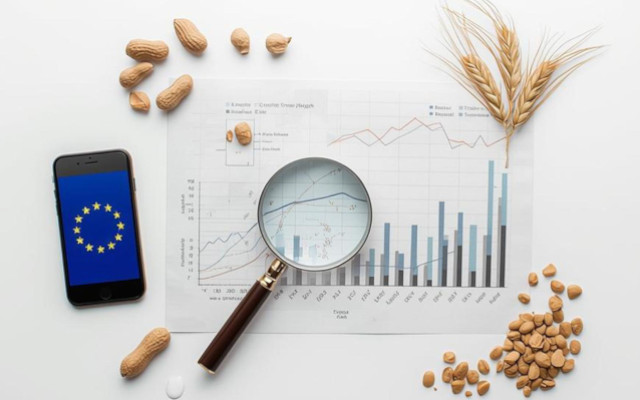
The European Commission has finally launched a public consultation in view of adopting an implementing regulation under the Food Information Regulation (EU) No 1169/11, aimed at defining uniform conditions for the use of Precautionary Allergen Labelling. (1)
The consultation will allow the collection of opinions and feedbackd from relevant stakeholders — representative associations of consumers with food allergies and intolerances, including coeliac disease, as well as industry and academia — with a view to adopting rules and criteria that are as widely shared as possible.
This article presents several elements that our FARE (Food and Agriculture Requirements) team considers essential for the adoption of precautionary labelling and the management of accidental contamination based on scientific risk analysis. We extend an invitation for broad stakeholder participation in contributing to the Commission’s initiative.
The Food Information Regulation (EU) No 1169/2011, FIR, requires responsible operators to indicate on the label — with graphic emphasis (e.g. bold typeface, underlining), distinguishing them from other ingredients in the ingredients list — the presence of substances and foods capable of causing allergies or intolerances, even if present in traces or in derived form, outside of specific exemption cases. (2, 3)
This obligation applies only to the 14 categories of products and substances listed in the exhaustive list set out in Annex II to the FIR. Individuals with allergies, intolerances, or other sensitivities to foods not mentioned in that list (e.g. favism) must therefore pay particular attention to the full list of ingredients, without, however, receiving any guarantee of the absence of accidental contamination.
Precautionary Allergen Labelling (PAL)
Regulation (EU) No 1169/11 currently classifies the precautionary indication of the possible presence of allergens resulting from accidental contamination — known as ‘Precautionary Allergen Labelling’ (PAL) — within the scope of voluntary information. Such information, pursuant to Article 36 of the FIR, must not:
- mislead the consumer regarding the essential characteristics of the product, including its composition;
- be ambiguous and/or confusing;
- not be based on relevant scientific data, as required by the case.
The Commission has been delegated by the European legislator, under the FIR, to adopt implementing acts to ensure the consistent application of the above criteria to ‘information relating to the possible and unintentional presence in foods of substances or products causing allergies or intolerances‘.
In preparation for the exercise of this delegation, the Brussels executive has launched a public consultation with the objective of defining harmonised criteria for the use of PAL. Harmonisation is essential to provide sensitive consumers with clear and consistent information throughout the Single Market, as well as to ensure a level playing field for food businesses.
Current application and limitations of PAL
Precautionary labelling on the possible presence of allergens (PAL) is generally expressed using wording such as ‘may contain [name of the product or substance causing allergies or intolerances]‘. The absence of precise provisions regarding its use, however, gives rise to a number of critical issues:
- the indication in some cases includes the concept of ‘traces of‘ allergens, which is ambiguous as it lacks an exact measure and any scientific or legal reference points;
- its use is frequently abused, whereas it should constitute the outcome of a thorough assessment of cross-contamination risks following the implementation of correct hygiene practices and self-monitoring procedures. (4)
Several Member States have adopted domestic policies and guidelines for the correct application of PAL, where voluntarily included on the label by the food business operator. In all cases, reference has been made to the FAO/WHO ad hoc expert group recommendations on food allergen risk assessment, including the adoption of threshold levels and PAL. (5)
Requirements for harmonised provisions
Set out below are the considerations submitted by the FARE (Food and Agriculture Requirements) unit of WIISE benefit regarding the minimum content of the rules that should be considered in the implementing regulation in question.
Principles based on FAO/WHO recommendations
The interest expressed by certain Member States — in particular the Netherlands, Spain, Belgium and Germany — in adopting national policies founded on the principles of threshold levels and Reference Doses (RfD) is grounded in robust scientific evidence, from which derives the use of an eliciting dose (ED05) defined as the quantity of allergen capable of inducing only mild or moderate adverse reactions, even in 5% of allergic individuals with the highest level of sensitivity. (6)
The RfDs defined for the principal allergens are based on a conservative approach, from which a maximum level of 3–4% of the sensitive population may experience the mild and moderate reactions precautionarily anticipated. Precautionary Allergen Labelling (PAL) is not necessary when the unintentional presence of an allergen or intolerance-causing substance is below the Reference Dose (RfD), as the risk of clinically relevant adverse reactions is considered negligible on the basis of available toxicological and clinical evidence.
Numerous scientific organisations and patient advocacy associations — such as FAARP, FARE, EFA, and EAACI — have long called for the implementation of RfDs in the analysis and management of food allergen contamination risk.
Adherence to the VITAL® System
The Voluntary Incidental Trace Allergen Labelling (VITAL®) programme, developed by the Allergen Bureau in Australia and New Zealand, has already successfully implemented RfDs in allergen risk analysis, while also offering operators an online service to assess and determine the necessity of using PAL on the basis of the identified Action Level.
The scientific soundness of VITAL® (currently in version 4.0) has been confirmed by the FAO and WHO. The standardisation of the calculation system for allergen protein content in food (mg/kg) and adherence to the principles of RfD and ED allows for the attainment, in combination with appropriate analytical methods, of reliable results for risk management and ongoing corporate crises. (7)
Alternative Made-in-EU systems are already in existence (e.g. DIAMONDS 3.0), developed by the Netherlands Organisation for Applied Scientific Research (TNO). Its development effectively runs in parallel with that of VITAL®, thanks to results obtained through EU co-funded projects such as Europrevall, IFAAM and ThrALL, with contributions approaching 24 million euros. The application of these systems would, among other things, reduce the costs of unjustified food alerts. (8)
Prevention of food waste
Food alerts not founded on actual risk analysis — which frequently involve the authorities of several Member States and are registered in the Rapid Alert System for Food and Feed (RASFF) — result in false alarms for vulnerable consumers, exorbitant costs for supply chain operators, and unjustified corrective measures that generate avoidable food waste, which could otherwise be prevented through the application of thresholds and reference doses. (9) This stands in contrast, moreover, with the food waste reduction objectives established under Target 12.6 of the SDGs and reiterated in European sector policies, from the Green Deal and its Farm to Fork Strategy to the Circular Economy Action Plan (CEAP).
Harmonised criteria for managing critical situations should therefore first and foremost provide for genuine risk analysis through the application of RfDs and ED05, as well as for the possibility of on-site re-labelling (by affixing adhesive labels to) foods already placed on the market that are found to be genuinely non-compliant — following their withdrawal from shelves and segregation — as preferred measures to prevent food waste without compromising food safety objectives.
Provisional conclusions
The time has finally come to establish harmonised criteria for the use of PAL in the EU. These should draw upon the positive experience of pioneer Member States in employing RfDs and ED05 as their foundation, on the basis of scientific evidence validated by the FAO and WHO expert group. Precautionary labelling on the possible presence of allergens in individual products must be grounded in a concrete risk analysis carried out by responsible operators. Such analysis should be performed using the VITAL® system, or its EU-developed equivalents (e.g. DIAMONDS).
The Commission’s initiative is warmly welcomed, and it is important that all stakeholders contribute to facilitating the adoption of an implementing regulation adequate to guarantee the objectives set out by the Food Information Regulation.
Dario Dongo and Andrea Adelmo Della Penna
Cover art copyright © 2026 Dario Dongo (AI-assisted creation)
Notes
(1) Food labelling – voluntary provision of Precautionary Allergen Labelling (PAL). https://ec.europa.eu/info/law/better-regulation/have-your-say/initiatives/16653-Food-labelling-voluntary-provision-of-Precautionary-Allergen-Labelling-PAL-_en
(2) Dongo D., Della Penna A.A. (2024, 1 January). EU, food allergens guidelines are needed. Position paper. FT (Food Times). https://www.foodtimes.eu/food-safety/eu-food-allergens-guidelines-are-needed-position-paper/
(3) Dongo D. (2017, 15 September). Allergens, guidelines. FT (Food Times). https://www.foodtimes.eu/consumers-and-health/allergens-guidelines/
(4) Dongo D. (2018, 28 November). Food Allergies and PAL, Codex Alimentarius. FT (Food Times). https://www.foodtimes.eu/consumers-and-health/food-allergies-and-pals-codex-alimentarius/
(5) Dongo D., Della Penna A.A. (2026, 16 February). Allergens: the Netherlands and Spain lead the shift towards VITAL. FT (Food Times). https://www.foodtimes.eu/consumers-and-health/allergens-the-netherlands-spain-vital/
(6) Dongo D. (2025, 21 April). Allergen risk analysis. FAO, WHO and ILSI Confirm Vital 3.0. FT (Food Times). https://www.foodtimes.eu/food-system/allergen-risk-analysis-fao-who-and-ilsi-confirm-vital-3-0/
(7) Dongo D. (2022, 4 July). Allergen risk analysis. FAO, WHO and ILSI Confirm Vital 3.0. FT (Food Times). https://www.foodtimes.eu/food-system/allergen-risk-analysis-fao-who-and-ilsi-confirm-vital-3-0/
(8) Dongo D. (2022, 13 July). Allergens and RASFF, European blackout. FT (Food Times). https://www.foodtimes.eu/planet/allergens-and-rasff-european-blackout/
(9) Dongo D. (2022, 2 July). False alerts, passing the buck, abuses of power, and social disasters. FT (Food Times). https://www.foodtimes.eu/planet/false-alerts-passing-the-buck-abuses-of-power-and-social-disasters/

Dario Dongo, lawyer and journalist, PhD in international food law, founder of WIISE (FARE - GIFT - Food Times) and Égalité.

Graduated in Food Technologies and Biotechnologies, qualified food technologist, he follows the research and development area. With particular regard to European research projects (in Horizon 2020, PRIMA) where the FARE division of WIISE Srl, a benefit company, participates.


 No 1169/11, aimed at defining uniform conditions for the use of Precautionary Allergen Labelling.)