
Food loss and waste (FLW) is increasingly being reimagined as a valuable resource in the quest for sustainable functional food production. The scientific review, ‘From Waste to Wellness: A Review on the Harness of Food Industry By‐Products for Sustainable Functional Food Production’ (Ospina‐Maldonado et al., 2024), provides an in-depth analysis of upcycling food industry by‐products into high-value ingredients that contribute to healthier diets and reduced environmental impact. It examines advanced technologies and novel processing methods that transform discarded materials into essential nutrients and bioactive compounds.
This review not only addresses the environmental challenges posed by food loss and waste but also highlights the economic and nutritional benefits of upcycling these by‐products into functional foods. Further examples of innovative applications are provided in the following subparagraphs, illustrating the extensive range of possibilities for leveraging food production side-streams into valuable nutritional ingredients. These examples underscore how diverse by-products can be transformed into sustainable food solutions that meet modern consumer demands.
1. Food loss and waste, a global challenge
Food loss and waste is a pressing global issue, with approximately 17% of worldwide food production lost or discarded annually (FAO, 2024).
The beverage, dairy, fruit, vegetable, and meat industries are significant contributors to this waste. Traditional disposal methods, such as landfills and incineration, exacerbate environmental pollution.
However, food by-products are rich in bioactive compounds, including proteins, fibers, antioxidants, and vitamins, making them ideal for functional food development.
2. Upcycling food by‐products into functional foods
A central theme of the review is the innovative upcycling of food by‐products to create functional foods. Ingredients such as fruit and vegetable pomace, cereal bran, and even animal processing residues are rich in dietary fibres, proteins, vitamins, and antioxidants.
The examples to follow represent only a small fraction of the extensive range of possibilities available for upcycling food by‐products into functional foods.
There are many other sources with innovative applications that continue to emerge, showcasing the vast potential for transforming food waste into valuable nutritional ingredients.
2.1. Fruit, vegetable and microalgae by-products
- Agricultural, field or process byproducts: straw, stems, stalks, leaves, husks, fruit pulp or stubble, molasses, brewers’ treads, coffee grounds, bagasse (from grinding sugarcane and sweet sorghum) upcycling into prebiotics and functional foods ingredients (Gonçalves et al., 2023).
- Apple pomace: adds fibre to gluten-free pasta and muffins, though texture challenges remain (Rupasinghe et al., 2008).
- Grape stems: bioactive compounds extracted by wine by-products to produce functional foods ingredients (Fernandes et al., 2025).
- Pomegranate peels and seeds: packed with antioxidants and phenolics, these enhance beverages and snacks while inhibiting enzymes linked to diabetes (Alsataf et al., 2021).
- Citrus peels: boost yogurt’s antimicrobial properties and shelf life (Fathy et al., 2022).
- Microalgae byproducts: upcycling into flour as vegan milk-substitutes by Sophie’s bionutrients, within the Horizon 2020’s ProFuture project.
2.2. Cereals by-products
- Wheat bran: rich in dietary fibres, used with fructo-oligosaccharides in bakery products (Renzetti et al., 2024).
- Wheat stalks and other cereals stems, stalks, husks and cobs: upcycled in wheat flour and sugar, respectively (The Supplant Co.).
- Barley and rice brewers’ grains are being upcycled into partially hydrolysed proteins, with EFSA approving their novel food application (2023).
- Brewer’s spent grain (BSG): a protein-rich ingredient for bread and snacks (Lynch et al., 2016).
- Unsold bread upcycling to produce beer and snacks (Biova project, Turin, Italy).
2.3. Cocoa and coffee by-products
- Cocoa juice, pulp and endocarp: rich in sugars, fibers and bio active substances, these cocoa byproducts upcycling into ‘no added sugar’ chocolate ingredients shows a high potential (Mishra et al., 2024).
- Coffee by-products (husk, silver skin): rich in fibre and polyphenols, used in beverages and baked goods (Iriondo-DeHond et al., 2020).
2.4. Animal processing residues
- Fish side-streams: upcycled in fish meal and flours (Rodrigues de Souza et al., 2022), but also in Omega-3, hydrolised proteins, gelatine, collagen, and functional ingredients for the food, cosmetics and pharmaceutical industries (Horizon Europe’s EcoeFISHent research project; Malcorps et al., 2021).
- Fish scales: converted into gelatin for sausages, mimicking commercial textures (Boronat et al., 2023).
- Chicken liver: enriches pâtés with iron and proteins, replacing less sustainable fats (Terrasa et al., 2016).
2.5. Oil and dairy side streams
- Sunflower seed flour: increases fibre in muffins by 30%, meeting EU ‘high-fibre’ claims (Grasso et al., 2021).
- Cheese whey: fermented into probiotic drinks, tackling dairy industry waste (Pérez-Marroquín et al., 2023).
These innovations not only reduce waste but also enhance nutritional profiles, proving that ‘by-products’ are often mislabelled — they’re untapped resources.
3. Innovative extraction technologies
Another key aspect explored in the review is the role of innovative extraction technologies in recovering bioactive compounds from food waste. Advanced methods including ultrasound-assisted extraction (UAE), microwave-assisted extraction (MAE), pulsed electric field (PEF), supercritical fluid extraction (SFE), and enzymatic technologies — have been successfully applied to extract high-value ingredients such as lycopene, polyphenols, and antioxidants. These state-of-the-art techniques not only enhance extraction efficiency but also help preserve the functional integrity of bioactive compounds, ensuring that the final food products retain their maximum health benefits.
Several studies highlight the effectiveness of these technologies in real-world applications. For instance, the combination of UAE and PEF has proven particularly efficient in extracting lycopene from tomato peels, leading to beverages with superior antioxidant properties (Kumar et al., 2022). Similarly, supercritical fluid extraction has demonstrated remarkable potential in preserving antioxidants from raspberry waste, making it a promising approach for sustainable food processing (Velarde-Salcedo et al., 2023). These examples underscore the growing role of advanced extraction techniques in maximizing the nutritional and economic value of food industry by-products.
4. Culinary and gastronomic applications
The review also explores the culinary and gastronomic applications of food by products, highlighting how upcycling these ingredients can enhance both the nutritional profile and sensory appeal of food products. In the bakery sector, for instance, apple pomace and cocoa pod husk have been successfully incorporated into breads and biscuits, increasing dietary fibre while adding natural colours and flavours — reducing reliance on synthetic additives. Similarly, in the meat industry, biomass waste has been repurposed in products such as pâtés, sausages, and meatballs, improving nutritional value by lowering fat content while introducing novel textures and flavours.
Beyond conventional applications, fermentation and upcycling techniques are transforming gourmet food, blending traditional practices with modern food technology to create innovative and sustainable culinary experiences. Notable examples include:
- kombucha SCOBY. Utilised in vegan dishes to enhance texture and fermentation driven flavours (Torán-Pereg et al., 2021).
- aquafaba (legume cooking water). A widely adopted egg substitute in vegan baking, providing a plant-based alternative for aeration and emulsification (Lafarga et al., 2020).
5. Future directions: public investment needed
The study underscores critical gaps in upcycling food by-products — and the urgent need for public and private funding to accelerate solutions:
- research & innovation grants. Governments and institutions must prioritize funding for low-cost extraction technologies (e.g., enzymatic technologies, ultrasound-assisted methods) to maximize nutrient retention and scalability, and knowledge-sharing among stakeholders (i.e. Wasteless research project, in Horizon Europe);
- pilot programs could bridge lab-to-market gaps, such as EU-funded projects like UpFood, EcoeFISHent or USDA’s SBIR grants for food waste startups.
- consumer awareness campaigns. Public funding should support behavioral studies and marketing initiatives to combat stigma around ‘waste-derived’ foods, highlighting their nutritional and environmental benefits;
- policy levers for industry adoption. Tax incentives for companies using by-products (e.g., tax credits for upcycled ingredients), and waste-to-wellness subsidies, mirroring renewable energy models, to offset R&D costs for SMEs.
Without systemic investment, upcycling risks remaining a niche practice. As Ospina-Maldonado et al. (2024) stress, scaling these solutions requires treating food waste as a public health and climate priority — not just a corporate responsibility issue.
6. Interim conclusions
In conclusion, ‘From Waste to Wellness’ and the further studies and research projects mentioned in this review offers a comprehensive framework for upcycling food industry by‐products into valuable ingredients for functional foods.
By focusing on the upcycling of food by‐products, the implementation of innovative extraction technologies, and the wide-ranging culinary applications, the review highlights a future where sustainability and nutrition go hand in hand.
This holistic approach to food by-products valorisation is not only a significant step toward environmental sustainability but also paves the way for new economic opportunities and improved consumer health in the food sector.
Dario Dongo
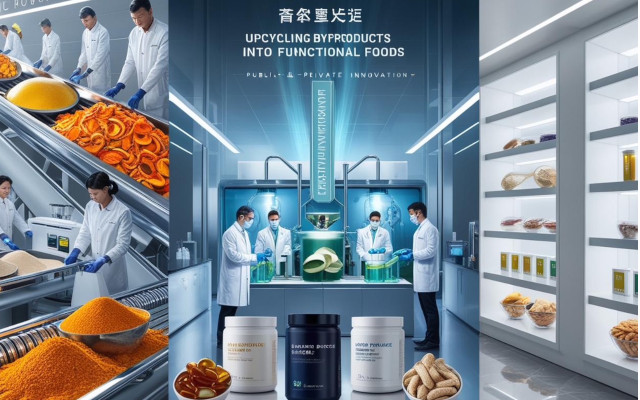
Cover image generated by AI.
References
- Alsataf, S., Başyiğit, B., & Karaaslan, M. (2021). Multivariate analyses of the antioxidant, antidiabetic, antimicrobial activity of pomegranate tissues with respect to pomegranate juice. Waste and Biomass Valorization, 12(11), 5909–5921. https://doi.org/10.1007/s12649-021-01427-9
- Boronat, Ò., Sintes, P., Celis, F., Díez, M., Ortiz, J., Aguiló-Aguayo, I., & Martín-Gómez, H. (2023). Development of added-value culinary ingredients from fish waste: Fish bones and fish scales. International Journal of Gastronomy and Food Science, 31, 100657. https://doi.org/10.1016/j.ijgfs.2022.100657
- Cencic, A., & Chingwaru, W. (2010). The role of functional foods, nutraceuticals, and food supplements in intestinal health. Nutrients, 2(6), 611–625. https://doi.org/10.3390/nu2060611
- EFSA NDA Panel. (2023). Safety of partially hydrolysed protein from spent barley (Hordeum vulgare) and rice (Oryza sativa) as a novel food pursuant to Regulation (EU) 2015/2283. EFSA Journal, 21(9), Article 8064. https://doi.org/10.2903/j.efsa.2023.8064
- (2024). The state of food and agriculture 2024 – Value-driven transformation of agrifood systems. Food and Agriculture Organization of the United Nations. https://doi.org/10.4060/cd2616en
- Fathy, H. M., Abd El-Maksoud, A. A., Cheng, W., & Elshaghabee, F. M. F. (2022). Value-added utilization of citrus peels in improving functional properties and probiotic viability of acidophilus-bifidus-thermophilus (ABT)-type symbiotic yoghurt during cold storage. Foods, 11(17), Article 2677. https://doi.org/10.3390/foods11172677
- Fernandes, R., Medrano-Padial, C., Dias-Costa, R., Domínguez-Perles, R., Botelho, C., Fernandes, R., & Barros, A. N. (2025). Grape stems as sources of tryptophan and selenium: Functional properties and antioxidant potential. Food Chemistry: X, 26, Article 102260. https://doi.org/10.1016/j.fochx.2025.102260
- Gonçalves, D. A., González, A., Roupar, D., Teixeira, J. A., & Nobre, C. (2023). How prebiotics have been produced from agro-industrial waste: An overview of the enzymatic technologies applied and the models used to validate their health claims. Trends in Food Science & Technology, 135, 229–241. https://doi.org/10.1016/j.tifs.2023.03.016
- Grasso, S., Pintado, T., Pérez-Jiménez, J., Ruiz-Capillas, C., & Herrero, A. M. (2021). Characterisation of muffins with upcycled sunflower flour. Foods, 10(2), Article 426. https://doi.org/10.3390/foods10020426
- Iriondo-DeHond, A., Iriondo-DeHond, M., & del Castillo, M. D. (2020). Applications of compounds from coffee processing byproducts. Biomolecules, 10(9), Article 1219. https://doi.org/10.3390/biom10091219
- Kumar, S., Rawson, A., Kumar, A., Sunil, C. K., Vignesh, S., & Natarajan, V. (2023). Lycopene extraction from industrial tomato processing waste using emerging technologies, and its application in enriched beverage development. International Journal of Food Science and Technology, 58(4), 2141–2150. https://doi.org/10.1111/ijfs.16156
- Lafarga, T., Villaró, S., Bobo, G., & Aguiló-Aguayo, I. (2020). Potential of pulse-derived proteins for developing novel vegan edible foams and emulsions. Journal of Food Science and Technology, 55(2), 475–481. https://doi.org/10.1002/ijfst.2847
- Lynch, K. M., Steffen, E. J., & Arendt, E. K. (2016). Brewers’ spent grain: A review with an emphasis on food and health. Journal of the Institute of Brewing, 122(4), 553–568. https://doi.org/10.1002/jib.363
- Malcorps, W., Newton, R. W., Sprague, M., Glencross, B. D., & Little, D. C. (2021). Nutritional characterisation of European aquaculture processing by-products to facilitate strategic utilisation. Frontiers in Sustainable Food Systems, 5, Article 720595. https://doi.org/10.3389/fsufs.2021.720595
- Mishra, K., Green, A., Burkard, J., Gubler, I., Borradori, R., Kohler, L., Meuli, J., Krähenmann, U., Bergfreund, J., Siegrist, A., Schnyder, M., Mathys, A., Fischer, P., & Windhab, E. (2024). Valorization of cocoa pod side streams improves nutritional and sustainability aspects of chocolate. Nature Food, 5(5), 423–432. https://doi.org/10.1038/s43016-024-00967-2
- Ospina-Maldonado, S., Martin-Gómez, H., & Cardoso-Ugarte, G. A. (2024). From waste to wellness: A review on the harness of food industry by-products for sustainable functional food production. International Journal of Food Science and Technology, 59(11), 8680–8692. https://doi.org/10.1111/ijfs.17571
- Pérez-Marroquín, X. A., Estrada-Fernández, A. G., García-Ceja, A., Aguirre-Álvarez, G., & León-López, A. (2023). Agro-food waste as an ingredient in functional beverage processing: Sources, functionality, market and regulation. Foods, 12(8), Article 1583. https://doi.org/10.3390/foods12081583
- Renzetti, S., & van der Sman, R. G. M. (2024). Combining bran-enrichment with sugar replacement in biscuits enables the flexible use of a sustainable and fibre-rich by-product. Food Hydrocolloids, 146, Article 109226. https://doi.org/10.1016/j.foodhyd.2023.109226
- Rodrigues de Souza, M. L., Gasparino, E., Souza dos Reis Goes, E., Franco Coradini, M., Vieira, V. I., Gonçalves Oliveira, G., Matiucci, M. A., Valente Junqueira de Castro, A. C., Siemer, S., Takeuchi Fernandes, V. R., & Feihrmann, A. C. (2022). Fish carcass flours from different species and their incorporation in tapioca cookies. Future Foods, 5, Article 100132. https://doi.org/10.1016/j.fufo.2022.100132
- Rupasinghe, H. P. V., Wang, L., Huber, G. M., & Pitts, N. L. (2008). Effect of baking on dietary fibre and phenolics of muffins incorporated with apple skin powder. Food Chemistry, 107(3), 1217–1224. https://doi.org/10.1016/j.foodchem.2007.09.057
- Terrasa, A. M., Staffolo, M. O., & Tomás, M. C. (2016). Nutritional improvements and physicochemical evaluation of liver pâté formulations. LWT – Food Science and Technology, 66, 678–684. https://doi.org/10.1016/j.lwt.2015.11.018
- Torán-Pereg, P., del Noval, B., Valenzuela, S., Martinez, J., Prado, D., Perisé, R., & Arboleya, J. C. (2021). Microbiological and sensory characterization of kombucha SCOBY for culinary applications. International Journal of Gastronomy and Food Science, 23, Article 100314. https://doi.org/10.1016/j.ijgfs.2021.100314
- Velarde-Salcedo, A. J., De Leon-Rodriguez, A., Calva-Cruz, O. J., Balderas-Hernandez, V. E., De Anda Torres, S., & Barba-de la Rosa, A. P. (2023). Extraction of bioactive compounds from Rubus idaeus waste by maceration and supercritical fluids extraction: The recovery of high added-value compounds. International Journal of Food Science and Technology, 58(12), 5838–5854. https://doi.org/10.1111/ijfs.16687

Dario Dongo, lawyer and journalist, PhD in international food law, founder of WIISE (FARE - GIFT - Food Times) and Égalité.